

More news on this day
Mexico is stepping up its push for higher-spending travelers, joining Egypt, Indonesia, France, South Korea, Japan and other destinations that are rolling out new tourism plans, policy tweaks and headline events designed to capture more visitor revenue and support economic growth.
Get the latest news straight to your inbox!
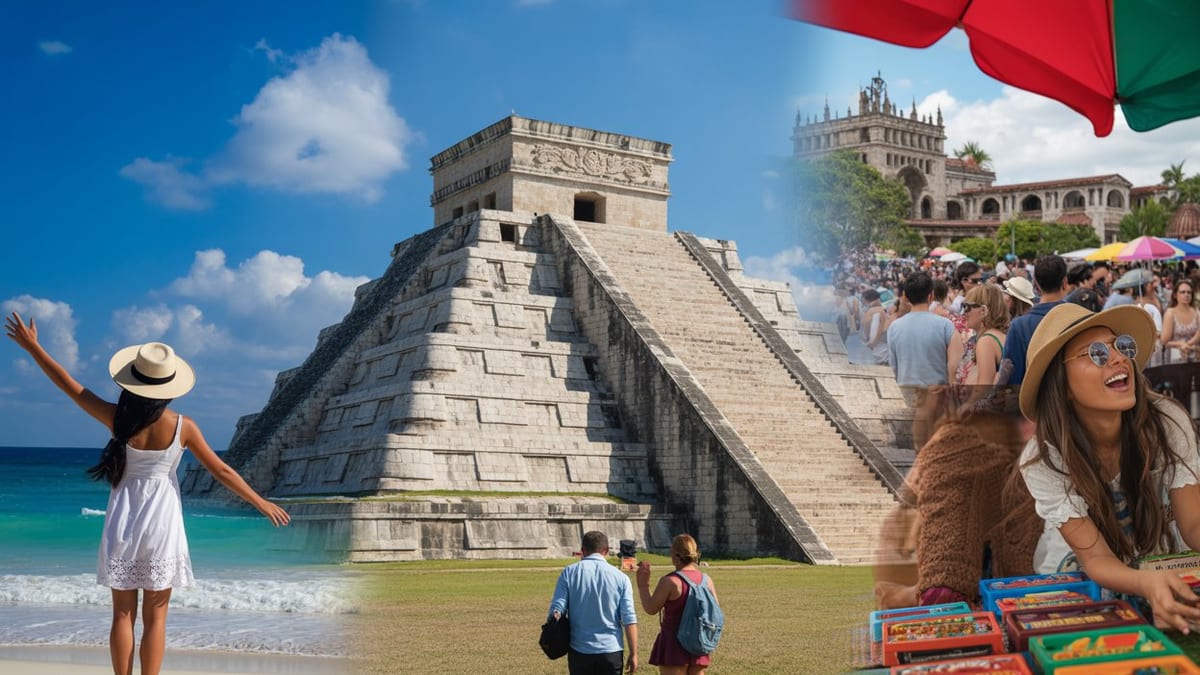
Image by Travel And Tour World
Mexico Targets Higher-Spending Visitors With Fresh Investment
Mexico is positioning tourism as a pillar of economic growth, with federal and state authorities sharpening their focus on visitor spending rather than just arrivals. Recent public information highlights expanded investment in airport connectivity, resort infrastructure and cultural corridors in destinations including the Mexican Caribbean, Pacific coast and interior colonial cities. These efforts aim to lengthen stays, promote premium experiences and encourage more spending on local services.
Reports indicate that Mexico is prioritizing diversified products that go beyond traditional sun-and-sand packages. New promotional pushes feature gastronomy, nature and adventure offerings, indigenous communities and creative cities, with the objective of attracting higher-income segments and repeat visitors. Publicly shared plans also emphasize closer coordination with the private sector to enhance hotel quality, develop boutique and luxury accommodation, and improve digital booking and payment systems.
Policy adjustments are part of the strategy. Authorities have signaled an interest in more data-driven management of popular hotspots such as Cancun, Tulum and Los Cabos, with attention on environmental carrying capacity and local infrastructure. The intention, according to published coverage, is to sustain growth in tourism receipts while reducing pressure on fragile ecosystems and urban services that underpin long-term revenue potential.
Mexico’s approach mirrors a wider trend in major tourist economies that are recalibrating from a pure volume race to models centered on average daily expenditure. In this context, new cultural festivals, sporting events and convention facilities are being promoted as tools to spread demand throughout the year and attract segments that typically spend more on accommodation, dining and experiences.
Egypt Bets On Mega-Museums And Record Economic Impact
Across the Atlantic, Egypt is in the midst of a historic tourism surge, with travel and tourism reaching record contributions to national output in 2024 and forecasts pointing to new highs in 2025. Research from international tourism bodies shows that the sector has become one of Egypt’s most important economic engines, accounting for a growing share of gross domestic product and foreign currency earnings.
Central to the country’s strategy is a pipeline of large-scale cultural and heritage projects, led by the long-anticipated Grand Egyptian Museum on the Giza Plateau. Analysts cited in regional media describe the opening of the museum as a catalyst expected to trigger significant “tourism multiplier effects,” channelling visitor spending into hotels, restaurants, transport, retail and creative industries across Cairo and beyond. The museum is being positioned as a flagship attraction to encourage longer stays and higher per-trip expenditure.
Egypt is pairing these attractions with infrastructure spending. Planning documents reported by local outlets point to a double-digit percentage increase in public investment earmarked for tourism and antiquities in the 2025 to 2026 fiscal year, including hotel capacity, transport links and site management. International forecasts cited by official information services project that tourist arrivals could climb toward the high teens in millions by 2025, reinforcing the sector’s role as a driver of employment and regional development.
Economic impact studies from the World Travel & Tourism Council indicate that the country’s tourism recovery has already surpassed pre-pandemic performance, with travel-related GDP and jobs both registering strong gains. The current set of policies and projects is framed as a way to lock in that momentum and move Egypt further up the rankings of globally competitive destinations.
Indonesia And Japan Focus On Quality, Visas And Visitor Spending
In Southeast and East Asia, Indonesia and Japan are advancing wide-ranging reforms to attract more visitors and capture a larger share of global tourism expenditure. Indonesia has introduced a long-term “golden visa” regime for investors and high-net-worth individuals, which publicly available information shows is being promoted as a tool to draw entrepreneurs, technology specialists and creative professionals who tend to make repeated, higher-value trips. This sits alongside sustained promotion of Bali and emerging destinations such as Labuan Bajo, Lake Toba and the new capital region.
Indonesia’s tourism strategy is increasingly centered on sustainable and community-based tourism zones branded as “super-priority” destinations. National plans emphasize infrastructure, safety and environmental management in these areas, with the goal of attracting premium markets for diving, eco-tourism and cultural experiences. Reports in regional media note that this approach is intended to encourage visitors to spend more time outside the most saturated hubs, distributing revenue into lesser-known regions.
Japan, which has rapidly re-established itself as one of the world’s most sought-after destinations, is adjusting its policies to support both volume and value. Travel industry guidance highlights the introduction of immediate tax exemption at tax-free stores from late 2024, allowing eligible foreign visitors to access lower prices at the point of sale. This system is designed to simplify shopping, increase retail turnover and generate more tourism-linked tax revenue overall.
Publicly available information also points to a forthcoming pre-clearance system for international arrivals, aimed at streamlining border procedures and cutting queues at major airports. At the same time, some heritage attractions have moved to differentiated ticket pricing for foreign visitors to fund preservation and operations. Analysts describe these changes as part of a broader attempt to balance visitor growth with cultural and environmental stewardship while maintaining robust spending per tourist.
France, South Korea And Mega Events Power Urban Tourism
In Europe, France is using the legacy of the Paris 2024 Olympic and Paralympic Games to reinforce its status as the world’s most-visited country and drive additional spending in regions beyond the capital. Payments industry data released after the Games showed a sharp rise in international cardholders in Paris during the event period compared with the previous year, underlining the role of large-scale sporting events in stimulating visitor numbers and consumption in hotels, restaurants and retail.
French tourism officials have signalled that the infrastructure upgrades, security operations and global visibility generated by the Olympics are being leveraged to attract new conferences, exhibitions and cultural events. At the same time, research from national tourism agencies highlights strong growth in short-term rentals and alternative accommodation, which are reshaping visitor flows into smaller cities and rural areas. This diversification is seen as a way to spread tourism income while tapping micro-entrepreneurs and local service providers.
South Korea, meanwhile, is combining high-profile cultural programming with targeted visa measures to restore inbound tourism to and beyond pre-pandemic levels. According to coverage in Korean media, the government has recently offered visa-free or visa-fee entry for certain tour groups from China for a limited period, timed around major diplomatic gatherings and peak travel seasons. Broader plans also include K-culture training visas, digital nomad permits and support for “workation” hubs that cater to visitors who combine remote work with extended stays.
Major festivals and creative events continue to underpin Korea’s external image. The Busan International Film Festival, regional music gatherings and cultural showcases at the Demilitarized Zone are being promoted as anchors for multi-day trips that drive up per-capita spending on accommodation, food and entertainment. Policy announcements have underscored the ambition to lift arrivals into the tens of millions annually while generating tens of billions of dollars in associated tourism receipts.
A Global Shift Toward Value-Driven, Managed Tourism Growth
Mexico’s latest tourism plans sit within a broader global shift that is reshaping how countries evaluate success in the sector. Rather than focusing solely on headline arrival numbers, destinations from Egypt and Indonesia to France, South Korea and Japan are concentrating on higher-yield segments, more balanced regional development and stricter management of environmental and social pressures.
Common themes run through the new initiatives. Countries are investing heavily in connective infrastructure and signature cultural attractions, such as museums and festivals, while also fine-tuning visa regimes and entry processes to reduce friction for targeted markets. At the same time, pricing tools, differentiated taxes and new rules around accommodation are being used to capture more revenue from affluent travelers and finance the upkeep of heritage sites and urban services.
Analysts note that this strategy is unfolding against a backdrop of intensifying competition for international visitors, currency pressures and the lingering impact of the pandemic on travel behavior. With more tourists seeking experiences, safety and authenticity, governments are trying to align tourism promotion with broader economic, social and environmental objectives.
For Mexico and its peers, the latest wave of policies, events and infrastructure announcements points toward a new era in global tourism, defined by targeted growth, higher per-visitor spending and closer integration between the travel sector and national development priorities.