

More news on this day
Mexico is moving to establish a national tourism police system that would standardize how visitors are protected across its major destinations, as authorities race to reassure fans and travel providers that the country can safely co host the 2026 FIFA World Cup despite a recent surge in cartel related violence.
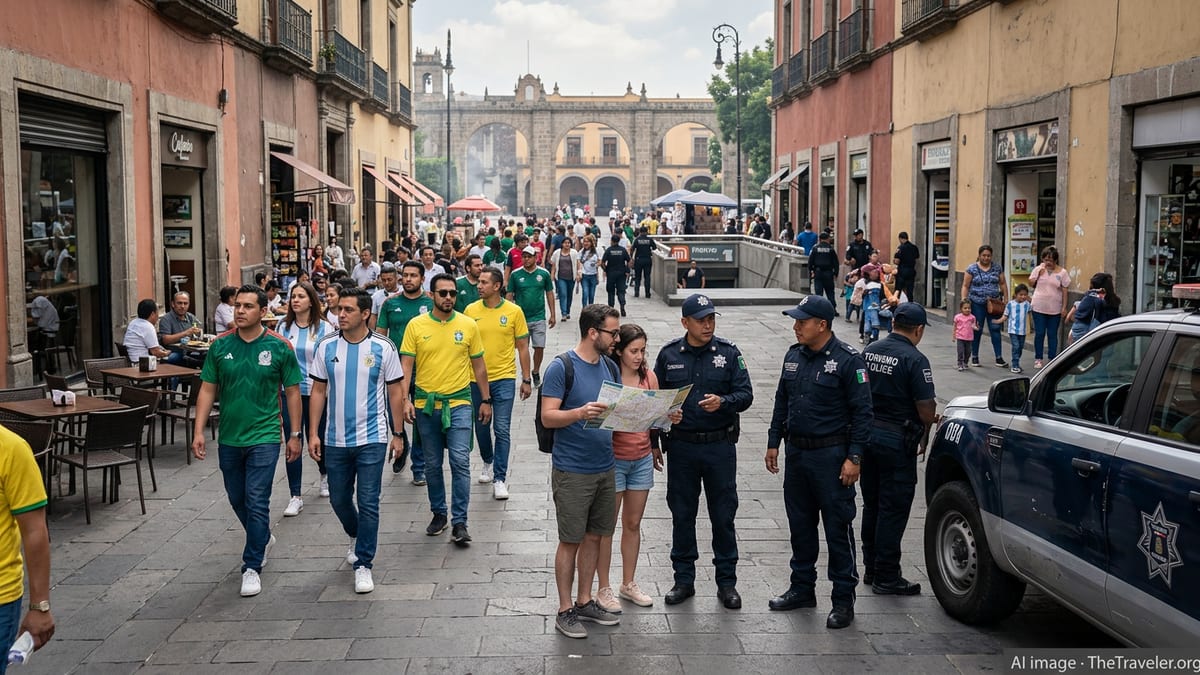
A Unified Security Front for a Pivotal Tournament
The proposed national tourism police system, which is being shaped in coordination with federal, state and municipal security agencies, would bring together existing tourist police units under a single operational framework focused on visitor safety. Officials say the goal is to replace a patchwork of local protocols with common training standards, shared intelligence and clear lines of command in resort areas, key cities and World Cup host venues.
Modeled in part on Mexico City’s long running tourist police units and federal National Guard deployments in beach corridors, the new structure is expected to prioritize visible patrols in hotel zones, historic centers, entertainment districts and transit hubs. Authorities are also discussing specialized multilingual officers, rapid response teams for crimes targeting foreigners and closer coordination with hotel security and private event staff.
The plan comes as Mexico prepares to welcome hundreds of thousands of football supporters to Mexico City, Guadalajara and Monterrey for the 2026 tournament. While officials insist the World Cup itself will be one of the most heavily protected events in the country’s history, they acknowledge that confidence in day to day safety across wider tourism corridors is just as critical for airlines, tour operators and booking platforms deciding how aggressively to market Mexico in the months ahead.
Pressure Mounts After High Profile Cartel Violence
Security concerns have sharpened since the army’s recent operation against powerful cartel leader Nemesio Oseguera Cervantes triggered days of violent retaliation in several states. Road blockades, burned vehicles and clashes with security forces dominated headlines, raising fresh questions internationally about Mexico’s ability to shield visitors from the fallout of its war with organized crime.
In response, President Claudia Sheinbaum has repeatedly stressed that there is “no risk” to World Cup visitors and that security conditions in host cities will be guaranteed through reinforced deployments of federal forces, the National Guard and local police. She has said the new tourism focused policing model will complement those deployments by concentrating on the spaces tourists actually move through, from airports and fan zones to public transport and nightlife districts.
Security analysts note that cartels have historically avoided high profile attacks on foreign tourists, viewing the industry as a crucial source of revenue for local economies they also depend on. Even so, sporadic incidents in popular destinations and the highly visible recent violence have prompted several foreign governments to update travel advisories, urging citizens to remain within established tourism areas and avoid overland travel at night.
World Cup Scrutiny and International Coordination
The run up to the 2026 World Cup has amplified that scrutiny. FIFA representatives are visiting Mexico to review security and mobility plans around stadiums, training sites and fan festivals, while federal authorities in Mexico and partner governments in the United States and Canada work on joint protocols for cross border intelligence sharing and crisis response.
Under the proposed national tourism police system, Mexican officials say they want a clearer bridge between major event security operations and routine visitor protection. That includes standardized reporting channels for incidents involving foreign nationals, closer liaison with foreign consulates and a harmonized protocol for crowd management in areas where local residents and visiting fans are likely to mix in large numbers.
Mexico’s tourism and interior ministries have also been in talks with industry associations, airlines and global hotel brands to ensure that security messaging is both accurate and transparent. The government is keen to avoid alarmism that could deter bookings, but it is equally aware that underplaying risks could damage trust if incidents occur. A dedicated tourism police system, visible on the streets and clearly branded for visitors, is seen as one way to show tangible progress in the months leading to kickoff.
Balancing Visitor Safety With Local Concerns
The tourism security push comes at a delicate moment for Mexico’s biggest destinations, where residents have staged protests over gentrification and overtourism, particularly in Mexico City neighborhoods popular with remote workers and short term rentals. Activists argue that large scale events and a constant influx of foreign visitors are driving up rents and reshaping public space, even as local communities continue to grapple with everyday insecurity.
Officials involved in designing the tourism police framework say those tensions are central to the debate. They argue that better organized, accountable and trained tourism policing can benefit residents as well as visitors by curbing petty crime, reducing opportunities for extortion and ensuring that crowd control around major events is handled more professionally. Human rights groups, however, are urging clear safeguards against racial profiling, arbitrary detentions and abuse of authority that have marred past policing drives in tourist hubs.
Mexico’s government has begun consulting with civil society organizations, hotel councils and transport unions about how the new system should operate in practice. Proposals include body worn cameras for officers, transparent complaint mechanisms in multiple languages and better oversight from federal watchdogs to deter corruption and protect both tourists and local workers in hospitality and transport.
What Travelers Can Expect Ahead of 2026
If implemented as described by officials, visitors arriving in Mexico in the lead up to and during the World Cup can expect a denser security presence in airports, on main access roads, at metro and bus interchanges and around fan zones and stadiums. Tourism police officers would be more clearly identified, with language badges and information cards explaining how to seek help, file a report or contact their consulate.
Authorities are also planning public information campaigns to encourage travelers to use official taxis and ride share pick up points, stay in accredited accommodations and report any attempted scams, shakedowns or unregistered tour operators. The national emergency number will remain the primary channel for serious incidents, but tourism police units are expected to operate dedicated hotlines for non emergency assistance in English and other major languages.
Travel industry executives say that while infrastructure, ticketing and accommodation remain the immediate priorities, perceptions of safety will ultimately determine how many fans choose to extend their stays beyond match days or combine World Cup travel with longer holidays in Mexico’s beach and cultural destinations. For a government that has staked much of its economic and diplomatic capital on a successful tournament, the proposed national tourism police system has quickly become one of the most closely watched pieces of the World Cup security puzzle.