

More news on this day
As college students and families prepare to head south for spring break, a fresh wave of cartel-related violence, fast-changing government advisories and cascading flight disruptions is forcing travelers to reassess plans for Mexico’s most popular beach destinations.
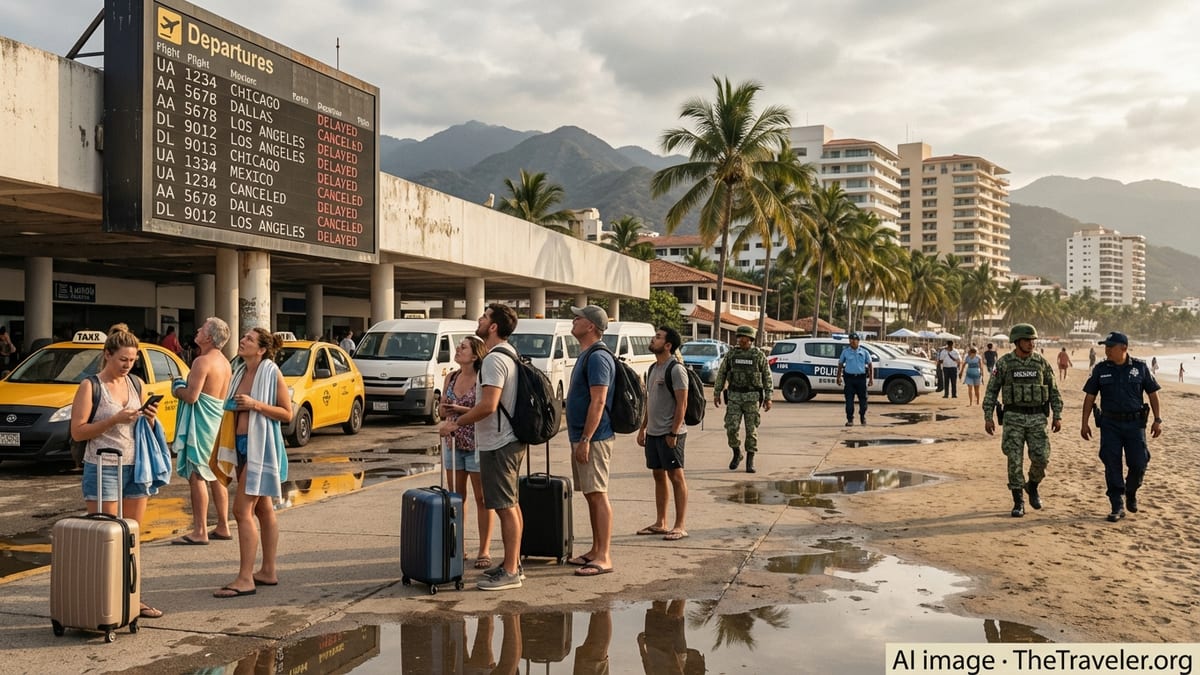
Cartel Leader’s Killing Triggers Turbulent Lead-Up to Spring Break
The latest bout of anxiety for Mexico-bound travelers began on February 22, 2026, when Mexican security forces killed Nemesio “El Mencho” Oseguera Cervantes, the powerful leader of the Jalisco New Generation Cartel. The high-profile operation, centered in the state of Jalisco, unleashed retaliatory attacks including road blockades, vehicle fires and assaults on security forces across parts of western Mexico.
In the hours that followed, authorities in Jalisco and neighboring states activated emergency protocols. Local officials reported burning vehicles on major highways, sporadic gunfire in some urban areas and targeted attacks on banks and government facilities. Images of smoke plumes, military convoys and shuttered storefronts quickly spread across social media, heightening global concern just as international arrivals were ramping up for the spring break season.
The violence was concentrated far from many of Mexico’s Caribbean beach resorts, but the scale and speed of events were enough to rattle the broader tourism sector. Destination marketing agencies and hotel associations in Puerto Vallarta, Guadalajara and parts of the Pacific coast spent recent days fielding urgent calls from tour operators, airlines and anxious guests seeking clarity on what was safe and what was not.
Advisories Evolve: From Shelter in Place to “Recovery Phase”
Within hours of the operation, the United States Department of State and the U.S. Embassy in Mexico City issued urgent alerts advising American citizens in several states, including Jalisco, Michoacán, Guerrero, Tamaulipas and Nuevo León, to shelter in place. The unprecedented warnings for such a wide swath of western Mexico underscored the uncertainty around the scale of the cartel response and the risk of spillover into tourist zones.
Those early alerts came on top of the longstanding countrywide Level 2 advisory that urges travelers to exercise increased caution in Mexico due to crime and kidnapping, with higher Level 3 and Level 4 warnings for some states. For prospective spring break travelers, the sudden shelter-in-place language, layered over already complex guidance, fueled confusion about whether trips should be canceled outright or merely postponed.
By February 24 and 25, however, U.S. officials began to dial back the most severe elements of the warnings. The embassy signaled that public transportation and businesses in key western cities were returning toward normal operations, and it formally lifted shelter-in-place instructions. Diplomats described the situation as entering a “recovery phase,” with a continued call for vigilance but no blanket order to stay indoors across tourist corridors.
Even as restrictions on U.S. government staff were rolled back, diplomats kept in place targeted precautions that serve as a proxy for risk levels travelers should factor into their decisions. Personnel in parts of Jalisco, Nayarit and Nuevo León remain subject to nighttime curfews and are instructed to avoid nonessential intercity road travel, a sign that authorities still view after-dark movement on highways as especially sensitive.
Flight Cancellations, Flexible Waivers and Stranded Vacationers
For many travelers, the most immediate impact of the unrest was felt at the airport rather than on the streets. Between February 22 and 24, more than 370 flights on U.S. and Canadian routes to Mexico were canceled, largely affecting services into Guadalajara and Puerto Vallarta as airlines temporarily suspended operations amid roadblocks, arson attacks and uncertainty around access to airports.
Major carriers including United, Delta, Southwest, Alaska Airlines and Air Canada rolled out emergency travel waivers for passengers booked to and from Jalisco and parts of the Pacific coast. Policies typically allowed customers to rebook without change fees and, in some cases, without fare differences if they traveled by early March. Advisories urged travelers already in resort areas to remain at their hotels and not attempt to reach airports unless instructed by airline or local authorities.
As security conditions stabilized, airlines began a cautious restart of flights into affected cities. Schedules remained uneven for several days, with lingering delays and last-minute cancellations. Some cruise lines also altered itineraries, skipping calls at Mexican ports in the immediate aftermath of the violence. For thousands of vacationers, the combination of shifting advisories and flight chaos meant unplanned extra nights in hotels, scrambled connections through alternate hubs and, in some cases, the decision to abandon Mexico trips entirely in favor of other warm-weather destinations.
In tourism-dependent communities like Puerto Vallarta and the Riviera Nayarit, hoteliers and small businesses reported a wave of cancellations and early departures as images of burning vehicles and roadblocks circulated abroad. Travel agents say some families have shifted plans to Cancun, the Riviera Maya or Los Cabos, while others are postponing Mexico altogether until closer to summer.
Regional Disparities: Pacific Hot Spots vs. Caribbean “Business as Usual”
Despite the intensity of the recent unrest, security conditions have not been uniform across Mexico’s major tourist zones. Authorities and local tourism boards on the Caribbean side, in destinations such as Cancun, Playa del Carmen, Tulum and Cozumel, have stressed that daily life and tourism operations have continued largely as normal, even as they acknowledged isolated incidents of vandalism and heightened police presence.
State security forces in Quintana Roo moved quickly to contain a series of small fires and property damage reported around February 22 in Playa del Carmen and Cancun, but these did not trigger formal shelter-in-place orders or major shutdowns of airports and ports. Hoteliers there have reported only modest upticks in cancellations, with many travelers apparently viewing the Caribbean coast as insulated from the worst of the cartel violence centered in western states.
Farther west, however, Jalisco and Nayarit remain under tighter scrutiny. While airports in Puerto Vallarta and Guadalajara are functioning and beach resorts report that guests are still on the sand and at the pools, the presence of additional security forces, nighttime curfews for U.S. government staff and recent images of burning buses on access roads have introduced a new level of unease. The symbolism is particularly sensitive for Guadalajara, one of the host cities for the 2026 FIFA World Cup, where officials are keen to reassure future visitors that the latest flare-up is an aberration rather than a sign of things to come.
Other states with long-standing security warnings, including Guerrero, Michoacán, Sinaloa and Tamaulipas, remain on many countries’ “do not travel” lists, largely independent of the February violence. While these regions do contain some coastal resorts and cultural attractions, the bulk of international spring break traffic has for years tended to concentrate in better-policed zones such as Quintana Roo, Baja California Sur and selected pockets of the Pacific coast.
What Spring Break Travelers Should Expect Now
For travelers still planning March and early April trips, the picture emerging is one of cautious normalization rather than outright crisis. Airlines have restored most routes, but timetables remain subject to short-notice changes as carriers adjust capacity and monitor demand. Industry analysts expect some lingering softness in bookings to Puerto Vallarta and Guadalajara, with package operators offering incentives to fill rooms that typically sell out months in advance for spring break.
Travel advisors say the primary shift this season is not an official ban on Mexico but a heightened emphasis on trip “micro-planning.” That includes selecting specific neighborhoods and resorts with strong security track records, building in extra time for airport transfers in case of highway disruptions, and staying flexible with changeable tickets and comprehensive travel insurance that covers civil unrest.
Governments on both sides of the border are urging visitors to follow common-sense precautions that take on added weight in the current climate: avoid driving at night between cities, steer clear of protests or large gatherings, and monitor trusted official channels for updates rather than relying on viral videos and unverified posts. Recent disinformation campaigns around the Jalisco operation, in which false claims about airport takeovers and tourist kidnappings spread widely before being debunked, have underscored how fast rumors can outpace verified information.
With Mexico still ranking among the top international destinations for U.S. travelers, the coming weeks will test whether the combination of residual unease, higher airfares and more complex logistics is enough to significantly dent spring break demand. For now, beaches from Cancun to Cabo remain open, but the latest unrest has made clear that even the country’s most well-trodden holiday corridors are not entirely insulated from the broader security challenges playing out beyond the resorts.