

More news on this day
Mexico is entering 2026 as one of the world’s fastest-rising tourism powerhouses, coupling record visitor growth with ambitious sustainability policies and AI-enabled projects that are reshaping its position in the global travel market.
Get the latest news straight to your inbox!
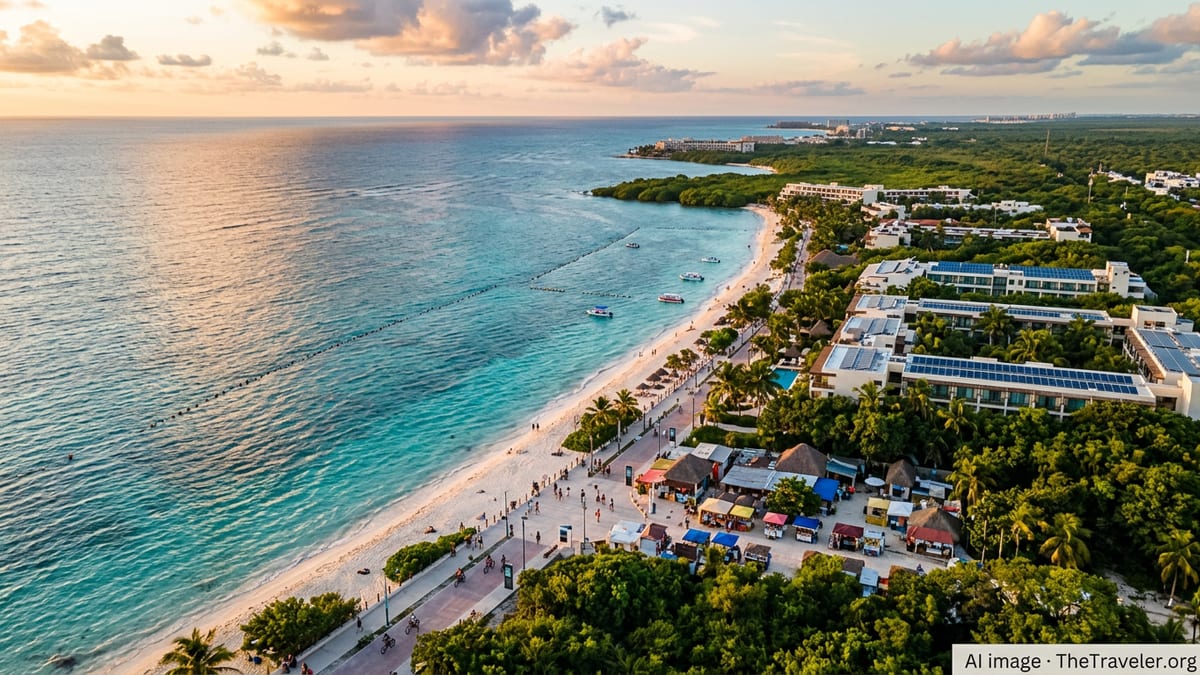
Tourism Growth Outpaces Traditional Holiday Leaders
Recent international tourism data and industry analyses indicate that Mexico has moved ahead of several established destinations, including Denmark, Thailand, Brazil, Costa Rica, Greece and even parts of Spain, in terms of post-pandemic growth momentum and future projections. While European and Asian favorites have largely focused on recovering pre-2020 volumes, Mexico has paired a strong rebound in arrivals with a sharper rise in tourism revenue and new market diversification, supported by its ranking among the world’s top destinations by visitor numbers and receipts.
According to published coverage based on United Nations tourism statistics, Mexico welcomed around 45 million international visitors in 2024, roughly in line with its 2019 peak but with significantly higher average spending. Subsequent reports point to further increases through 2025, including record-breaking months that set new highs for international arrivals and foreign exchange earnings. Observers note that this combination of volume recovery and higher per-visitor expenditure puts Mexico ahead of several competitors that still trail their 2019 benchmarks or remain more narrowly dependent on a single source market.
Analysts also underline that Mexico’s tourism growth is increasingly broad-based. Long dominated by sun-and-sea hubs such as Cancun and Los Cabos, the country is now seeing faster relative gains in inland cities and secondary regions, from colonial highland towns to biodiversity-rich coastal reserves. This diversification is frequently contrasted with destinations like Denmark or Costa Rica, where growth is solid but more incremental, or Thailand and Brazil, where recovery has been slower and more exposed to shifts in long-haul demand.
In parallel, sector outlooks for 2026 and beyond place Mexico among the leading drivers of tourism expansion across the Americas. Studies on the global travel and tourism industry highlight that Mexico’s visitor economy now supports nearly five million jobs and contributes close to 9 percent of national output, with forecasts suggesting that the share could climb toward the mid-teens of gross domestic product if current trajectories for investment and spending are maintained.
Bold National Strategy Puts Sustainability at the Center
Mexico’s rapid ascent is not anchored solely in volume. Publicly available policy documents show that the government’s Sustainable Tourism Strategy 2030 and related programs are designed to make the country a benchmark for low-impact, community-centered travel. The framework prioritizes protected-area management, responsible coastal development, circular-economy practices in hospitality and reductions in greenhouse gas emissions along tourism value chains.
International organizations have highlighted several flagship initiatives. A partnership with UNESCO to embed cultural and community-based tourism principles into Mexico’s national tourism strategy seeks to ensure that local residents become primary beneficiaries of growth. Pilot projects in states such as Chiapas, Tabasco, Yucatán, Campeche and Quintana Roo focus on training community cooperatives, strengthening Indigenous cultural offerings and improving governance in destinations that are vulnerable to overtourism or environmental degradation.
Programs like the long-running Pueblos Mágicos scheme, which promotes towns with strong cultural, historical and gastronomic appeal, are being reframed through a sustainability lens. Rather than simply driving visitor numbers, new guidance encourages limits on carrying capacity, incentives for locally owned lodging and the protection of heritage architecture. This approach aligns with a broader global shift from conventional “sustainable tourism” toward more regenerative models that aim to leave destinations better off than before.
Mexico’s stance is also visible in large-scale infrastructure. Environmental assessments and impact-mitigation plans have been expanded for new rail corridors, airport improvements and coastal developments, reflecting pressure from both domestic communities and international travelers who increasingly scrutinize climate and biodiversity impacts. Analysts say this focus on long-term resilience and shared prosperity is one factor differentiating Mexico’s strategy from that of some competitors that remain more narrowly focused on headline arrival totals.
AI-Enabled Destinations and Smart Tourism Infrastructure
A major pillar of Mexico’s tourism repositioning is the adoption of digital and AI-driven tools to improve how visitors plan, move and spend throughout the country. Industry reports describe a growing ecosystem of smart-destination projects in leading tourism states such as Quintana Roo, Jalisco and Baja California, where authorities and private operators are experimenting with data platforms that integrate flight information, hotel capacity, mobility options and real-time crowd analytics.
In practice, this means that destinations are beginning to adjust services based on live demand signals. AI-enabled systems can help manage visitor flows at popular beaches and archaeological sites by forecasting peak times and redirecting travelers toward lesser-known areas, reducing congestion and environmental pressure. Hotels and tour operators are also deploying predictive tools that optimize energy use, waste management and staffing, which can lower emissions and operating costs while preserving service quality.
Mexico’s emerging rail and intermodal transport projects contribute to this digital pivot. New and upgraded passenger rail lines, along with the Interoceanic Corridor of the Isthmus of Tehuantepec, are being integrated into journey-planning apps and smart-ticketing platforms that rely on AI for route optimization and demand management. Analysts note that such systems are increasingly important as visitor numbers grow in regions that previously had limited transport infrastructure and weak connectivity between tourist hubs and surrounding communities.
Domestic travel-tech startups are playing a visible role. Market research points to a rising number of Mexican platforms offering AI-based itinerary design, dynamic pricing for tours and experiences, and real-time safety and weather alerts tailored to specific micro-destinations. This wave of innovation is positioning Mexico as a regional test bed for technology that can later be exported to other Latin American and Caribbean markets.
Community-Based Experiences Redefine Responsible Travel
Mexico’s tourism transformation is closely linked to a deliberate push toward community-based and culturally immersive experiences. UNESCO-supported strategies and Mexico’s own National Community Tourism Program encourage visitors to spend more time and money in smaller communities, creating new revenue streams beyond the traditional resort corridor model.
Examples highlighted in recent reports include Indigenous-led homestays in southern states, cooperative-run nature excursions in mangrove and reef ecosystems, and culinary routes that connect small-scale producers with international travelers seeking local food traditions. These initiatives are explicitly framed as tools to reduce inequality, foster youth employment and make tourism a more reliable driver of rural development.
Observers emphasize that this community focus helps Mexico differentiate itself from other environmentally oriented destinations, such as Costa Rica or Greece, where eco-resorts and protected areas are well-established but community ownership is sometimes more limited. In Mexico, policy statements consistently refer to “shared prosperity” and to tourism’s role in lifting households out of extreme poverty, a narrative now supported by socioeconomic data showing increases in employment and income in key tourism regions.
At the same time, public debates around infrastructure projects in sensitive ecosystems show that Mexico’s responsible-travel ambitions remain a work in progress. Environmental groups have raised concerns over coastal erosion, sargassum seaweed, deforestation and pressure on freshwater resources in several hotspots. Analysts say the country’s ability to manage these risks while continuing to expand visitor numbers will be a critical test of its claim to be a premier destination for responsible travel.
Culinary, Cultural and Urban Innovation Broaden Mexico’s Appeal
Mexico’s surge is also tied to a broader reimagining of its visitor offer. Global travel coverage in 2024 and 2025 noted the debut of the Michelin Guide for Mexico, with stars awarded to restaurants in Mexico City, Oaxaca, Baja California and other regions. This recognition has reinforced the country’s reputation as a leading gastronomic destination and drawn a new wave of culinary travelers who often seek longer, higher-spend itineraries that combine fine dining with markets, vineyards and rural food experiences.
Major cities are complementing this with investments in culture, public space and digital visitor services. Mexico City, Guadalajara and Monterrey have expanded museum programming, festivals and creative districts while rolling out smart-city solutions such as integrated mobility cards, open-data dashboards and AI-assisted translation tools in tourism hotspots. These upgrades help position urban centers as stand-alone destinations rather than mere gateways to coastal resorts, putting Mexico in more direct competition with European city-break favorites in Spain, Denmark and Greece.
Industry briefs suggest that Mexico’s tourism planners are consciously moving away from dependence on a small number of North American markets. Targeted campaigns, route-development incentives and language-adapted digital content are being used to attract higher-spending visitors from Europe and Asia who are often more receptive to sustainability messaging, regenerative tourism concepts and tech-enabled experiences.
With visitor numbers at or above pre-pandemic levels, receipts climbing and a dense pipeline of sustainable and AI-enabled projects underway, Mexico is entering 2026 with a reinforced reputation as a laboratory for the future of responsible, tech-driven travel. How effectively it can balance growth with environmental limits and community well-being will determine whether it can hold its lead over rival destinations in the years ahead.