

More news on this day
Mexico is entering 2026 with one of the strongest tourism performances in its history, as record visitor flows, solid domestic demand and a hefty investment pipeline reinforce the sector’s growing weight in the national economy.
Get the latest news straight to your inbox!
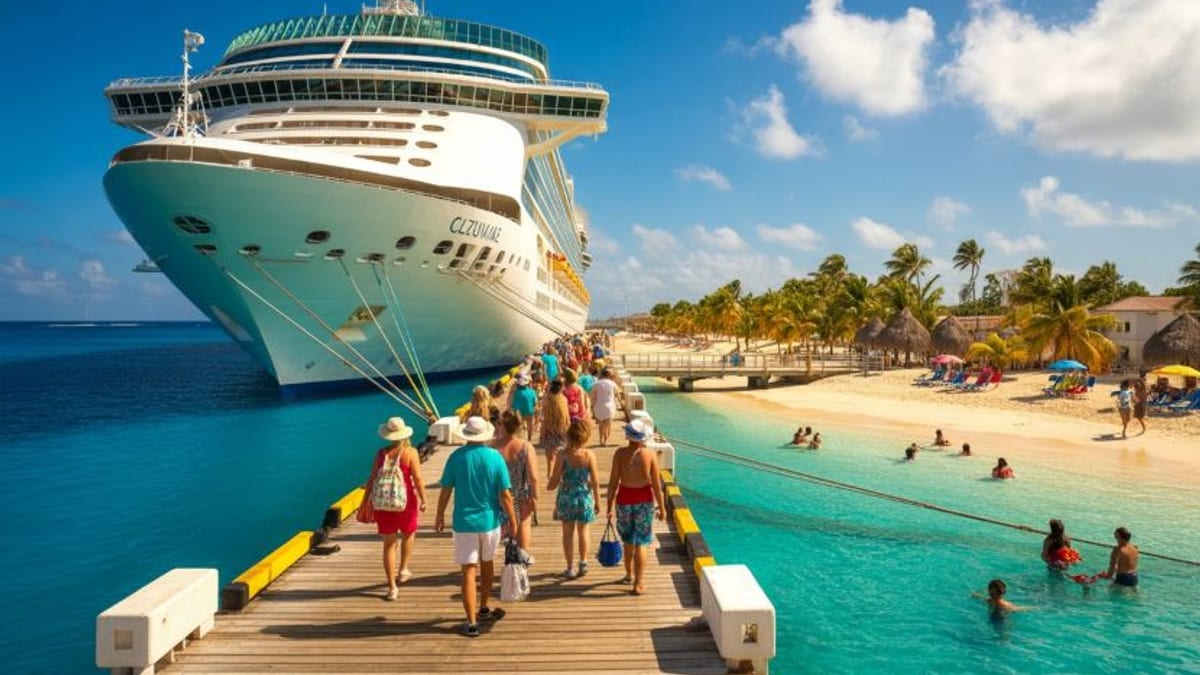
Record Visitor Volumes Cement Mexico’s Global Rank
Recent data from Mexico’s Tourism Ministry and international organizations indicate that the country closed 2025 with historic visitor numbers, extending gains made since the post-pandemic recovery. Mexico received close to 48 million international tourists last year, keeping it among the world’s top destinations and consolidating its position as a leading gateway for global travelers into Latin America.
From January to October 2025 alone, official figures cited in international coverage show that Mexico welcomed more than 79 million international visitors across all categories, an increase of over 13 percent compared with the same period in 2024. Travel industry reporting notes that these visitors stayed longer and spent more, lifting foreign currency earnings by around 6 to 7 percent and pushing tourism receipts to well above 28 billion US dollars during that ten-month stretch.
This external demand is layered on top of a sizable domestic market. Publicly available information suggests that Mexico hosted more than 90 million domestic tourists during the first ten months of 2025, up by roughly 3 percent year over year. The combination of international and domestic travelers is giving the country one of the most diversified tourism bases in the region at the outset of 2026.
These flows are translating directly into economic heft. According to recent interviews and statistical summaries reported in Spanish and international media, tourism now represents about 8 to 9 percent of Mexico’s gross domestic product and supports around five million direct jobs, or roughly a tenth of national employment. That scale provides a key buffer for the wider economy as global growth remains uneven.
Early 2026 Data Point to Stronger Domestic and Air Travel Demand
Preliminary indicators for early 2026 suggest that momentum is continuing rather than cooling. Coverage of Tourism Ministry figures indicates that domestic tourism volumes in the first weeks of the year have risen between 3 and 4 percent compared with the same period in 2025. Hotel occupancy data in major cities such as Mexico City, Guadalajara and Monterrey, as well as coastal hubs on the Pacific and Caribbean, point to consistent weekend and holiday demand.
Air traffic numbers tell a similar story. Mexico City International Airport remained the country’s busiest hub in 2025, handling more than 44 million passengers and cementing its role as a primary entry point for both business and leisure travelers. Industry statistics show that secondary hubs, including Guadalajara, Tijuana and the fast-expanding Tulum airport, continued to gain passengers in 2025 and are helping absorb growth as traditional leaders adjust to capacity limits and seasonality.
In the Caribbean region, passenger data highlight some shifting patterns while still underscoring the overall boom. Cancun International Airport saw a modest decline in total throughput in 2025 compared with record highs in 2023 and 2024, but analysts note that a portion of this traffic has migrated to nearby Tulum, which has ramped up operations within just two years. Travel trade publications report that Cancun still recorded one of its busiest starts to a year for international arrivals in early 2026, with nearly four million arrivals logged before the main spring break period.
Taken together, these figures signal that Mexico’s aviation network is broadening in step with visitor demand. New international routes into regional cities and incremental capacity on transatlantic and North American corridors are giving travelers more entry points, while also spreading the benefits of tourism beyond a handful of beach destinations.
Investment Pipeline Underpins Long-Term Economic Strength
Behind the visitor boom lies a substantial wave of public and private investment. Trade and investment reports indicate that Mexico closed 2025 with a tourism project pipeline valued at approximately 36 to 37 billion US dollars, spanning more than 700 initiatives across about 30 states. These projects range from new hotels and resort complexes to cultural centers, nature reserves, urban regeneration schemes and airport improvements.
Infrastructure upgrades are particularly visible in the runup to the 2026 FIFA World Cup, which Mexico will co-host with the United States and Canada. Recent reporting highlights ongoing modernization works at Mexico City’s main airport, where authorities are executing a multi-billion-peso program to optimize terminals, improve passenger flows and enhance connectivity with other transport systems ahead of the opening match scheduled in the capital.
Private-sector players are also expanding rapidly. Annual reports from major hotel groups describe a growing portfolio of properties aimed at both high-end international travelers and the rising domestic middle class. In parallel, smaller operators are tapping into demand for boutique stays, community-based tourism and nature-oriented experiences, often in partnership with local communities and regional governments.
This investment cycle is reinforcing tourism’s macroeconomic role. The World Travel and Tourism Council’s latest economic impact research for the region points to travel and tourism as one of Latin America’s most dynamic growth engines, with projections for rising GDP contribution and job creation through 2025 and 2026. Mexico’s outsized share within that regional market means that a large portion of the forecast gains will be realized within its borders, supporting tax revenues, employment and ancillary sectors such as construction, retail and transport.
Strategic Shift Beyond Sun and Sand
While coastal destinations such as Cancun, Los Cabos and Riviera Nayarit continue to attract large numbers of visitors, policy announcements and promotional campaigns described in recent international coverage show that Mexico is working to broaden its tourism offer. The national strategy emphasizes cultural, gastronomic and nature-based tourism, as well as visits to lesser-known cities and rural areas.
Mexico’s growing presence at major travel fairs in Europe and Latin America reflects this push. At the 2026 edition of a leading tourism trade show in Madrid, where Mexico appeared as an official partner country, government representatives outlined plans to position the nation not only as a leisure destination, but also as a hub for cultural experiences and shared prosperity with local communities. The approach aims to distribute income more evenly, reduce pressure on saturated districts and bring tourism-related opportunities to regions that historically received few international visitors.
Gastronomy and high-end city tourism are emerging as flagship pillars of that diversification. The Michelin Guide’s recent expansion into Mexico, first in 2024 and with broader coverage planned for 2026, has shone a spotlight on restaurants in Mexico City, Baja California and other states. Travel analysts note that this recognition is already encouraging culinary travel, especially from North America and Europe, and is helping to lengthen average stays in urban centers.
Heritage corridors, Indigenous community initiatives and nature reserves are also drawing increased attention. National programs that promote community tourism and sustainable practices are being featured more prominently in marketing materials, encouraging visitors to engage with local traditions and landscapes in ways designed to minimize environmental impact and support small-scale enterprises.
World Cup Countdown and Regional Outlook
The countdown to the 2026 FIFA World Cup is adding another layer of momentum to Mexico’s tourism boom. Several host cities, including Mexico City, Guadalajara and Monterrey, are preparing for a surge of international fans, with upgrades to stadiums, transport links and urban infrastructure. Travel planners expect this mega-event to generate a spike in arrivals during the tournament period and to leave a legacy of enhanced connectivity and visibility that will benefit the sector well beyond 2026.
Airline and tourism board data show that seat capacity between Mexico and key markets such as the United States has been rising, with more than 25 million scheduled seats recorded in 2025 on cross-border routes alone. Large shares of this capacity are concentrated in states along the northern border and main coastal gateways, underscoring Mexico’s role as a bridge between North and Latin America for both leisure and business travelers.
At the regional level, assessments from global tourism bodies suggest that Latin America could add hundreds of billions of dollars in travel-related economic output over the next decade, along with millions of new jobs. Mexico’s size, connectivity and established brand position it to capture a significant portion of that growth, especially if it continues to invest in infrastructure and diversify its tourism products.
For now, the latest figures on visitor arrivals, spending and investment indicate that Mexico is entering 2026 from a position of unusual strength. Barring sharp external shocks, analysts see the country maintaining its place among the world’s most visited destinations, while tourism deepens its role as a cornerstone of national development.