

More news on this day
As Mexico prepares for a high-profile year on the global stage in 2026, the country is quietly reshaping its tourism offer, spotlighting lesser-known beaches, deep cultural experiences, and community-based adventures that move beyond the familiar resort corridors.
Get the latest news straight to your inbox!
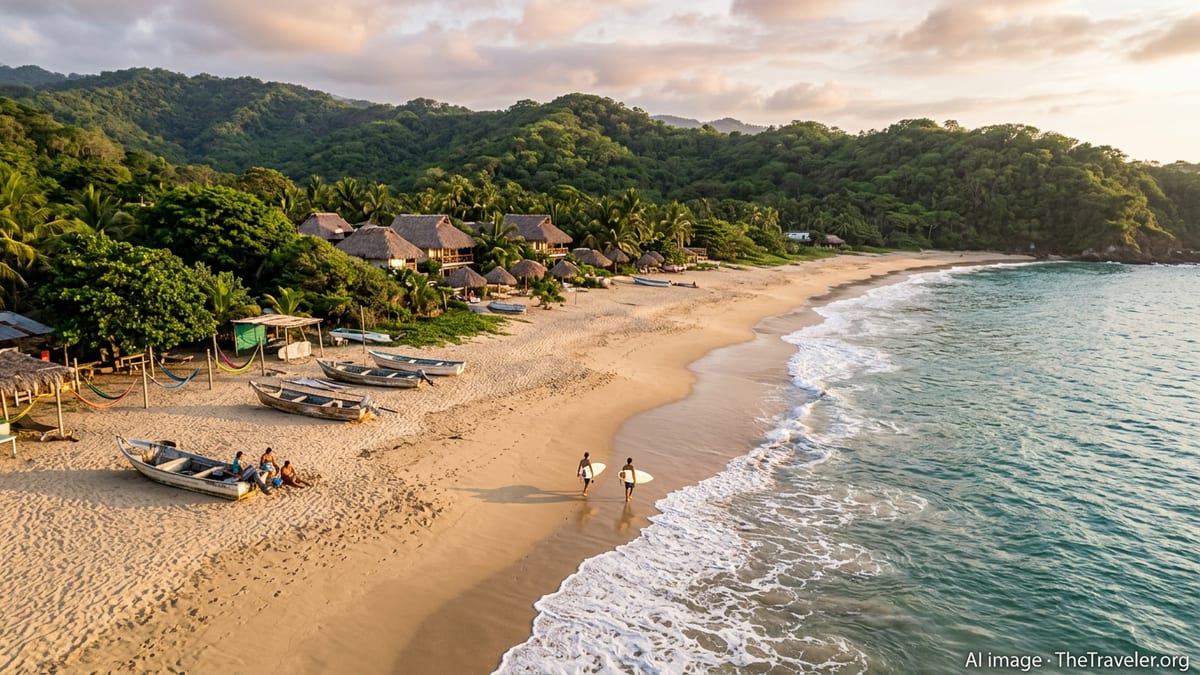
Hidden Coasts Step Into the Spotlight
Recent travel coverage points to a growing shift away from Mexico’s most crowded resort hubs toward quieter stretches of shoreline, where small-scale projects and nature-focused stays are redefining the beach experience. On the Pacific, coastal regions such as Oaxaca’s smaller bays and Nayarit’s emerging microdestinations are drawing visitors in search of uncrowded surf, wildlife encounters, and low-key fishing villages rather than nightlife and mega-resorts.
On the Oaxaca coast, guides and local operators are promoting lesser-known beaches and coastal communities through small-group boat trips, lagoon tours, and hiking routes. Reporting on this region highlights turtle nesting, bioluminescent lagoons, and community-led conservation initiatives that limit visitor numbers and encourage travelers to stay longer, spend locally, and follow basic environmental guidelines.
Further north, the state of Nayarit has announced an expansion of its sustainable tourism program that identifies dozens of “microdestinations” beyond established spots such as Sayulita and Nuevo Vallarta. Public information on the initiative describes investments in basic infrastructure, interpretation signage, and cultural programming designed to spread tourism benefits inland and along quieter stretches of coast while keeping development relatively small-scale.
Industry analysts suggest that these emerging coastal destinations are likely to gain visibility in 2026 as airlines and tour operators respond to traveler demand for quieter, nature-rich escapes. This trend aligns with broader global interest in “second-city” and “second-shore” travel, where visitors bypass the busiest locations in favor of more intimate and often more sustainable alternatives.
New Rail and Airport Links Reshape Access
Infrastructure projects launched over the past few years are starting to reshape how travelers move between Mexico’s main gateways and outlying regions, with implications for 2026 itineraries. In the southeast, the Maya Train project is progressively expanding passenger service across the Yucatán Peninsula, linking Cancun and the Riviera Maya with smaller towns, archaeological sites, and biosphere reserves that were previously harder to reach without private transport.
Publicly available briefings on the project note that the route is intended to connect established coastal resorts with inland communities and heritage sites, including lesser-known Maya ruins and protected jungle landscapes. Tourism observers say that as new stations come online, tour operators are adding multi-stop journeys that combine cenotes, small towns, and community-run nature reserves, broadening what has traditionally been a beach-focused circuit.
Around Tulum, recent coverage highlights a coordinated strategy to manage rapid growth fueled by the new airport and expanding transport links. Federal and state tourism agencies have outlined plans that include improving basic services, monitoring environmental impacts, and maintaining public access to beaches. These measures aim to prevent unchecked coastal development while still accommodating strong international demand.
Beyond the Caribbean coast, development reports for 2025 and 2026 point to continued investment in airport upgrades and road connections in destinations such as Los Cabos and secondary Pacific coast towns. Analysts expect these improvements to support more point-to-point international routes and to make it easier for travelers to combine well-known hubs with nearby lesser-known beach enclaves on a single trip.
Community-Based Tourism Gains Momentum
Alongside new hardware like trains and airports, Mexico is investing in community-based tourism models that position residents as central actors in hosting visitors. A national policy framework developed with the support of international organizations promotes locally owned guesthouses, guided cultural experiences, and nature excursions that are managed by community cooperatives rather than outside operators.
In the Yucatán Peninsula, this approach is already visible in projects that invite travelers to visit Maya communities for day trips and overnight stays. Published accounts describe activities such as traditional cooking workshops, demonstrations of milpa agriculture, and guided visits to lesser-known cenotes and cave systems. Revenue from these experiences is typically shared within the community and tied to conservation or cultural programming.
UNESCO’s documentation of Mexico’s community-based tourism initiatives notes that they are being rolled out not only in the southeast but also around Mexico City and other regions. The aim is to create standardized guidelines and a national catalogue of vetted experiences so that tour operators and independent travelers can more easily find options that meet basic quality and sustainability criteria.
Observers say that as global travelers look for more meaningful and lower-impact trips in 2026, these community-led experiences are likely to feature more prominently in destination marketing. For visitors, they offer a way to engage with local culture beyond quick photo stops, while for host communities they provide an incentive to conserve languages, crafts, and traditional land-use practices.
Cultural Tourism Surges in Cities and “Pueblos Mágicos”
Beyond the beaches, cultural tourism in Mexico has been expanding, with museums and archaeological zones reporting higher visitor numbers in recent data. Coverage of national statistics indicates that international arrivals are increasingly pairing coastal stays with time in heritage cities and smaller towns recognized for their cultural and historical value.
Mexico’s “Pueblos Mágicos” program, which designates towns with distinctive architecture, traditions, or landscapes, continues to guide travelers toward destinations outside the major urban centers. These towns, ranging from highland communities in central Mexico to coastal settlements on the Pacific and Gulf, have seen renewed interest from visitors seeking festivals, crafts markets, regional cuisine, and historic plazas instead of large-scale resort experiences.
In major cities such as Mexico City, Guadalajara, and Mérida, cultural institutions have expanded programming with temporary exhibitions, contemporary art biennials, and neighborhood-level events targeting both residents and visitors. At the same time, local debates around gentrification and mass tourism, particularly in popular Mexico City neighborhoods, are prompting discussions about zoning rules, housing policies, and visitor behavior.
Urban planners and tourism analysts note that these conversations are influencing how city tourism strategies are framed for 2026. Campaigns increasingly highlight respectful travel practices, neighborhood etiquette, and the importance of using licensed guides and regulated accommodations, especially in districts where short-term rentals have transformed the housing market.
Sustainability, Safety and Traveler Expectations for 2026
Environmental sustainability has become a central theme of Mexico’s tourism planning, particularly in coastal destinations facing erosion, waste management challenges, and pressure on marine ecosystems. Recent initiatives in places like Nayarit, Quintana Roo, and the Mexican Caribbean focus on reef restoration, turtle protection programs, and zero-waste campaigns that involve local businesses and visitor volunteers.
Reports from hotel groups and non-profit organizations describe beach cleanups, plastic reduction efforts, and partnerships with marine biologists to monitor coral health. New properties opening along the Pacific and Caribbean coasts increasingly promote low-impact design, water-saving technologies, and habitat restoration as part of their brand identity, reflecting growing consumer expectations around responsible travel.
At the same time, travelers planning trips for 2026 are paying close attention to safety advisories and local regulations. Public guidance from foreign ministries and travel risk firms emphasizes that conditions can vary widely across Mexico’s regions and recommends that visitors monitor updates, use registered transport, and stay informed about local restrictions, particularly when venturing beyond established tourist corridors.
Tourism experts suggest that the combination of enhanced infrastructure, more diversified destinations, and a strong push toward community and sustainability initiatives is reshaping how global visitors experience Mexico. For travelers willing to look beyond the most familiar resort strips, 2026 is positioned to offer a mix of hidden beaches, living culture, and authentic, locally grounded adventures across the country.