

More news on this day
Surging oil prices, renewed cartel violence and widening Middle East conflict are converging into a perfect storm for global tourism, prompting fresh warnings on travel to Mexico and a wave of nervous trip cancellations as families rethink where, and whether, to go abroad in 2026.
Get the latest news straight to your inbox!
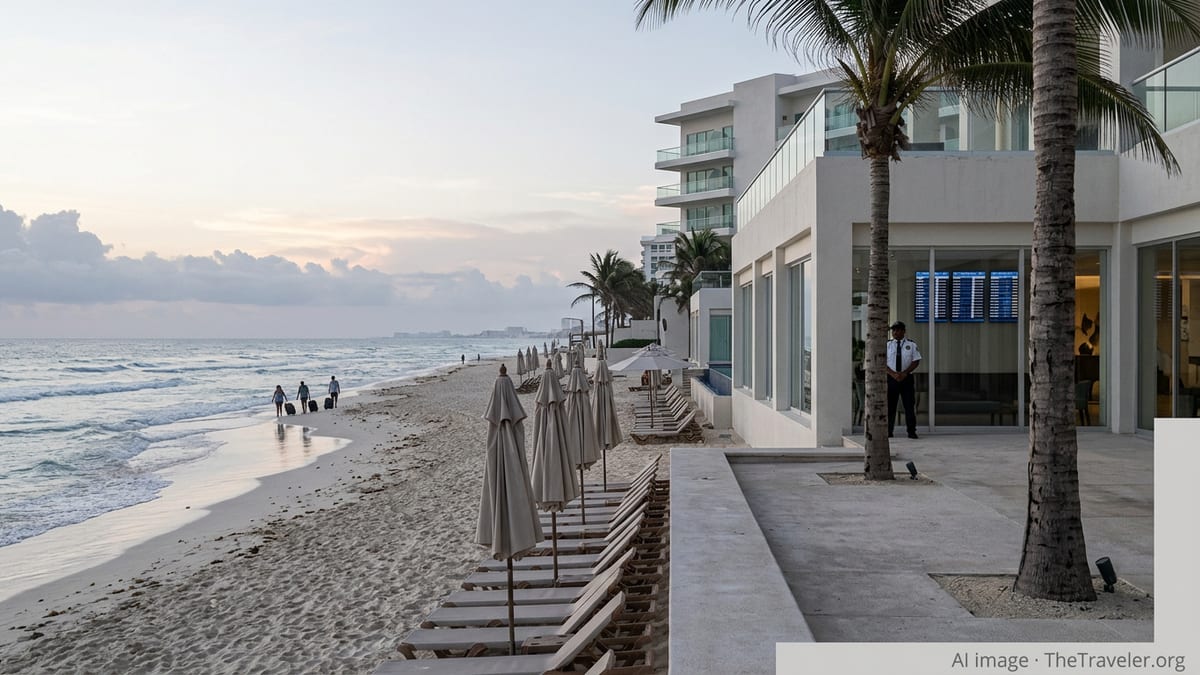
Travel Warnings and Security Jitters in Mexico
Mexico remains one of the most popular international destinations for Americans, yet the security backdrop has grown more complex just as the spring and summer travel rush approaches. The U.S. Department of State continues to rate Mexico overall at Level 2, urging travelers to exercise increased caution nationwide, while maintaining higher Level 3 and Level 4 alerts for several states where cartel violence, kidnapping and armed robbery are more prevalent. That patchwork of advisories has left many travelers parsing maps and fine print before committing thousands of dollars to beach resorts and city breaks.
Concerns have been sharpened by recent cartel-related violence in parts of western Mexico, including Jalisco, that briefly triggered shelter-in-place guidance from U.S. and Canadian officials before it was lifted. Security analysts say the risk remains highly localized and many resort areas along the Caribbean and Pacific coasts continue to operate normally, but images of burning vehicles and roadblocks circulating on social media have rattled would-be visitors far beyond the affected regions.
Travel advisors report an uptick in calls from anxious clients asking whether to cancel or reroute upcoming trips, especially for multi-city itineraries that involve driving between states or exploring lesser-known towns. Some are opting to limit themselves to major resort corridors with strong private security and direct airport transfers, while others are pushing travel to later in the year to see how the situation evolves.
Mexican tourism officials and hotel groups stress that popular destinations such as Cancun, Los Cabos and Puerto Vallarta remain open and heavily policed, and they warn that blanket cancellations risk punishing communities that rely on tourism. Still, they acknowledge that headlines about cartel showdowns and evolving U.S. advisories have become a powerful deterrent, particularly for first-time visitors and families with young children.
Oil Shock Drives Up Airfares and Forces Hard Choices
Even travelers who are comfortable with Mexico’s security landscape are now confronting a second shock: the rapid rise in global oil and jet fuel prices tied to the war in Iran and disruptions around the Strait of Hormuz. Brent crude has swung wildly, briefly spiking above levels not seen since the aftermath of Russia’s 2022 invasion of Ukraine, while aviation-grade kerosene has surged as airlines scramble to secure supplies.
Industry data show jet fuel costs jumping from around 85 to 90 dollars per barrel before the latest escalation to well above 150 dollars in recent days. With fuel often representing a quarter or more of an airline’s operating expenses, carriers are responding by adding fuel surcharges, trimming capacity on marginal routes and quietly pushing fares higher across networks, including on North America to Mexico leisure routes that had been aggressively discounted in recent years.
Budget-conscious travelers planning Mexico getaways say they are being squeezed from every angle. Families who locked in hotel packages months ago are discovering that the once-affordable flights they expected to book closer to departure now cost hundreds of dollars more per person. Others who had hoped to upgrade to nonstop services are settling for less convenient itineraries, or abandoning international plans altogether in favor of road trips within the United States.
Airlines insist that most flights to Mexico remain in high demand and that pricing simply reflects fuel and capacity realities, not opportunism. But tour operators report a clear behavioral shift: more clients are asking about price protections, flexible fares and package deals that bundle air and hotel to spread the risk of further fare spikes. Some are deferring travel to shoulder seasons in the hope that fuel markets stabilize and fares ease.
Middle East Conflict Ripples Across Global Travel
The intensifying war in Iran and the crisis in the Strait of Hormuz are far from Mexico geographically, yet their impact on traveler psychology is unmistakable. Airspace closures, shipping disruptions and volatile energy markets have revived memories of earlier global shocks, reminding tourists that a conflict thousands of miles away can quickly affect the cost, safety perceptions and logistics of a beach holiday in the Americas.
Analysts at international aviation and tourism bodies say the current conflict is reshaping route networks and risk calculations worldwide. Airlines with heavy exposure to Middle East hubs have grounded aircraft or rerouted long-haul flights, while others are weighing whether to add capacity on transatlantic and Americas routes to capture demand shifting away from conflict-adjacent corridors. The result, they warn, could be tighter capacity and structurally higher fares on many popular leisure routes, even those that appear far removed from the front lines.
The U.S. government has reinforced its own sense of unease with a recent worldwide caution for American citizens, urging travelers to stay alert to the possibility of retaliation or opportunistic attacks tied to the Iran war. While the advisory does not single out Mexico, its broad language has added to a generalized sense that global travel carries more geopolitical risk than it did a decade ago.
For some travelers, that has translated into a preference for destinations perceived as politically quiet, or for vacations closer to home. For others, it has catalyzed a pause on international trips altogether, as households contend simultaneously with economic uncertainty, inflation and security concerns when weighing whether an overseas vacation feels worth the risk and expense.
Tourism Industry Scrambles to Reassure and Retain Bookings
Across Mexico’s tourism sector, the response has been swift and multi-pronged. Major resort brands and tour operators are amplifying messaging about on-the-ground security, emphasizing controlled-access properties, private transfers and coordination with local authorities. Many are highlighting crisis-management protocols and 24-hour guest support in marketing materials that once focused almost exclusively on beaches and nightlife.
Travel agencies and online platforms, keen to avoid a repeat of mass refund battles seen during the pandemic, are also adapting. Flexible booking policies that allow date changes without penalties, optional travel insurance that covers security incidents, and real-time advisory dashboards have moved from optional extras to central selling points for Mexico packages. Advisors say these tools are often the difference between a nervous client canceling outright or choosing to proceed with modifications.
At airports and resorts, operators are investing in visible security measures, from increased surveillance and additional screening points to closer coordination with local and federal police. While much of this infrastructure already existed, operators are more openly communicating these efforts to reassure visitors who may have read about cartel clashes or seen viral videos of roadblocks far from tourist zones.
Yet the industry walks a fine line between transparency and alarm. Executives concede that repeatedly emphasizing safety can inadvertently reinforce perceptions of danger, particularly among travelers who do little research beyond scanning headlines. For now, many are focusing on targeted outreach to travel advisors and repeat guests who are more likely to appreciate nuanced risk assessments than sweeping warnings.
Travelers Rethink Destinations, Timing and Risk Tolerance
On the traveler side, a gradual recalibration of risk tolerance is underway. Surveys conducted by travel trade groups and booking platforms in early 2026 indicate that safety and geopolitical stability have climbed sharply in importance when Americans choose a destination, ranking alongside price and weather for the first time since the immediate post-pandemic period.
Some Mexico loyalists are adapting rather than abandoning their plans, focusing on well-known resort areas, booking nonstop flights from major U.S. gateways to limit overland transfers, and leaning more heavily on trusted travel advisors. Others are pivoting to Caribbean islands, domestic beach destinations or national parks, citing a desire to avoid complex security and advisory landscapes without giving up their annual vacation.
Economists warn that if oil prices remain elevated and the Iran war drags on, the combined effect of higher airfares and persistent security worries could cool international leisure demand more broadly, not just for Mexico. Households already facing higher living costs may simply travel less often, shorten trips or rotate between domestic and international vacations, dragging on tourism-dependent economies across Latin America and beyond.
For now, the message from security experts and travel professionals is one of informed, not panicked, caution. They urge travelers to read destination-specific advisories carefully, differentiate between high-risk regions and mainstream resort areas, and build flexibility into plans in case oil markets, airline schedules or security dynamics shift again. In a year defined by conflict-driven volatility, the decision to travel to Mexico or anywhere abroad has become as much a calculation about global risk as it is about sun, sand and price.