

More news on this day
The UK Foreign Office has issued an urgent warning to British travelers in Mexico to stay indoors and avoid non essential movement in parts of Jalisco, after the killing of a powerful cartel leader sparked widescale violence, road blockades and flight disruption in and around the Pacific resort hub of Puerto Vallarta.
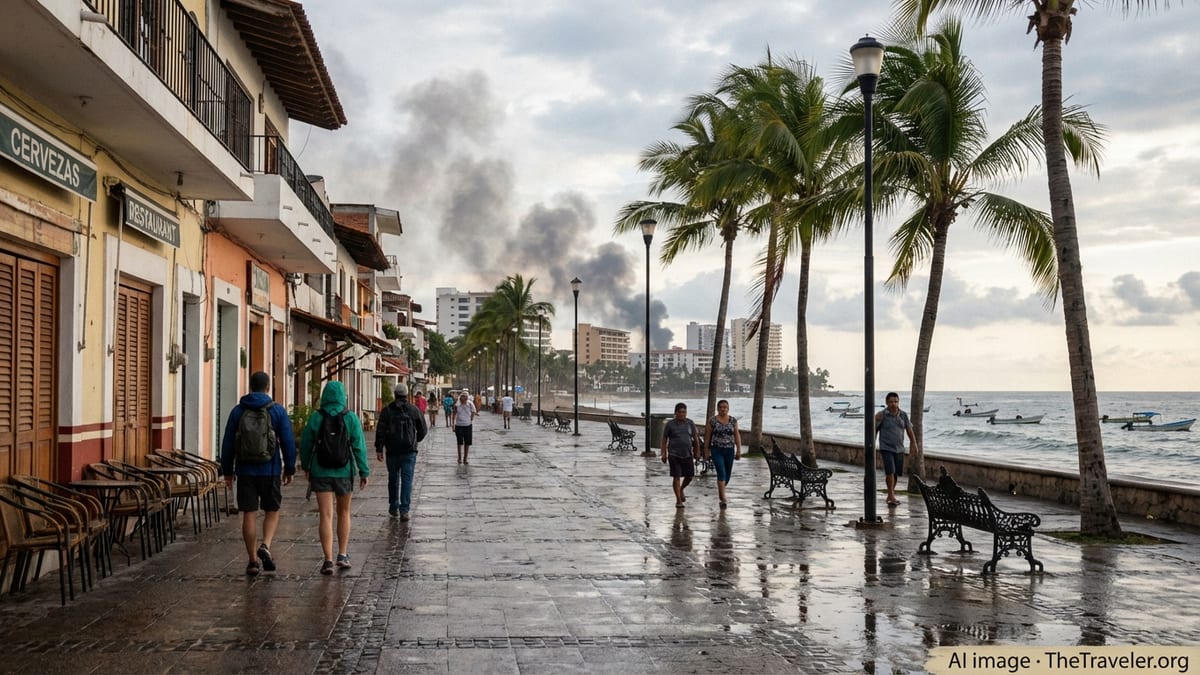
UK Foreign Office Tightens Advice as Violence Spreads
Britain’s Foreign, Commonwealth and Development Office (FCDO) updated its Mexico travel advice on Monday to flag what it describes as a fast moving and unpredictable security situation in Jalisco and several other states. The latest notice highlights reports of burning vehicles, armed clashes and road blockades following a major security operation against the Jalisco New Generation Cartel, one of the country’s most powerful criminal organizations.
In language markedly stronger than its routine cautions for Mexico, the FCDO stressed that travelers already in affected areas should stay indoors, follow instructions from local authorities and hotel management, and avoid non essential trips, particularly after dark. Officials warned that access routes to airports could be blocked, and that conditions may deteriorate with little or no warning.
“Wherever you are in Mexico, you should stay alert and follow local security advice,” the advisory notes, singling out Puerto Vallarta and Guadalajara as places where local authorities have asked residents and visitors to remain inside. Travelers are urged to monitor local media and stay in close contact with airlines and tour operators before attempting to move around the region.
Cartel Leader’s Death Triggers Retaliatory Chaos
The sudden escalation in risk follows a high profile military operation on 22 February in the mountain town of Tapalpa, Jalisco, in which Mexican security forces killed Nemesio “El Mencho” Oseguera Cervantes, the elusive boss of the Jalisco New Generation Cartel. Mexican officials, supported by United States intelligence, had long described him as one of the world’s most wanted drug traffickers and a key figure in the production and trafficking of synthetic drugs including fentanyl.
Within hours of the operation, which also left several cartel members dead and military personnel injured, retaliatory attacks were reported across Jalisco and multiple neighboring states. Hijacked buses and cargo trucks were set ablaze to create barricades on highways, while gunfire and explosions were reported near major roads and in some urban districts.
Images shared by residents and tourists from Puerto Vallarta and Guadalajara showed plumes of thick black smoke rising above residential areas, shopping centers and arterial routes. Local media carried accounts of vehicles torched at intersections, a petrol station on fire and isolated shootings that added to the sense of panic and uncertainty among both locals and foreign visitors.
Puerto Vallarta and Guadalajara Under Stay Indoors Advisories
Puerto Vallarta, a Pacific coast city known for its beaches, high rise resorts and popular malecón waterfront promenade, has been among the hardest hit in terms of disruption. Local authorities issued public messages over the weekend urging people to stay at home or within their hotels, and to avoid driving on highways leading out of the city unless absolutely necessary.
Tourists reported being told by resort staff not to leave the property as a precaution while security forces fanned out across access roads and nearby neighborhoods. Videos filmed from hotel balconies showed distant fires and columns of smoke, even as many hotel zones themselves remained relatively calm and heavily guarded by security personnel.
In Guadalajara, the state capital and one of Mexico’s largest cities, authorities activated a code red emergency plan after reports of blockades on key ring roads and avenues. Public transport was partially suspended and schools closed, with officials again urging residents to limit movement to essential activities and to steer clear of areas where security forces were operating.
International Flight Disruptions and Stranded Travelers
The violence has had an immediate impact on air travel to and from western Mexico. All international flights to Puerto Vallarta’s Licenciado Gustavo Díaz Ordaz International Airport were cancelled on Sunday, with airlines citing security concerns and the logistical challenges posed by roadblocks and burning vehicles on approach routes.
Airlines serving Guadalajara, including major North American carriers, announced widespread cancellations and flexible rebooking policies as the unrest unfolded. While the airport itself reported operating under heavy security with terminals open, many passengers found their flights scrubbed or heavily delayed, with some planes turned back mid flight or diverted to alternative airports.
British, American and Canadian travelers have described scenes of confusion in departure halls as airport announcements struggled to keep pace with fast changing airline decisions. Some passengers arriving on late night flights were advised to remain in the terminal until daylight due to concerns about traveling into the city while blockades were still in place.
Major carriers have issued travel waivers allowing customers booked to or through Puerto Vallarta and Guadalajara over the coming days to change dates without penalties, though seat availability on alternative routes through Mexico City and other hubs remains tight during the busy winter season.
Global Governments Align on “Shelter in Place” Guidance
The UK’s heightened warning comes in parallel with robust messages from the United States and Canada, underscoring a rare moment of unified tone among Western governments on security in a specific Mexican state. The US Embassy in Mexico City issued a security alert on Sunday instructing its citizens in Jalisco, including Puerto Vallarta, Chapala and Guadalajara, to shelter in place until further notice due to ongoing security operations and criminal activity.
American officials extended that advice to parts of several other states, including Tamaulipas, Michoacán, Guerrero and Nuevo León, reflecting concerns that reprisals by cartel cells could ripple far beyond Jalisco. Canada’s foreign ministry has warned of a serious and rapidly evolving situation, explicitly advising travelers in Puerto Vallarta and Guadalajara to follow local instructions, keep a low profile and comply with any orders to stay indoors.
For British holidaymakers, the FCDO’s latest language signals that the risk level in Jalisco has moved beyond generalised concern to a situation where movement may be severely restricted from one day to the next. Tour operators serving the region are reviewing itineraries and in some cases contacting clients to discuss postponements, alternative destinations or early departures if conditions and logistics allow.
Impact on Tourism Hotspots and Upcoming Events
The timing of the unrest is particularly sensitive for Mexico’s tourism sector. Puerto Vallarta and the wider Jalisco coast are in the midst of the high season, attracting large numbers of visitors from the UK, Europe, the United States and Canada seeking winter sun breaks. Hotel occupancy has been strong, and tourism operators had been banking on a robust season to consolidate the industry’s recovery from the pandemic years.
The state capital, Guadalajara, is also in the spotlight as it prepares to host matches for the FIFA World Cup later this year, an event expected to draw tens of thousands of international fans. Images of burning vehicles on city streets and closed schools have raised questions about how quickly authorities can reassert control and reassure visitors that venues and critical infrastructure will be secure.
Elsewhere in Mexico, destinations such as Cancún and Tulum in Quintana Roo have also featured in advisories, although airports there are operating normally and there are no broad orders to stay indoors. Nonetheless, the spread of copycat roadblocks and the possibility of further retaliatory attacks have led some travelers to reconsider multi destination itineraries that involve moving overland between states.
What UK Travelers in Jalisco Are Being Told to Do
The FCDO is advising British nationals already in Jalisco to remain in their accommodations if local authorities or hotel management have recommended that course, and to avoid crossing any roadblocks or engaging with individuals who attempt to stop vehicles. Travelers are encouraged to keep passports, travel documents and essential medications close at hand in case they need to move quickly at short notice.
Officials stress the importance of staying in regular contact with family members and tour providers, providing updates on location and wellbeing. Those who are due to fly in or out of Puerto Vallarta or Guadalajara in the coming days are urged to check directly with airlines before heading to the airport, and to factor in the possibility that routes to terminals may be partially blocked or heavily congested due to security checkpoints.
Travel insurance providers in the UK typically require policyholders to follow official government advice, and some have indicated that failure to comply with stay indoors or shelter in place guidance could affect coverage. Travelers are therefore being told to retain documentation, screenshots of advisories and receipts in case they need to make claims related to trip interruption or additional accommodation costs.
Looking Ahead: How Long Could the Disruption Last
Mexican authorities say they are working to dismantle the remaining blockades and restore order on highways and in urban centers, but have not given a clear timeline for when stay indoors recommendations might be lifted in Jalisco. Analysts of the country’s security situation note that previous operations against senior cartel figures have sometimes triggered days or weeks of rolling unrest as factions jostle for control and seek to demonstrate strength.
For now, diplomats and security officials are urging a cautious approach. Even in districts where life appears to be returning to normal and shops are reopening, the risk of sudden flare ups remains, particularly near strategic infrastructure such as highways, fuel depots and airports. Authorities warn that social media images can often lag behind real time conditions and may not reflect the precise location or current level of risk.
For prospective visitors, the FCDO is not advising against all travel to Mexico, but it is urging those with imminent plans to Jalisco to check the latest government advice and consider whether their trips are essential at this time. For those already on the ground, the message from London, Washington and Ottawa is aligned: stay indoors where instructed, keep movements to a minimum and allow time for security operations to take effect before attempting to move around western Mexico’s troubled heartland.