

More news on this day
Mexico’s turquoise coasts remain among the world’s top beach escapes, but a wave of cartel violence, sudden travel alerts and online misinformation is turning some dream getaways into stressful, fast-changing security dilemmas for international visitors in 2026.
Get the latest news straight to your inbox!
Cartel Crackdowns Trigger Sudden Travel Chaos
The latest jolt came on February 22, 2026, when a major military operation in the western state of Jalisco killed Nemesio “El Mencho” Oseguera Cervantes, long identified in public reporting as leader of the Jalisco New Generation Cartel. Subsequent clashes, arson attacks and road blockages rippled out from Jalisco into multiple states, including tourist magnets such as Nayarit, Baja California, Guerrero and Quintana Roo, according to coverage from international and Mexican outlets. Airports saw disrupted operations, mass events were suspended and images of burning vehicles circulated widely.
In response, the United States Mission to Mexico issued an unusual, broad security alert on February 23 advising American citizens in 18 states to shelter in place while authorities worked to regain control of key highways and urban zones. Reporting by Spanish and U.S. media described canceled flights in Puerto Vallarta and restrictions on movements in parts of western Mexico, leaving some tourists temporarily stranded in hotels or unable to reach airports.
Publicly available information shows that much of the violence and disruption has remained concentrated in western states like Jalisco and Sinaloa, rather than in the Caribbean resorts most associated with spring break. Yet the scope of the alert, combined with vivid social media posts, created the impression that the entire country’s tourism infrastructure was under siege. Analysts quoted in major U.S. travel coverage have emphasized that the risk profile can now change by the day, making advance planning and real-time monitoring more important than in previous years.
Beach Hotspots: Safer Bubbles or Illusion of Security?
Despite the recent turmoil, official advisories still distinguish sharply between Mexico’s regions. As of late February 2026, the overarching U.S. travel advisory classifies Mexico at Level 2, meaning travelers are urged to exercise increased caution. However, several states, largely in western and northern Mexico, remain at Level 4, or “Do Not Travel,” reflecting persistent concerns about violent crime and kidnapping. Popular resort areas such as Cancún in Quintana Roo and Los Cabos in Baja California Sur are generally rated at lower risk than many inland or border regions.
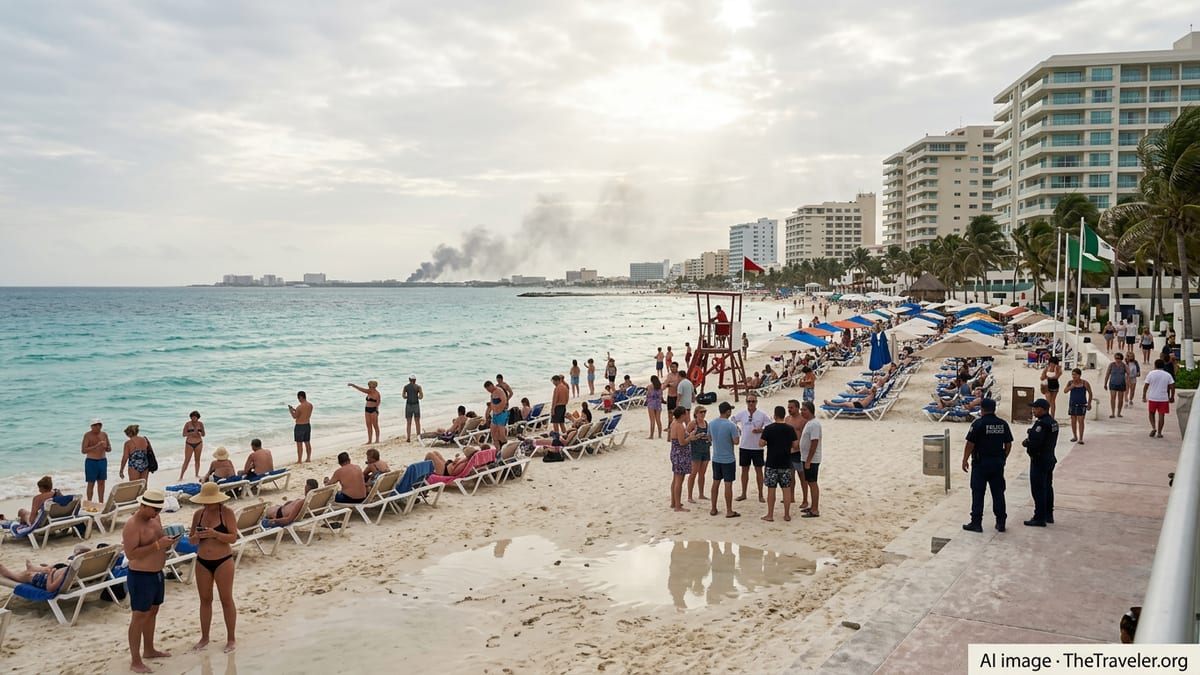
Reports from travel risk consultancies and tourism industry publications point out that Mexico’s government deploys heavy security around major beach corridors, recognizing their central role in the national economy. In destinations like Cancún, Playa del Carmen and Cabo San Lucas, visitors typically encounter visible police and National Guard patrols around hotel zones, airports and main nightlife districts. Recent reporting notes that even during the February cartel crisis, tourists in these enclaves often continued their vacations with relatively limited direct disruption.
Yet that security bubble can be fragile. Local data compiled by investment and security researchers show that municipalities such as Tulum have experienced some of the country’s highest homicide rates in recent years, even as marketing presents the area as an idyllic, bohemian retreat. Other traveler-focused analyses now rate Tulum as notably less stable than Cancún or Cabo, emphasizing that the experience outside tightly controlled beachfront and hotel areas can be more volatile than headline tourism statistics suggest.
US Alerts, Social Media Panic and the Misinformation Problem
The February 2026 crisis also highlighted how quickly rumors can overtake verified information. In the hours after El Mencho’s death became public, social networks filled with unverified claims of airports being seized, tourists taken hostage and beach towns under active attack. Subsequent reporting by international wire services and national newspapers documented that several of the most alarming viral posts were inaccurate or exaggerated, even as they were being shared widely by would-be visitors and travel influencers.
At the same time, real events did unfold, including vehicles and businesses set on fire in parts of Jalisco and neighboring states, and temporary shutdowns of mass gatherings and some flights. For travelers watching the situation unfold from thousands of miles away, distinguishing between localized violence and a nationwide breakdown became difficult. Travel specialists interviewed in U.S. broadcast coverage have warned that relying solely on social media to gauge risk can lead to either undue panic or misplaced complacency.
Public guidance from risk experts now stresses cross-checking multiple sources, including government advisories from travelers’ home countries and reputable international news outlets, rather than assuming any single account on the ground is definitive. The February shelter-in-place alert, which was lifted in stages as conditions stabilized, underscored how formal advisories can lag behind or move more cautiously than the fast, and sometimes misleading, narratives emerging on social platforms.
The Hidden Risks Behind a Cheap Flight Deal
Even when violence does not directly touch resort corridors, the broader security environment can create unexpected complications for visitors. Recent years have seen high-profile cases of foreign tourists killed, injured or going missing in Mexico’s tourist regions, drawing renewed scrutiny to local policing and investigative capacity. Public reporting on incidents from Baja California Sur to Quintana Roo has raised questions about the consistency of official responses, as well as the time it can take for families and consular officials to obtain clear information.
Infrastructure and transportation issues also contribute to what some analysts describe as a widening gap between glossy marketing and on-the-ground realities. Recent mass-casualty road and rail accidents in southern Mexico, covered extensively in international media, have involved domestic travelers as well as foreign visitors. While such events are statistically rare relative to the millions of safe trips completed each year, they highlight systemic challenges ranging from road safety and vehicle maintenance to emergency medical access in rural areas.
Travel industry data show that demand for Mexico’s beaches remains robust, particularly among North American visitors drawn by proximity and price. But the same factors that make last-minute trips attractive can leave travelers more exposed if the security situation changes suddenly. Analysts recommend that travelers factor in flexible booking options, consider travel insurance that explicitly covers civil unrest or trip disruption, and understand that a flash sale on flights may be occurring against a backdrop of fluctuating risk assessments for the destination.
What Travelers Can Do to Reduce Their Exposure
In this rapidly shifting environment, experts in travel risk management emphasize preparation rather than alarm. Guidance compiled by security consultancies and travel medicine organizations suggests that visitors considering Mexico’s beach destinations should study the specific advisory level for the state they plan to visit, not just the national rating. Some states popular with tourists, such as Quintana Roo and Baja California Sur, currently sit at the same advisory level as parts of Western Europe, while others remain flagged for higher levels of crime and kidnapping.
Once on the ground, publicly available safety tips from both governments and private risk firms converge on a few themes. Travelers are advised to remain within well-established tourist areas, avoid purchasing illegal drugs, limit late-night movements away from main hotel and nightlife corridors, and use registered taxis or ride services arranged through hotels. Analysts also caution against displaying expensive jewelry or electronics and recommend maintaining a low profile in public spaces where petty crime and opportunistic targeting can occur.
Finally, specialists highlight the importance of contingency planning, including registering trips with consular services where available, keeping copies of key documents stored securely online, and maintaining communication plans with family or friends at home. With Mexico’s tourism sector operating alongside complex criminal dynamics and episodic surges of violence, the current landscape suggests that a dream beach vacation is still possible, but only if travelers recognize the evolving risks behind the postcard images and make informed decisions before and during their stay.