

Choosing between Mexico and Costa Rica for a beach vacation is a good dilemma to have. Both countries deliver warm seas, palm-fringed shores and vibrant local culture, yet they offer very different experiences in terms of cost, crowd levels, safety, development and the kind of nature on your doorstep. Understanding those differences is the key to deciding which one matches your travel style, budget and expectations.
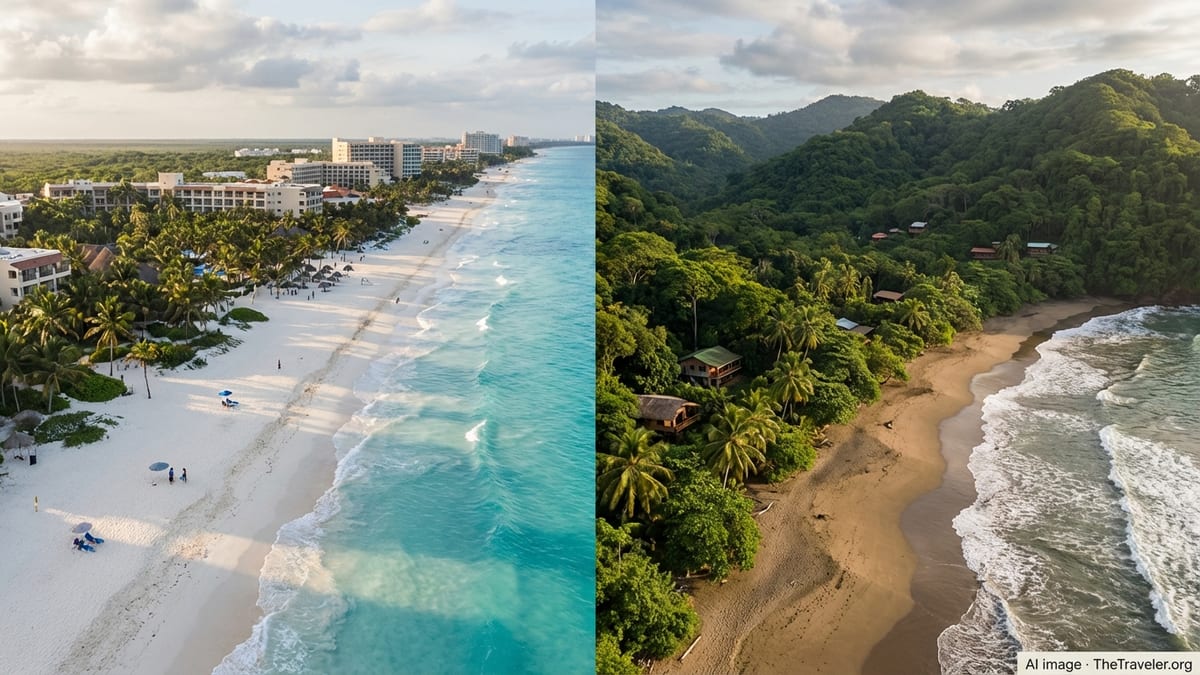
Overall Vibe: Big Beach Destinations vs Intimate Eco Escape
Mexico’s coasts feel wide-ranging and high energy. From the mega-resorts of Cancun and Los Cabos to the walkable beach town charms of Puerto Vallarta and Mazunte, you can choose anything from all-inclusive ease to boho boutique. Popular hubs like Cancun consistently top international arrival rankings and keep adding hotels, restaurants and entertainment, so they hum with life almost year-round.
Costa Rica’s beach scene is smaller in scale and more tightly tied to the country’s eco-tourism identity. Many coastal communities, especially in Guanacaste and on the Nicoya Peninsula, are low-rise and surrounded by forest or farms, with a strong emphasis on nature, wellness and surfing. Towns such as Playas del Coco and Nosara blend international amenities with a laid-back, barefoot feeling that can make even busy high season feel more relaxed than Mexico’s headline resort zones.
For travelers who want big-night-out options, showpiece resorts and plenty of built-up infrastructure, Mexico usually wins. If you picture early mornings watching howler monkeys in the trees, surfing small beach towns and spending more time on trails than in shopping malls, Costa Rica tends to feel closer to the dream.
Both countries offer quieter corners and lively hubs, but the baseline is different. Mexico leans toward variety and urbanized beachfront, Costa Rica toward compact, nature-first communities with dark skies and early nights.
Beaches and Scenery: Caribbean Blues vs Wild Pacific
On Mexico’s Caribbean coast in Quintana Roo, beaches around Cancun, Tulum and Cozumel are known for bright turquoise water and long sweeps of pale sand. Some stretches, like Playa Delfines in Cancun or Playa Paraíso in Tulum, regularly appear on lists of the country’s most photogenic beaches, thanks to their color, width and generally calm swimming conditions.
Mexico’s Pacific and Baja coasts deliver a different mood: dramatic headlands in Los Cabos, golden-sand bays around Puerto Vallarta, and surf towns scattered along Oaxaca’s coastline. Places such as Puerto Escondido and Mazunte trade perfectly groomed sand for powerful waves, cliff-backed coves and sunsets that drop straight into the Pacific. You can find both tranquil, swimmable bays and rougher, advanced-surf breaks within a short drive of each other.
Costa Rica largely fronts the Pacific, with scenery that often feels wilder and more compact. In Guanacaste, beaches like Playa Carrillo and Playa Negra sit against a backdrop of dry tropical forest and rolling hills rather than big skylines. Many coves are backed by palm groves and only lightly developed, with a single road, a few small hotels and a scattering of restaurants. Even well-known areas, such as the Papagayo Peninsula and Manuel Antonio, keep large areas of land in a natural state, with forest reaching right down to the sand.
The Caribbean side of Costa Rica, including Puerto Viejo and Cahuita, is more humid and rainforest-rich, with darker sands, coral reefs just offshore and a distinct Afro-Caribbean influence. Seas can be glassy calm or stormy depending on season, and stretches of beach often feel far less crowded than popular Mexican hotspots.
Nature, Wildlife and Activities in the Water
Mexico’s coasts excel at classic beach-vacation activities: snorkeling with reef fish and turtles, boat trips, jet skiing, parasailing and, in some locations, whale-watching. The Riviera Maya region blends marine life with iconic archeological sites within easy reach, including famous cliff-top ruins above the sea. Offshore, islands such as Cozumel are known for colorful reefs and drift dives, while areas along the Yucatán coast feature cenotes where you can swim in freshwater sinkholes with filtered light beaming down.
Costa Rica puts wildlife at the center of the experience. In many beach regions, it is common to see monkeys, iguanas and tropical birds along the road to the shore, and it is possible to combine ocean time with visits to national parks in the same day. On the Central Pacific, Manuel Antonio National Park backs onto white-sand beaches where visitors might spot sloths, capuchin monkeys and raccoons within a short walk of the tide line. Guanacaste’s quieter beaches, such as Playa Carrillo, offer good conditions for snorkeling and swimming, with recognized environmental quality awards and a focus on clean water and low-impact facilities.
Both countries offer strong surfing, though the character varies. Mexico’s Oaxaca coast and parts of Baja attract more advanced surfers with powerful breaks and larger swells. Costa Rica, especially places like Tamarindo, Santa Teresa and Nosara, cater to a full range of abilities, with many surf schools and consistent waves that suit beginners and intermediates as well as experts.
If your ideal trip centers on nature walks, wildlife, canopy tours and national parks alongside beach time, Costa Rica is hard to beat. If you are more interested in structured excursions, nightlife after your water activities and the option to do more urban sightseeing on non-beach days, Mexico offers greater variety.
Cost, Value and Types of Accommodation
For many visitors, Mexico provides more options at more price points, especially for traditional beach holidays. Large resort areas have deep hotel inventories, from budget-friendly city hotels a few blocks off the sand to mid-range beachfront properties and high-end all-inclusives. Competition can keep package prices relatively low outside peak holiday dates, particularly if you are flexible with travel times and do not require the very newest or most exclusive properties.
Mexico is also strong on dining value. Casual local taco stands, seafood shacks and neighborhood markets generally offer affordable meals, while resort strips layer on everything from fast-casual chains to fine dining. In big beach destinations, it is easy to adjust your daily budget just by deciding whether to eat in hotel restaurants or seek out local spots a few streets inland.
Costa Rica is typically more expensive day to day, especially in coastal zones that depend heavily on tourism and on imported goods. Beach towns often have fewer hotel rooms and smaller properties, and the inventory skews toward boutique hotels, eco-lodges and vacation rentals rather than huge all-inclusive complexes. New luxury openings on the Papagayo Peninsula and in select resort enclaves have raised the ceiling for upscale stays, but even rustic cabins can feel pricier than comparable rooms in Mexico.
Food costs in Costa Rica can surprise visitors who expect Central America to be uniformly low-cost. While small soda restaurants serving traditional dishes remain affordable, many beach communities cater to international tastes with cafes, fusion restaurants and imported products that raise prices. In return, you often get locally focused menus, farm-to-table ingredients and a sense that your spending supports small, locally owned businesses.
Safety, Beach Conditions and Practical Considerations
Both Mexico and Costa Rica welcome millions of international visitors each year, and most trips are trouble-free. That said, safety profiles differ by region and change over time, so travelers should review current government advisories and local news before booking. In Mexico, some states face higher rates of crime unrelated to tourism, while major resort areas often maintain visible security and tourism-police presence. Visitors are still encouraged to take standard precautions with valuables, transportation and nightlife, and to avoid isolated areas after dark.
Costa Rica is widely perceived as stable and politically calm, but authorities have highlighted an uptick in crimes targeting tourists, including property theft and incidents at vacation rentals, particularly in and around popular coastal zones. U.S. government advisories currently recommend exercising increased caution, securing accommodations carefully and being conservative with carrying cash and using ATMs. On both coasts, it is wise to research neighborhoods, look for accommodation with strong security measures and read recent guest reviews to understand on-the-ground conditions.
Ocean safety is another important factor. In Mexico’s major resort zones, many beaches are patrolled and use flag systems to signal current conditions. Even so, strong surf and sudden drop-offs can present risks, especially in Baja and on parts of the Pacific coast. In Costa Rica, rip currents are a serious hazard, and many beaches do not have lifeguards or clear signage. A limited number of popular beaches have stations, but visitors should not assume supervision. Learning how to recognize rip currents, swimming only where conditions look calm and staying within your abilities are critical in both countries.
From a health and logistics perspective, both destinations offer good access to private clinics in tourist regions and a well-established tourism industry. Mexico generally provides a larger network of direct flights from North American and European cities, whereas Costa Rica concentrates most long-haul routes through San José and Liberia, with onward travel by road to coastal areas.
Crowds, Seasonality and Weather
Mexico’s sheer size means that at almost any time of year you can find both busy and relatively quiet beaches, but the most famous destinations can feel crowded during northern hemisphere winter, spring break and key local holidays. Cancun, Puerto Vallarta and Los Cabos, in particular, can see high hotel occupancy, full restaurants and lively nightlife during these periods. Shoulder seasons often bring better rates and more breathing room, though tropical storm season on the Caribbean side can affect plans.
Costa Rica’s Pacific coast has a pronounced dry season, typically from December to April, when skies are sunniest and beaches are at their busiest. This window coincides with peak international tourism and higher prices. The rainy season brings greener landscapes and fewer visitors, but also heavier downpours, muddy roads and the possibility of stormy seas on some days. The Caribbean side follows its own pattern, with relatively drier months that do not always align with the Pacific, so travelers willing to shift coasts with the seasons can often find pockets of sunshine.
If you prioritize long, guaranteed strings of clear beach days and a classic winter-sun escape, Mexico’s principal resort regions usually offer more reliable weather and more options if storms affect a single stretch of coast. Costa Rica rewards those who are comfortable planning around its microclimates and who see some afternoon rain as a fair trade for lush landscapes and fewer crowds.
For solitude, smaller towns in both countries can deliver, but you will work a bit harder to reach them. In Mexico, that might mean heading to lesser-known stretches of the Pacific or smaller coastal villages in states beyond the big three. In Costa Rica, it can involve rougher roads, river crossings in rainy season or limited services, all part of the adventure for those who prize quiet over convenience.
Cultural Experiences, Food and Atmosphere off the Sand
Mexico’s coastal regions layer world-class beaches over centuries of history and deeply rooted urban culture. Many beachgoers split their time between the shore and historic centers inland or nearby: colonial towns, archeological zones and traditional markets. In cities such as Puerto Vallarta, you can step from a busy urban malecón lined with galleries and street performers straight onto the sand, then spend evenings exploring taco stands, mezcalerías and live music venues that feel distinctly local.
Cuisine is a major part of Mexico’s beach appeal. Coastal seafood, regional specialties and street food traditions create a wide spectrum of flavors, from simple fish tacos and ceviche to complex mole dishes imported from interior regions. Even in heavily touristed strips, it is usually possible to find local family-run spots serving regional staples a short walk from the waterfront.
Costa Rica’s coastal culture is more subdued but still rich, with a national identity built around the idea of “pura vida,” a relaxed, optimistic approach to daily life. In beach towns, that often manifests as early mornings, surf sessions, sunset gatherings on the sand and relatively quiet nights outside a few bar hubs. Local food emphasizes rice and beans, simple grilled fish, plantains and fresh fruit, with an increasing number of cafes and restaurants focusing on organic produce and international vegetarian or vegan menus.
Visitors interested in Afro-Caribbean culture gravitate to Costa Rica’s Caribbean coast, where reggae, calypso, distinct local dishes and colorful wooden architecture create a very different atmosphere from the Pacific. Overall, if you value a broad range of nightlife and dining scenes, Mexico’s coastlines typically offer more. If you prefer early bedtimes, sunrise yoga and long conversations on a dark beach under the stars, Costa Rica’s rhythm will likely feel more natural.
The Takeaway
There is no single winner in the Mexico versus Costa Rica debate for a beach vacation, only a better fit for your priorities. Mexico generally suits travelers seeking variety, value and convenience: big resort zones with all-inclusive options, lively nightlife, plentiful dining and day trips that mix culture with coastal relaxation. Its Caribbean and Pacific shores offer everything from high-energy party strips to laid-back fishing villages, often at attractive price points compared with other long-haul beach destinations.
Costa Rica shines for visitors who want beaches wrapped in nature. The country’s compact size and conservation ethic make it easy to pair days on the sand with visits to cloud forests, volcanoes and wildlife-rich national parks. Beach towns feel smaller and more intimate, accommodations lean toward boutique and eco-focused, and daily life often runs on ocean tides and sunrise surf rather than late-night clubs.
When deciding, ask yourself a few core questions: Are you more excited by abundant resort choices and nightlife or by wildlife and trails? Do you need the sharp turquoise of the Caribbean or are you happy with moody Pacific coves? Is a lower per-day cost more important than staying in a place where nearly every vista includes jungle hills? Honest answers to those questions will point you clearly in one direction or the other.
For many travelers, the ideal solution is not choosing at all but visiting both at different times in their lives. A first big resort getaway or multi-generational family trip might lean toward Mexico, while a later, more nature-centric escape or honeymoon could tilt toward Costa Rica. Either way, careful planning around safety, seasons and local conditions will help ensure your chosen coastline delivers the beach vacation you have in mind.
FAQ
Q1. Which is cheaper for a beach vacation, Mexico or Costa Rica?
Mexico is usually cheaper overall, especially for flights and resort stays. Costa Rica often has higher daily costs, particularly for accommodation and dining in beach towns.
Q2. Where are the beaches better for swimming, Mexico or Costa Rica?
Many Mexican Caribbean beaches have calm, clear water and gentle entry, ideal for swimming. In Costa Rica, conditions vary more, and strong currents are common on some Pacific beaches.
Q3. Which destination is better for wildlife and nature near the beach?
Costa Rica offers easier access to national parks, rainforest and wildlife viewing directly from many coastal areas, so it has the edge for nature-focused travelers.
Q4. Is Mexico or Costa Rica safer for tourists on the coast?
Both see large numbers of visitors with mostly trouble-free trips. Safety varies by region, so it is important to check current advisories and choose well-reviewed areas in either country.
Q5. Which place has livelier nightlife on the beach?
Mexico generally has livelier nightlife, especially in major resort areas such as Cancun, Los Cabos and Puerto Vallarta, where bars, clubs and beach venues stay busy late into the night.
Q6. Where will my money go further on food and activities?
In most cases, Mexico offers better value for casual dining and tours thanks to a larger tourism infrastructure and more competition among operators and restaurants.
Q7. Which is better for a family beach vacation with kids?
Mexico’s large family-friendly resorts, all-inclusive packages and calmer Caribbean beaches make it a strong choice, though Costa Rica can be excellent for older kids who enjoy nature and adventure.
Q8. Where should I go for surfing, Mexico or Costa Rica?
Both are good for surfing. Mexico has famous advanced breaks, while Costa Rica is known for consistent waves and many surf schools that are ideal for beginners and intermediates.
Q9. Which destination is better for a honeymoon on the beach?
Costa Rica appeals to couples who want privacy, eco-luxury and wildlife, while Mexico works well for honeymoons focused on pampering, dining and nightlife in full-service resorts.
Q10. If I want a quiet, uncrowded beach, which country should I choose?
Both countries have quieter areas away from major hubs, but Costa Rica’s smaller, less developed beach towns often feel more secluded and close to nature.