

More news on this day
A new hospitality platform, Mezza, is rolling out across the United Arab Emirates with a model that combines upfront capital, customer acquisition and restaurant-friendly payment terms, positioning itself as a potential game changer for operators under pressure to grow without surrendering margins to traditional aggregators.
Get the latest news straight to your inbox!
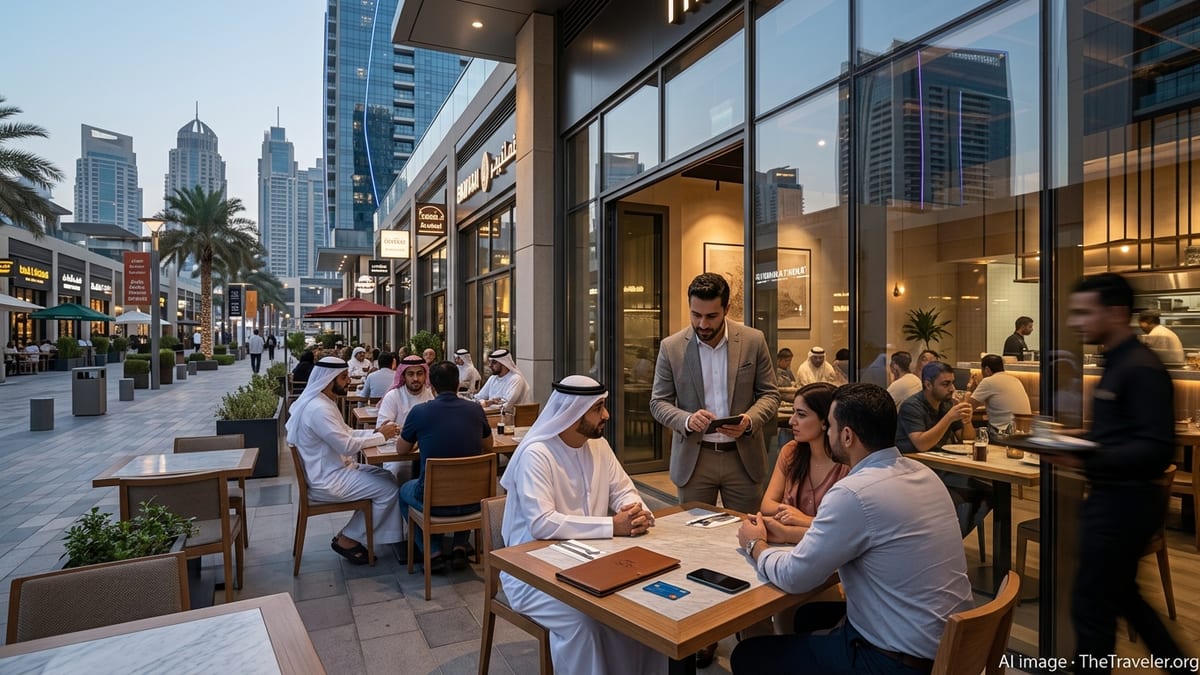
A New Fintech-Driven Partner for UAE Restaurants
Publicly available information on Mezza indicates that the platform is designed to sit at the intersection of finance, marketing and reservations, giving restaurants access to capital in exchange for a share of future customer spend rather than conventional debt. Instead of collecting steep commission on individual orders, the company structures its product around pre-purchased dining value and recurring visits, aiming to reduce pressure on restaurant cash flow.
The model arrives at a time when many UAE operators are looking for alternatives to high-cost delivery intermediaries and discount schemes. Industry commentary has frequently highlighted the challenge of balancing rising operating expenses with the commissions charged by legacy platforms, particularly for independent venues and mid-market brands. Mezza’s approach seeks to reframe that relationship by aligning its returns with the long-term performance of partner restaurants.
According to available descriptions, the platform onboards venues, assesses their revenue potential and then extends upfront capital that can be used for fit-outs, marketing or working capital. Repayments are linked to guest transactions driven through Mezza, creating an incentive for the company to keep sending diners back rather than simply capturing one-off orders. This performance-linked structure is being pitched as a flexible alternative to bank lending for smaller and growth-stage concepts.
By positioning itself as a growth partner rather than just another intermediary, Mezza is entering a competitive but fast-evolving segment of the UAE’s hospitality technology landscape, which already includes booking engines, inventory tools and guest-experience platforms targeting the same operators.
Driving Footfall in a Crowded Dining Market
The UAE’s foodservice market has expanded rapidly on the back of urbanisation, tourism and rising disposable incomes, resulting in a dense and diverse restaurant scene. Recent market reviews show that diners are eating out more frequently and increasingly seeking distinctive, experiential concepts, especially in Dubai and Abu Dhabi. In this environment, steady footfall and repeat visits can be the difference between sustained profitability and constant churn.
Mezza’s consumer-facing experience is built around curated discovery and value, encouraging diners to pre-commit to specific venues or neighbourhoods and then redeem that value over multiple visits. By locking in future spend and capturing intent earlier in the decision journey, the platform aims to deliver restaurants guests who are more engaged and likely to return, rather than price-driven discount seekers.
Reports on broader technology trends in the region’s hospitality sector indicate that restaurants increasingly favour partners that help fill seats at targeted times of day and days of the week instead of driving only peak-period demand. Mezza’s model appears to be well suited to this requirement, with the ability to structure offers that nudge diners into off-peak reservations, thereby smoothing revenue and improving staff utilisation.
For operators based in mall locations or tourism districts, where rents are high and competition for walk-in traffic is intense, the promise of predictable, pre-committed customers is particularly compelling. The platform’s focus on in-venue dining also aligns with the growing emphasis on experiential formats that differentiate themselves from delivery-only propositions.
Capital Access Without Traditional Bank Friction
Access to flexible finance remains a recurring theme in discussions about the UAE restaurant industry. While larger groups can tap bank lending or private equity, smaller operators often face stringent collateral requirements, lengthy approval processes and limited appetite for concept risk. This gap has given rise to alternative funding models that tie returns to future revenue streams.
Mezza’s upfront capital product is structured to serve precisely this segment. Information shared about the platform suggests that restaurants receive funds quickly once due diligence is complete, with repayment automatically linked to guest spend routed through Mezza. Because the arrangement is based on revenue participation, it is inherently more elastic than fixed monthly repayments, which can strain cash flow during seasonal dips or unexpected disruptions.
The approach reflects a broader global trend in revenue-based financing and embedded fintech entering the hospitality sector. In the UAE context, this is unfolding in parallel with government efforts to promote entrepreneurship and digitalisation, creating supportive conditions for non-bank financial solutions. For restaurateurs, the key advantage lies in being able to invest in refurbishments, concept refreshes or marketing pushes without immediately increasing fixed financial obligations.
Analysts following the regional market note that such structures can also encourage better capital allocation. Because repayment is tied directly to how effectively the funds translate into customer spend, operators are more likely to use the capital for initiatives that clearly enhance guest experience or operational efficiency, rather than plugging structural losses.
Data, Loyalty and a Shift Away from Costly Aggregators
Another differentiator for Mezza is its emphasis on data ownership and loyalty. Traditional delivery and booking platforms in the UAE have often been criticised for limiting access to granular customer information, making it harder for restaurants to build direct relationships with guests. Available descriptions of Mezza’s technology indicate that partner venues gain deeper insight into visit frequency, spend patterns and offer responsiveness.
This data can be used to design targeted campaigns, personalise experiences and reward high-value guests, reinforcing the virtuous cycle of repeat business that underpins Mezza’s funding model. In a market where more than half of surveyed diners report being willing to pay extra for premium experiences, better segmentation and tailored engagement tools can translate directly into higher average checks.
At the same time, the platform’s structure is intended to reduce the dependence of restaurants on high-commission aggregators. Rather than paying fees on every order, operators share a defined portion of the incremental value generated through Mezza, which may result in lower effective customer acquisition costs over time. This repositioning of third-party partners from cost centres to growth engines is a notable shift in an industry where fees and discounts have long been a point of contention.
The rise of tools like Mezza also intersects with wider digital adoption trends in the UAE, including the use of social media for discovery, dynamic pricing, and AI-assisted forecasting. As restaurant groups become more comfortable with technology across both front and back of house, integrated platforms that blend finance, marketing and analytics stand to gain traction.
Implications for the Wider UAE Hospitality Ecosystem
Mezza’s entry into the market comes as the UAE doubles down on its ambitions to be a global hub for tourism, events and culinary innovation. Recent hospitality forums in Dubai and Abu Dhabi have devoted significant attention to technology, investment and new funding pathways for restaurant concepts, underlining the sector’s appetite for tools that enhance resilience and scalability.
Sector-wide reports show that investors are increasingly focused on concepts that can demonstrate robust unit economics, disciplined expansion and clear digital strategies. Platforms that improve cash flow visibility and guest retention directly support these priorities, making partner restaurants potentially more attractive to landlords, franchisees and financial backers.
For the broader ecosystem, a successful rollout of Mezza’s model could encourage further experimentation with revenue-linked finance and customer-acquisition partnerships across hotels, bars and entertainment venues. It may also prompt traditional lenders and large aggregators to revisit their own terms and products for smaller operators, particularly if restaurants begin to shift volume toward platforms that are perceived as more aligned with their long-term interests.
While the ultimate impact will depend on the scale Mezza achieves and how effectively it balances risk across its restaurant portfolio, its arrival underscores a clear direction of travel for the UAE’s hospitality sector. As margins come under pressure and competition intensifies, operators are seeking partners that offer more than transactions, combining capital, technology and loyal diners in a single, integrated proposition.