

More news on this day
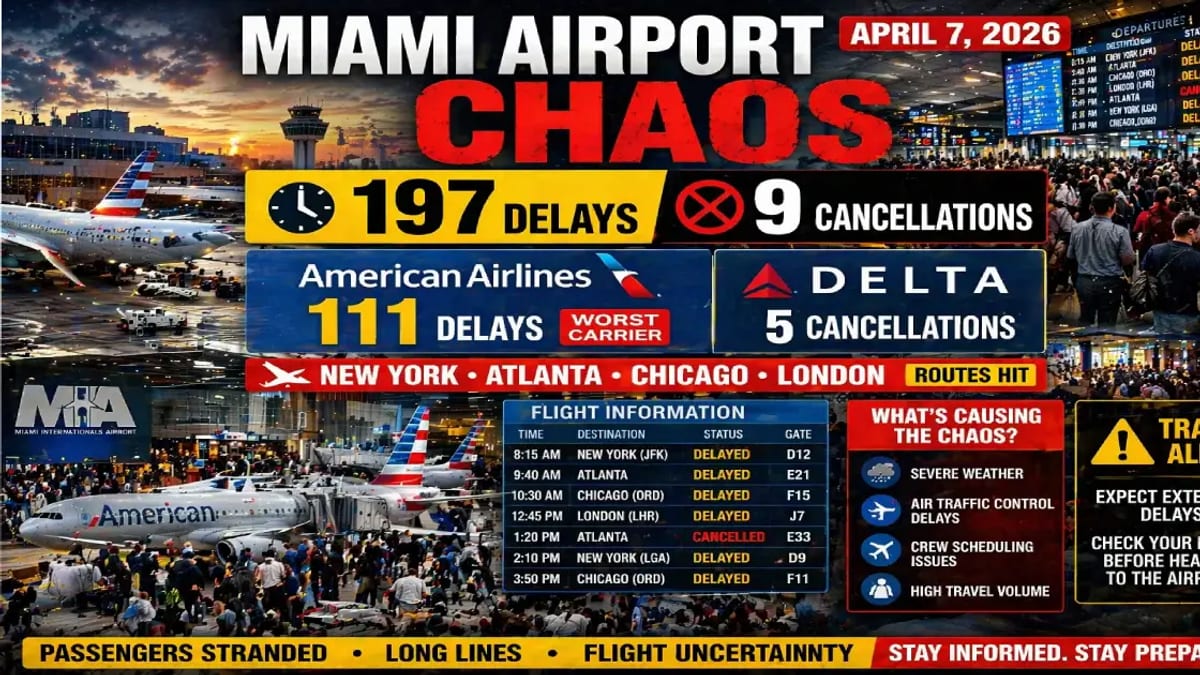
Post‑Easter travelers passing through Miami International Airport on April 7 faced another punishing day of air travel, with data indicating 206 combined cancellations and delays as spring storms and network congestion continued to ripple through one of the nation’s busiest hubs.
Get the latest news straight to your inbox!
Another Turbulent Day After the Holiday Rush
The Monday after Easter has long been a pressure point for U.S. aviation, and this year proved no exception in Miami. Published tracking data for April 7 shows that Miami International Airport (MIA) logged 206 total flight disruptions, including dozens of outright cancellations and well over a hundred delayed departures and arrivals as airlines worked through the tail end of the holiday surge.
The disruption in Miami unfolded against a national backdrop of severe congestion over the Easter weekend, when thousands of flights were delayed or canceled at major hubs such as Atlanta, Dallas Fort Worth, Chicago O’Hare and Houston. Industry reports citing FlightAware data describe more than 5,000 delays on peak Easter travel days and a cumulative tally in the tens of thousands across the long weekend, leaving aircraft and crews out of position as operations rolled into Monday.
For Miami, which serves as a critical gateway for Latin America and the Caribbean as well as domestic traffic, the timing was particularly challenging. Airlines were still moving heavy volumes of leisure travelers home from South Florida beaches and Caribbean resorts while simultaneously trying to reset schedules after several days of weather and routing troubles across the national network.
Although federal airport status boards showed MIA operating without ground stops or flow restrictions for parts of the day, the lingering impact of earlier disruptions meant that many passengers still encountered late inbound aircraft, rolling delays at the gate and short-notice schedule changes.
Weather, Network Knock‑Ons and Capacity Constraints
Reports from aviation data providers and insurance analysts point to a combination of factors behind the latest Miami disruption. Severe spring weather cells over the Easter period prompted reroutes and ground delays at multiple hubs, which in turn rippled outward through airline networks. Once aircraft and crews are displaced from their planned rotations, subsequent flights can be delayed or canceled even if local weather at the destination airport remains relatively stable.
Travel industry coverage in recent days has highlighted how these cascading effects produced more than 15,000 delays and thousands of cancellations across North America over the holiday window. When a hub such as Atlanta or Chicago slows down, carriers often prioritize long‑haul and trunk routes, leaving secondary connections and some leisure markets more vulnerable to disruption. Miami’s role as both a long‑haul gateway and a leisure destination placed it squarely in the path of those operational choices.
Airlines were also working with tight capacity margins after a strong winter and spring break season. Publicly available traffic reports for Miami International show that the airport has been handling robust passenger growth, including higher volumes on many Latin American routes compared with pre‑pandemic patterns. In such an environment, there is little slack in schedules to recover quickly once disruption takes hold.
Industry analysts note that while airlines have added staff and aircraft over the past two years, persistent crew scheduling complexity, maintenance windows and air traffic control staffing challenges can all amplify the impact of even a brief bout of severe weather.
Passenger Experience: Crowded Gates and Tight Connections
For travelers on the ground in Miami on April 7, the statistical picture translated into a familiar scene of crowded concourses and time‑squeezed connections. With more than 200 flights running late or scrubbed entirely, many passengers faced missed onward flights, extended layovers and last‑minute hotel searches as airlines attempted to rebook disrupted itineraries.
Travel forums and social media posts from the Easter period describe security lines in South Florida fluctuating sharply, with some periods of manageable wait times and other stretches where checkpoints backed up as delayed passengers converged on the terminals at once. Although separate reporting for Easter Monday suggested that average screening waits at MIA had fallen under 15 minutes at times, the uneven flow of delayed flights often meant that specific checkpoints or times of day were significantly more crowded than the averages suggest.
At the gates, rolling delay estimates added to the uncertainty. Passengers on some Miami departures reported departure times that slipped in 30‑ or 60‑minute increments as crews and aircraft were repositioned. Others arrived to find their flights already canceled following earlier disruptions in other parts of the country, with limited same‑day alternatives available on heavily booked post‑holiday services.
Consumer advocates emphasize that for travelers, the distinction between a cancellation and a long delay is often academic when it comes to lost time and missed plans. The 206‑flight disruption figure at Miami on April 7 captures both categories, reflecting the full scope of schedule instability experienced throughout the day.
Systemic Strains at a Growing Global Hub
The latest bout of chaos comes as Miami International Airport is in the midst of a long‑term modernization and expansion program designed to support continued growth in international and domestic traffic. Local government documents describe a multibillion‑dollar capital improvement plan aimed at upgrading terminals, baggage systems and airfield infrastructure over the next decade, positioning MIA to handle significantly higher passenger volumes.
Despite these investments, recent years have underlined how vulnerable even large, modern hubs can be to systemic shocks. Government and industry reports on U.S. air travel since the pandemic have documented how severe weather, staffing shortfalls, technology outages and policy‑related disruptions can all cascade into widespread cancellations and tarmac delays, especially during peak travel periods such as Easter, Thanksgiving and Christmas.
Miami has experienced a range of such pressures, from software payment issues affecting some airport vendors to periodic security scares that temporarily disrupt operations. While none of these factors appear to have been the primary trigger for the April 7 disruption tally, they contribute to a broader sense that the system is operating close to its limits when holiday demand surges.
Analysts argue that as climate change contributes to more frequent and intense storm systems, and as leisure and international travel continue to rebound, hubs like Miami will be forced to refine contingency plans, invest in resilience measures and coordinate more closely with airlines and federal agencies to mitigate the impact of inevitable disruption days.
What Travelers Can Do on High‑Risk Days
The experience at Miami on April 7 offers fresh lessons for travelers heading into the rest of the spring and summer seasons. Aviation data services and consumer guidance platforms consistently recommend building extra buffer time into itineraries around peak holidays, including the Friday before and Monday after Easter, when flight loads and connection banks are heaviest.
Experts in travel risk and insurance advise passengers to monitor their flight status frequently through airline apps or official trackers rather than relying exclusively on email alerts, which can lag behind real‑time schedule changes. When national data show widespread disruption, as they did across the Easter weekend, same‑day rebooking options may disappear quickly, making early awareness critical for securing alternative routings.
For those connecting through major hubs such as Miami, adding additional layover time and avoiding tight connections on high‑risk days can reduce the risk of becoming stranded. Travelers are also encouraged to review airline policies on weather‑related versus controllable cancellations, as these distinctions influence eligibility for vouchers, hotel accommodations or meal support when disruptions stretch into overnight stays.
While no set of precautions can fully shield passengers from a day when more than 200 flights at a single airport are disrupted, the latest incident at Miami International underscores the importance of planning for volatility. As Easter traffic gives way to the next wave of leisure demand, the April 7 chaos serves as a reminder that even routine calendar dates can become flashpoints when an already stretched aviation system encounters one more external shock.