

More news on this day
Travelers bound for and arriving from Montreal, Tel Aviv, Paris and other major international gateways were left in mounting frustration on March 9 as Miami International Airport reported 37 delayed flights and 40 cancellations, disrupting carefully planned trips across Canada, Israel, France and beyond.
Ripple Effects From Miami to Montreal, Tel Aviv and Paris
The latest disruptions at Miami International Airport come at a moment when global air travel is already strained by geopolitical tensions and volatile weather patterns. On Monday, a fresh wave of delays and cancellations at the busy Florida hub quickly rippled outward to key international markets, including Montreal, Tel Aviv and Paris, affecting both outbound and inbound itineraries.
Passengers on northbound routes between Miami and Montreal reported hours-long waits at departure gates, with aircraft held for operational checks and crew reassignment. Flights connecting through Montreal’s Pierre Elliott Trudeau International Airport were among those listed as delayed, adding uncertainty for travelers with onward European or transatlantic connections.
The situation was even more fraught for passengers with tickets to Tel Aviv, where services have already been unstable amid wider Middle East unrest and temporary route suspensions by several major carriers. Miami-originating flights feeding into Tel Aviv services through European and North American hubs faced cascading schedule changes, leaving some travelers stranded overnight.
Paris-bound passengers via Miami, many connecting through major European hubs, likewise experienced shifting departure times and missed onward flights. Recent operational strain at Paris–Charles de Gaulle, which has seen its own surge of delays and cancellations in recent days, compounded the disruption for travelers whose journeys started in South Florida.
Behind the Numbers: 37 Delays and 40 Cancellations
While Miami International routinely manages schedule adjustments during peak travel days, airport data for March 9 indicate a sharper-than-usual spike, with 37 flights delayed and 40 canceled over the course of the day. The majority of the affected services were medium- and long-haul routes, many of them key international links serving Canada, Europe and the Middle East.
Operational staff at the airport cited a mix of factors, including late-arriving inbound aircraft, crew scheduling challenges across multiple airlines and knock-on effects from weather systems affecting other parts of North America and Europe. Several flights arriving late into Miami from northern hubs set off a chain reaction, pushing back departure times for onward services and, in some cases, forcing carriers to cancel rotations entirely.
Carriers operating transatlantic and transborder services have been particularly exposed. Flights connecting Miami with Montreal were among those delayed as airlines worked to reposition aircraft and crew. Services that would normally feed passengers to onward connections in Europe and the Middle East were either rescheduled or canceled, shrinking options for travelers trying to reroute at short notice.
For many passengers, the statistics translated into missed family events, lost business opportunities and unplanned overnight stays. With hotel availability tight around Miami during the spring travel period, some stranded travelers reported long lines at information desks and difficulty securing accommodation through airline assistance channels.
International Travelers Voice Dismay and Confusion
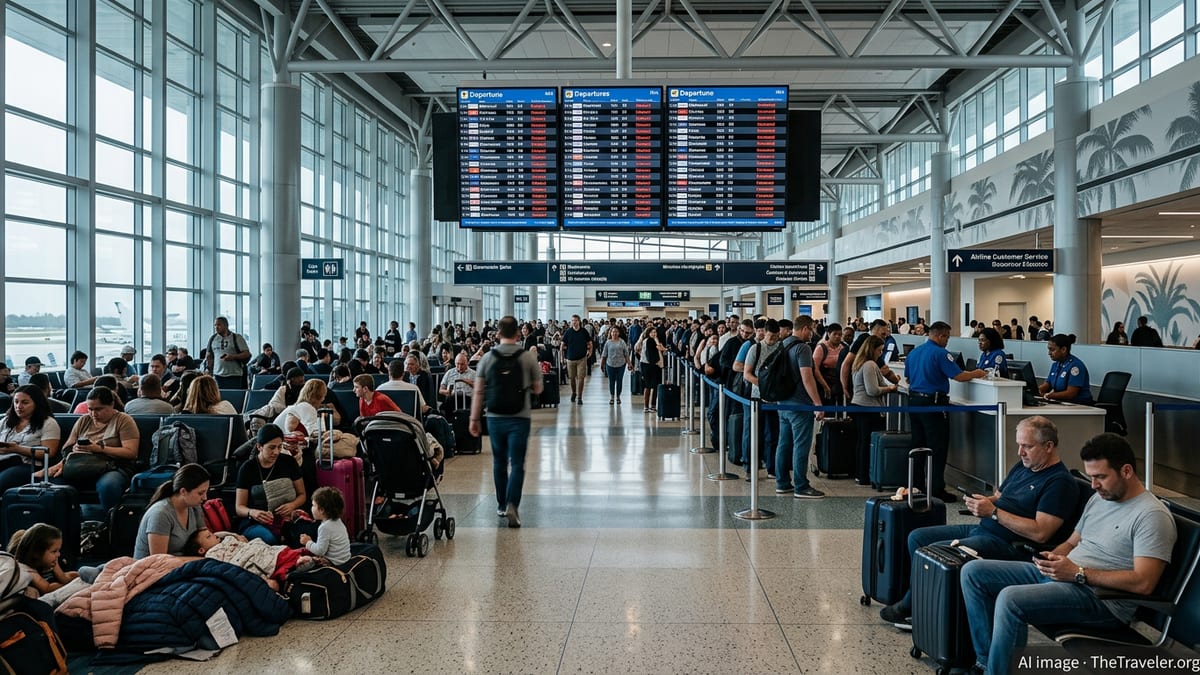
Scenes at Miami International on Monday reflected a familiar pattern of modern air travel disruption: crowded departure halls, long queues at airline counters and departure boards filled with yellow and red status updates. Passengers from Canada, Israel, France and other affected countries described a mix of confusion and exasperation as flight times shifted repeatedly throughout the day.
Travelers bound for Montreal, many of them winter-weary visitors heading home after Florida vacations, spoke of uncertainty over whether they would make same-day connections to domestic Canadian destinations. Others reported receiving a flurry of app notifications, only to see their flights first delayed, then placed under review and finally canceled.
Those headed to Tel Aviv, either on direct services from North America or via European hubs, expressed particular concern given the fragile state of flight schedules to Israel in recent weeks. Some passengers reported being rebooked onto later departures that remained subject to wider regional waivers and schedule adjustments, raising the possibility of further disruption even after leaving Miami.
Paris-bound travelers and those connecting onward through the French capital faced a double layer of uncertainty. Recent operational challenges and weather-related backlogs in Paris have left airport staff there working through lingering queues and aircraft rotations, meaning that a delay out of Miami could easily cascade into missed transcontinental or intra-European flights.
Airlines Update Waivers as Global Disruptions Mount
In response to the mounting disruption, several airlines serving Miami have extended or updated travel waivers, allowing passengers bound for affected destinations greater flexibility to change their itineraries. Carriers with routes touching Tel Aviv, Beirut, Dubai and other Middle Eastern destinations have already been operating under special policies related to regional unrest, which in some cases include full refunds or free rebooking within specific date windows.
European and North American airlines have also been adjusting schedules on routes linking Miami to major hubs such as Paris and Montreal. Some carriers have consolidated lightly booked flights, re-timed departures to align with available crews, or temporarily reduced frequencies on select international routes. For passengers, this has resulted in a moving target of available options, with inventory changing hour by hour as airlines recalibrate.
Travel-industry analysts note that the latest Miami disruptions are part of a broader pattern in which local operational issues intersect with an already fragile global network. Winter weather in North America, staff shortages at key European airports and geopolitical uncertainty in the Middle East have combined to leave little slack in the system, making major hubs like Miami particularly vulnerable to cascading disruption.
Consumer advocates are urging travelers impacted by cancellations to carefully review their rights under applicable passenger-protection rules, which can vary considerably depending on the airline and the jurisdiction under which their ticket was issued. In some cases, travelers may be entitled to refunds or compensation when cancellations or lengthy delays are not directly linked to extraordinary circumstances beyond an airline’s control.
What Affected Passengers Can Do Now
For travelers caught up in Monday’s wave of delays and cancellations at Miami International, experts recommend acting quickly and using every available channel to secure alternatives. Airline mobile apps and call centers remain primary tools for rebooking, but many seasoned travelers also suggest speaking directly to airport agents when possible, as they may have access to additional routing options or partner flights.
Passengers connecting from Montreal, Tel Aviv, Paris and other international gateways through Miami are being advised to monitor their itineraries closely, checking both segments of their journeys for changes. With tight connection windows particularly risky in the current environment, some travelers are opting to proactively move to earlier flights or request overnight layovers to reduce the likelihood of missed onward connections.
Travel planners also highlight the importance of documenting all communication with airlines and keeping records of expenses incurred due to disruptions, such as hotel stays or meals. These records can be essential when filing claims with airlines or travel insurers, especially in cases where policies include coverage for missed connections or extended delays.
As operations at Miami stabilize in the coming days, attention will turn to how quickly airlines can restore regular patterns on the affected routes linking South Florida with Canada, Europe and the Middle East. For now, passengers across Montreal, Tel Aviv, Paris and other connected cities remain on edge, closely watching departure boards and airline alerts for signs that their long-awaited journeys can finally proceed.