

More news on this day
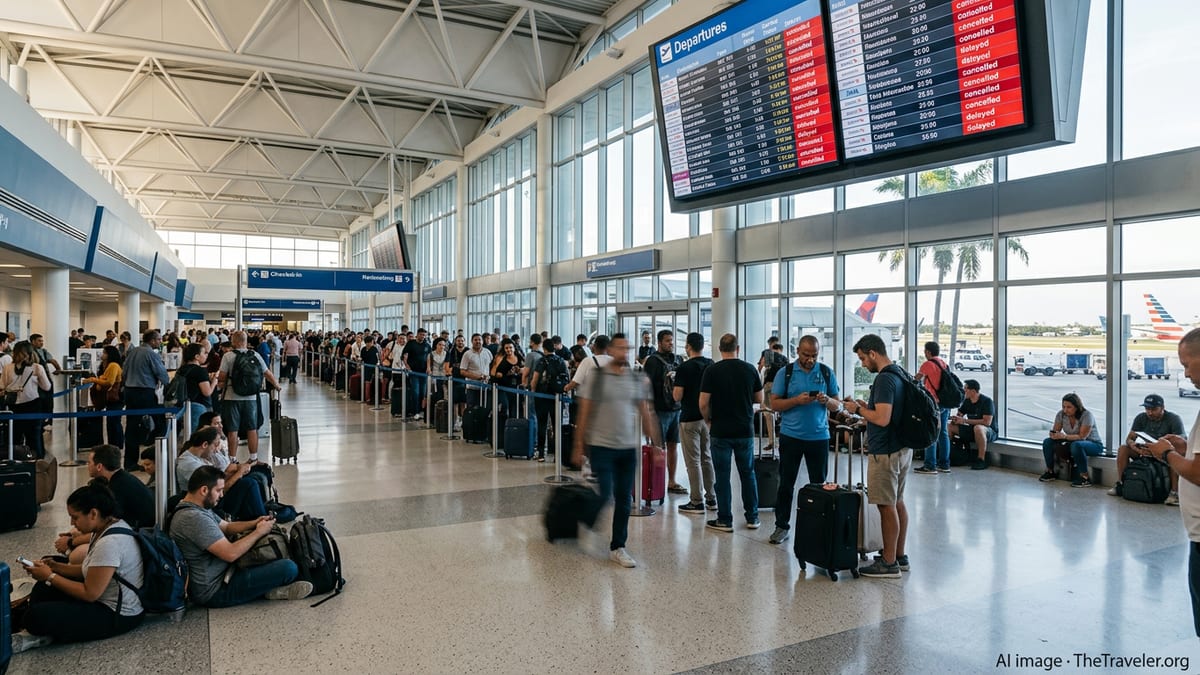
Numerous flight cancellations and delays at Miami International Airport in mid-March have disrupted travel plans for hundreds of passengers, as severe weather across North America and wider airspace disruptions ripple through one of the United States’ busiest international gateways.
Get the latest news straight to your inbox!
Weather and System Pressures Behind the Disruptions
Recent cancellations at Miami International Airport are closely tied to broader operational pressures in the aviation system rather than a single, isolated incident at the airport. A powerful storm system affecting parts of North America in mid-March has contributed to significant schedule disruptions, particularly at major hubs whose traffic feeds into and out of Miami. When flights into Miami from affected regions are delayed or cancelled, aircraft and crews often end up out of position, creating a knock-on effect for departures from Miami itself.
In addition to domestic weather challenges, international flying has been complicated by airspace issues in other parts of the world. According to widely reported coverage, closures and restrictions in key Middle Eastern flight corridors have led airlines to adjust or suspend some long-haul services. While these disruptions are centered far from Florida, they can affect Miami’s role as a connecting point for flights between North America, Europe, Latin America, and beyond, further tightening aircraft availability.
Operational data and public tracking platforms show that, on peak disruption days, Miami has seen clusters of cancellations concentrated among a handful of carriers that operate large connecting banks. Once a few high-capacity flights are removed from the schedule, terminal congestion can quickly worsen as passengers seek rebooking options, sometimes overwhelming customer service desks late into the evening.
These pressures come on top of Miami International Airport’s already high traffic volumes. Public traffic reports for recent years show the airport handling millions of passengers each month, with sustained growth in international and domestic demand. In such a tightly scheduled environment, even modest disruptions elsewhere can translate into hours of irregular operations in Miami.
How Widespread Cancellations Affect Passengers on the Ground
For travelers, the most visible impact of the recent disruptions at Miami International Airport has been long lines, crowded gate areas, and uncertainty around rebooking options. Social media posts and traveler forums from the past several days describe late-night queues stretching across concourses as passengers wait to speak with airline representatives after cancellations or missed connections. Some accounts describe waits of multiple hours at customer service counters, especially after large-capacity evening flights are cancelled.
Once a flight is cancelled, the challenge for passengers is not just finding an available seat, but finding one that fits complex itineraries involving international connections, onward domestic legs, or time-sensitive events. Because Miami functions as a major connecting hub, a single cancelled departure can strand passengers who were depending on tight connections to reach destinations throughout Latin America and the Caribbean. When bad weather or airspace restrictions affect multiple regions at once, alternative routings can quickly fill up, leaving travelers with limited options that may involve overnight stays or departures from other airports in South Florida.
Reports indicate that security and check-in areas have also come under strain on certain mornings following days with heavy disruptions. When airlines consolidate multiple rebooked passengers onto a handful of departures, lines at check-in counters, bag drops, and security checkpoints can lengthen, even if the flight schedule itself has begun to stabilize. Travelers arriving with minimal buffer time before departure have reported cutting it uncomfortably close at busy times.
These conditions can be particularly challenging for families with young children, travelers with limited mobility, and those unfamiliar with Miami International Airport’s sprawling terminal layout. Wayfinding and access to updated information become critical, especially when gate changes occur with little notice as airlines reshuffle their operations.
What Travelers Should Do Before Heading to Miami International
Given the recent pattern of cancellations, air travel specialists and consumer advocates generally emphasize preparation and flexibility for anyone traveling through Miami in the coming days. The first step is to monitor flight status directly through the airline’s official channels rather than relying solely on third-party apps or airport displays. Same-day schedule changes may not appear consistently across all platforms, and some travelers have reported discovering last-minute cancellations or significant delays only after arriving at the airport.
Travel guidance published in recent weeks for disrupted travel scenarios advises arriving earlier than usual when widespread irregular operations are occurring. For Miami, this typically means at least two hours before a domestic departure and three hours before an international flight, with extra buffer if traveling during early morning or late evening peaks. Extra time is especially important for passengers who need to check luggage, navigate immigration and customs, or move between terminals for connecting flights.
Travelers are also encouraged to familiarize themselves with their airline’s rebooking and compensation policies before a problem arises. Publicly available information from regulators and consumer organizations notes that, in the United States, compensation requirements can differ depending on whether a cancellation is categorized as a weather event or an airline-controlled issue such as crew or maintenance. Knowing in advance what is typically offered in each case can make it easier to evaluate options at the airport or via call centers and online channels.
Using digital tools can help reduce time spent in lines. Many airlines now allow same-day changes, waitlist options, and hotel or meal vouchers to be managed in their apps or websites when disruptions occur. Travelers who act quickly online sometimes secure seats on alternative flights while others are still queuing at counters, a pattern that has been reflected in multiple recent traveler accounts related to Miami.
Tips for Making Connections and Managing Long Delays
Passengers connecting through Miami International Airport in the current environment may wish to build in longer connection times than they might choose under normal circumstances. Travel planning resources often recommend avoiding minimum connection times when storms or international airspace disruptions are in the news. For international arrivals connecting to domestic flights, extra time is needed for immigration, baggage claim, customs, and re-checking bags, all of which can be slower when earlier flights have been delayed.
If a long delay or overnight disruption becomes unavoidable, travelers can take several steps to make the situation more manageable. Public advice from frequent-flyer communities suggests carrying essentials in hand luggage, including medications, chargers, a change of clothes, and basic toiletries, in case checked bags are inaccessible during an overnight stay. Access to snacks and water is also important, particularly during late-night hours when airport concessions may offer reduced service.
Many airlines maintain same-day standby lists and will place disrupted passengers on earlier or later flights as space becomes available. Passengers at Miami have reported success checking in regularly with gate agents and using airline apps to track their position on standby lists. However, because peak days can see most flights departing near capacity, travelers should be prepared for the possibility that standby does not clear and have a fallback plan, such as a confirmed seat the following day.
For those whose final destination is elsewhere in South Florida, ground transportation alternatives can sometimes offer a quicker resolution than waiting for a new flight. Publicly available guidance on irregular operations highlights that buses, trains, or rideshare options between Miami, Fort Lauderdale, and Palm Beach can be viable substitutes if airlines are able to rebook passengers into nearby airports, particularly when only the Miami leg has been affected.
Looking Ahead: What to Expect at Miami in the Coming Days
While conditions can change quickly, patterns from previous disruption periods suggest that Miami International Airport may experience a gradual normalization of operations once the broader weather systems and international airspace issues ease. However, residual effects such as displaced aircraft and crews, along with a backlog of passengers needing reaccommodation, can persist for several days even after the underlying cause has passed.
Travel analysts observing recent events have noted that hubs like Miami often face heightened pressure during peak travel seasons and around major operational shocks, whether from storms, technical outages, or sudden route suspensions. These pressures can amplify minor schedule irregularities into more visible disruptions, particularly during morning and evening banks when many connections are scheduled within narrow time windows.
In the short term, travelers using Miami International Airport are likely to benefit from closely monitoring their flights, arriving with generous time buffers, and staying flexible about routing and timing. As airlines work to restore normal schedules, some may temporarily adjust flight frequencies, swap aircraft types, or reroute certain services, which can create additional small changes even after large waves of cancellations have subsided.
For those planning upcoming trips, keeping an eye on airline and airport communications over the next several days will be essential. Publicly available information from the airport, airlines, and tracking services can provide early signals of improving conditions or renewed stress on the system. With preparation and awareness, travelers can navigate Miami International Airport more confidently, even amid an unsettled period for air travel.