

More news on this day
Major carriers at Miami International Airport are racing to refresh and expand their lounges ahead of the 2026 Miami Open, aligning premium services with a surge in affluent tennis fans and international visitors expected to pass through the city next March.
Get the latest news straight to your inbox!
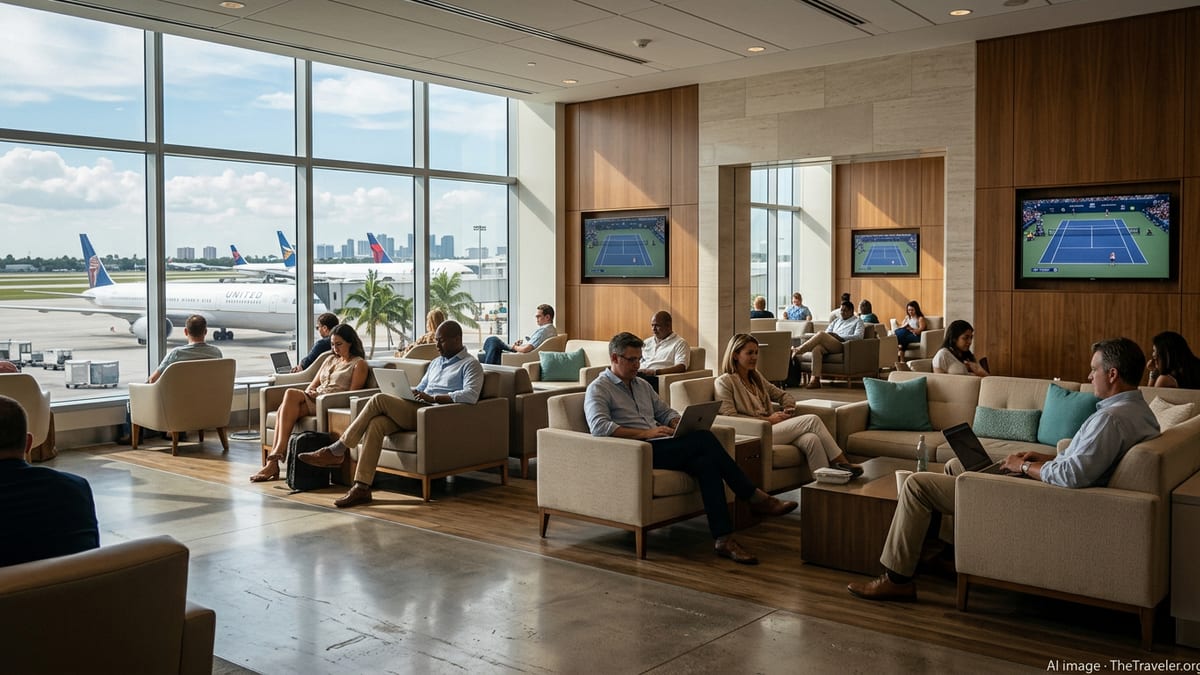
Miami Open Puts Global Spotlight on Miami International Airport
The Miami Open presented by Itaú is scheduled to run in March 2026, with ATP and WTA calendars placing the tournament in the heart of the month at Hard Rock Stadium in Miami Gardens. The event is one of the cornerstone stops on tennis’s early-season “Sunshine Swing,” drawing top-ranked players, corporate sponsors and high-spending spectators from Europe, South America and across the United States.
Airport and tourism planners view the tournament as a bellwether for Miami’s broader push into high-end sports tourism. Publicly available schedules and hospitality packages for 2026 show an emphasis on bundled experiences that combine courtside access with upgraded air travel and premium airport services. That focus is raising expectations for what Miami International Airport should deliver in terms of comfort and efficiency for connecting and origin passengers.
The growing prominence of the tournament is converging with a long-term modernization of Miami International Airport, where local authorities have launched a multibillion-dollar program to revamp concourses, gates and passenger amenities. Concourse D, the main hub for American Airlines and a key gateway for long-haul international flights, is at the center of that transformation.
American Airlines Leads With New Flagship and Expanded Admirals Club
American Airlines has outlined plans to significantly expand its premium footprint at Miami International Airport, positioning the hub for heavier event-driven demand such as the Miami Open. Company announcements describe a new Flagship lounge for long-haul and high-tier customers, alongside an enlarged Admirals Club presence in Concourse D. The airline has signaled that the combined lounge footprint will nearly double compared with its current configuration, reflecting Miami’s status as a critical international and Latin America gateway.
Publicly available information indicates the Flagship lounge is being designed with dedicated spaces for guests connecting to transatlantic and premium transcontinental routes, including more extensive dining options and quieter work zones. The Admirals Club expansion at the D30 area aims to relieve crowding at existing clubs and offer additional seating with views of the runway and ramp.
These moves coincide with the airport’s wider Concourse D expansion, a roughly one billion dollar project that will add new contact gates and upgraded passenger holding areas. Reports indicate that the airport’s modernization plan is intended to support periods of intense traffic tied to global events, from major sports tournaments to art fairs and cruise peaks, with expanded lounge capacity forming a central part of that strategy.
Delta, United and British Airways Refine Their Lounge Strategies
Delta Air Lines has already completed a substantial expansion of its Sky Club at Miami, adding square footage and refreshed interiors in 2024 to better match growth in premium demand. According to published coverage, the enlarged facility increased seating capacity and introduced more varied seating zones, upgraded food and beverage offerings and improved natural light, aligning the club more closely with Delta’s newer designs in hubs such as New York and Los Angeles.
United Airlines, while operating a smaller schedule at Miami than its primary coastal hubs, has been reassessing lounge capacity in several competitive markets amid rising entry restrictions and membership changes. Industry reporting and traveler commentary point to a broad effort by United to ease overcrowding and introduce more consistent design and amenity standards across its Club network. Miami, with its mix of Latin America connectivity and event-driven spikes, is increasingly viewed as a station where lounge positioning can influence corporate and high-yield leisure bookings.
British Airways, which currently serves Miami from London, is focusing on the joint venture transatlantic market alongside oneworld partners. At Miami International Airport, the carrier’s premium customers typically use oneworld-aligned facilities in Concourse D, meaning forthcoming American Airlines lounge upgrades are likely to benefit British Airways passengers as well. For the Miami Open period, when more European visitors connect through Miami to attend matches, that alliance-based lounge access is expected to form a key part of the overall journey experience.
Event-Driven Demand Reshapes Passenger Experience Priorities
The Miami Open’s calendar position, following Indian Wells and preceding the European clay season, tends to compress travel into a narrow window in March. This pattern concentrates demand for nonstop and connecting flights into Miami, particularly from tennis strongholds in Europe and South America. Travel organizers promoting 2026 packages already highlight early-morning and late-night arrivals, increasing reliance on airport lounges as essential spaces for rest, dining and remote work between flights.
For the airlines, this creates an opportunity to frame lounge access as a differentiator for high-spend fans, corporate hospitality guests and officials traveling on tight schedules. Marketing materials and credit card benefit guides emphasize priority check-in, fast-track security where available and access to upgraded lounges as part of premium fare bundles. The Miami Open, with its well-established global following, gives carriers a predictable event around which to test and refine those offerings.
The wider airport modernization initiative also reflects a shift toward integrating technology into the lounge and boarding experience. Public project documents describe the rollout of biometric boarding at more than one hundred gates, along with redesigned passenger holding rooms that can route travelers more efficiently between concourses. That infrastructure is expected to complement the airlines’ private lounge investments, reducing choke points when large numbers of premium passengers move from lounge to gate ahead of marquee flights tied to tournament dates.
Miami Positions Itself as a Year-Round Premium Sports Gateway
The combined impact of the 2026 Miami Open and the airlines’ lounge investments underscores Miami’s ambition to move beyond seasonal beach tourism into a year-round calendar of major events. Tennis joins existing draws such as international art fairs, Formula 1, and a heavy cruise schedule, all of which rely on Miami International Airport as the primary entry point for global visitors.
As American Airlines, Delta, United and British Airways sharpen their lounge strategies, Miami International Airport is emerging as a test case for how major hubs can align boutique-style ground experiences with high-volume traffic. Expanded square footage, higher service standards and more targeted access rules are intended to keep lounges usable even at peak times, while still supporting airline revenue goals through memberships, co-branded credit cards and premium fares.
For travelers planning trips around the 2026 Miami Open, the evolving lounge landscape suggests a more competitive environment among carriers, with airport time becoming a more curated part of the journey. While some upgrades will extend well beyond next March, the tennis tournament is already serving as a clear catalyst, accelerating timelines and concentrating attention on how Miami can welcome the world in greater comfort.