

More news on this day
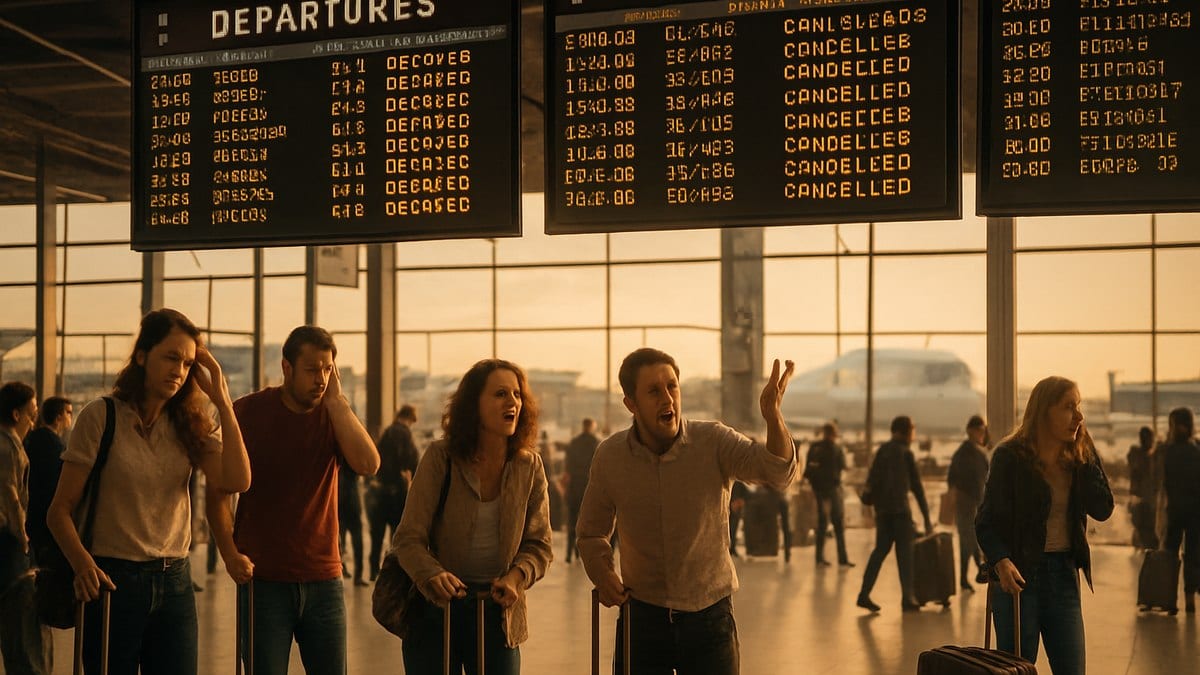
Spring travelers across the United States and Caribbean faced cascading disruption this week after a wave of 265 flight delays and nine cancellations at Miami International Airport rippled through already strained airline networks.
Get the latest news straight to your inbox!
Stormy Skies and a Packed Spring Schedule Collide
Publicly available flight-tracking data and industry coverage indicate that Miami International Airport logged roughly 265 delayed arrivals and departures, along with nine outright cancellations, over a single 24 hour period centered on April 6. The disruption struck at the height of the spring break return rush, when seats were already scarce and schedules tightly packed.
Reports point to a combination of thunderstorms in South Florida and weather-related slowdowns at other major hubs in the Southeast and Texas as the main triggers. While Miami avoided a daylong shutdown, brief ground stops and arrival metering contributed to rolling delays that quickly eroded schedule buffers. Airlines operating dense banks of flights through the hub found little room to recover once early services began running late.
Travel performance snapshots show that the Miami disruption formed part of a wider pattern of spring volatility across the United States, with thousands of flights nationwide arriving behind schedule in early April. Aviation analysts say that high load factors, lean staffing and storm-prone routes have left carriers more vulnerable when weather closes in on multiple hubs at once.
Under these conditions, even a relatively modest number of cancellations can feel like a major breakdown for travelers, as fully booked later departures offer few options for same day reaccommodation. For many passengers moving through Miami, the practical impact of the meltdown came in the form of hours-long delays, missed connections and unexpected overnight stays.
Ripple Effects Across U.S. and Caribbean Networks
Because Miami serves as a primary gateway between the continental United States and Caribbean destinations, the knock-on impact of Monday’s disruption stretched well beyond South Florida. Travel news outlets and aviation data providers tracking the episode highlight late departures from Miami to New York, Chicago, Dallas, Los Angeles and other major U.S. cities, alongside affected runs to island destinations.
Regional coverage indicates that once aircraft and crews fell out of position in Miami, delays quickly propagated onto onward legs bound for the Bahamas, the Dominican Republic, Jamaica and other popular spring break locations. Several of these routes operate once daily or only a few times per week, which means that a late inbound flight or missed connection can strand travelers for many hours, or in some cases until the next operating day.
Industry reports note that international connectivity through Miami was also strained. Flights connecting to Central and South America departed with significant holds, as carriers waited for inbound passengers and baggage clearing delayed domestic arrivals. The result was a web of missed links in both directions, with some travelers arriving in Miami to find that their onward Caribbean or Latin American flight had already left despite still being shown as active on earlier schedules.
For travelers starting their journeys outside South Florida, the meltdown was often invisible until they arrived at the gate. Airline alerts and mobile apps flagged delays in stages as storms shifted and gate agents worked through revised departure times. Passengers connecting from cities such as Atlanta, Houston and Charlotte faced particularly complicated itineraries when their first leg into Miami ran late, eliminating what was already a tight connection window to Caribbean-bound flights.
Ground Experience: From Manageable Lines to Frayed Nerves
On the ground, security checkpoints at Miami International did not experience the same catastrophic backups seen during earlier spring episodes, when regional reports documented security waits stretching past an hour across South Florida airports. Recent monitoring suggested that typical wait times on Easter Monday were under 15 minutes in Miami, even as flight delays mounted.
The most visible pressure points instead emerged at departure gates and customer service counters. With a high share of delayed but not canceled flights, many passengers spent extended periods in crowded concourses, monitoring shifting departure estimates and seeking clarification on whether they would still make their connections. Social media posts from the day show long lines at service desks as travelers requested rerouting, hotel vouchers or meal assistance.
Baggage handling also grew more complex as the day wore on. When travelers misconnected in Miami, their checked bags often continued on their original flight, particularly on short-haul Caribbean routes with limited ground time. That dynamic left some passengers arriving several hours, or even a full day, after their luggage. Airlines then faced the added challenge of arranging courier deliveries across resort areas and cruise departure points.
Airport operations data suggest that while runway throughput and airfield movements remained within normal bounds for a busy spring day, the tight spacing of scheduled departures meant that even short holds produced long tailbacks. The situation highlighted how airport and airline performance is now constrained as much by terminal congestion and connection chains as by raw runway capacity.
Passenger Rights and What Travelers Can Expect
Consumer advocates monitoring the Miami disruption emphasize that weather-related delays are generally classified as outside airline control, which typically limits eligibility for cash compensation under many regulatory regimes and airline policies. Publicly available guidance from passenger rights organizations notes that most North American carriers are not required to pay compensation when storms or air traffic control programs are the primary cause of delay.
However, industry resources stress that airlines still have obligations to assist. When major delays or overnight disruptions occur, many carriers provide meal vouchers, hotel accommodations or ground transportation on a discretionary basis, particularly if passengers are far from home. Travelers impacted by the Miami meltdown are being encouraged by consumer groups to review carrier-specific customer service plans and retain documentation of expenses.
Travel tools that aggregate real time flight data and historical on time performance are also drawing attention in the wake of the episode. These platforms allow passengers to verify delay causes, track baggage and evaluate whether their circumstances might qualify for reimbursement or future travel credits under airline policies. For those who purchased travel insurance, policy terms may cover hotel costs and missed connections, depending on the product selected.
Regulatory agencies in the United States maintain public dashboards that compare how different airlines handle delays, cancellations and customer care. Analysts point to these resources as increasingly important planning tools for spring travelers choosing between itineraries with tight connections through busy hubs such as Miami and those offering more generous layovers or alternative routing.
Outlook for the Remainder of the Spring Travel Season
The Miami disruption arrives during what aviation forecasts describe as a record-setting spring travel period, with U.S. airlines expected to carry close to three million passengers per day between early March and the end of April. That surge has coincided with repeated rounds of severe weather across key flight corridors, creating a fragile operating environment in which single airport meltdowns can spread widely.
Historical traffic reports from Miami International Airport show solid year over year growth in passenger volumes leading into 2026, while Miami-Dade County planning documents project continued expansion in both domestic and international markets over the next decade. As traffic grows faster than infrastructure upgrades can be completed, experts warn that peak season schedules will leave little margin for error when thunderstorms or other disruptions hit.
For travelers, the main lesson from the latest Miami episode is the importance of building flexibility into spring itineraries. Aviation commentators are advising passengers to prioritize early day departures, allow wider connection windows and avoid last flights of the day on critical legs whenever possible. Choosing itineraries with alternative routing options, particularly when heading to island destinations with limited service, can also reduce the risk of extended stranding.
While operations at Miami have largely normalized since the 265-delay meltdown, the incident underscores how quickly a single day of adverse conditions can reverberate through U.S. and Caribbean networks during peak season. With several weeks of heavy spring travel still ahead, both airlines and passengers are likely to treat the events in South Florida as a cautionary snapshot of a crowded, weather-sensitive system.