

More news on this day
Travelers across the United States faced another day of disrupted plans as Miami International Airport recorded 166 delayed flights and nine cancellations, snarling operations for American, United, Frontier and other carriers on busy routes to Charlotte, Chicago and additional domestic hubs.
Get the latest news straight to your inbox!
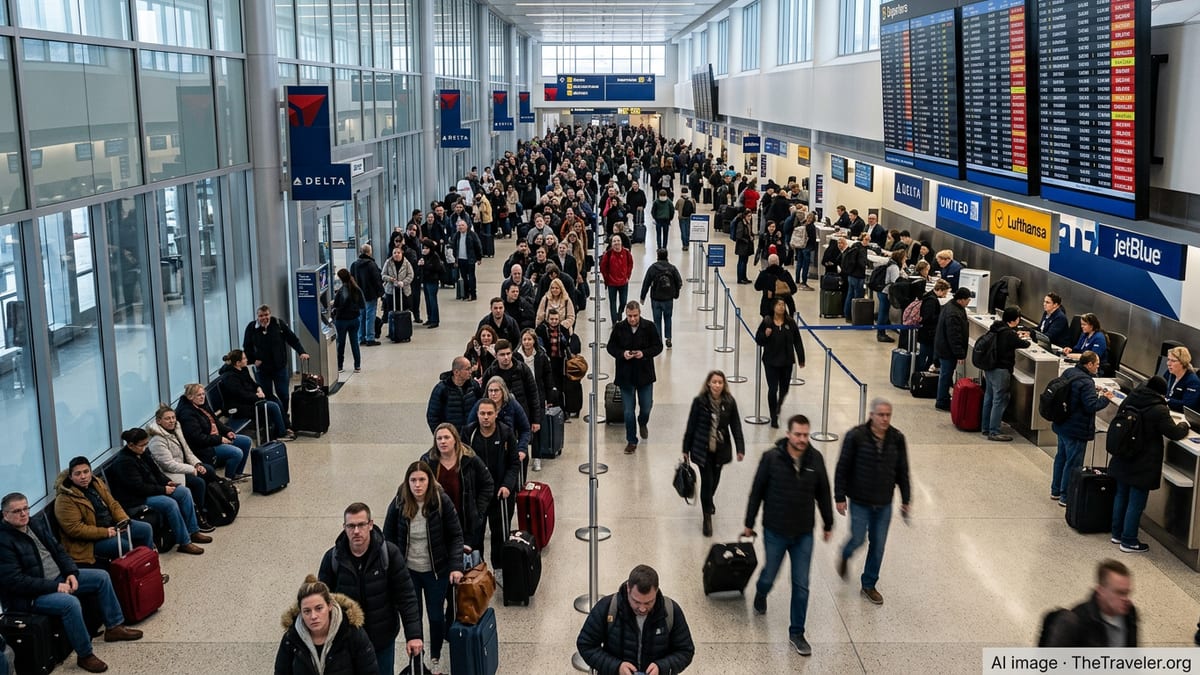
Miami Bottleneck Sends Disruptions Across Key Networks
The latest figures from widely used flight tracking dashboards show Miami International Airport among the most affected U.S. hubs, with 166 delays and nine canceled departures and arrivals in a single operational window. The interruptions hit a mix of domestic and international services, underscoring Miami’s role as a major connecting point for North American and Latin American traffic.
American Airlines, which maintains a large hub in Miami, appeared prominently in the disruption data, alongside services operated by United Airlines, Frontier Airlines and other carriers. While some flights experienced modest schedule slippage, others were held for hours or ultimately scrubbed, forcing reroutes or unexpected overnight stays for passengers.
The timing compounded pressure already evident across the national network this spring. Recent coverage of systemwide performance in the United States has highlighted elevated delay and cancellation levels for several major airlines, with weather, congestion and operational strain all intersecting to push schedules off track.
Publicly available statistics on flight punctuality suggest that Miami often sits among the more delay-prone large airports in the country. When irregular operations strike on a day already near capacity, relatively small disturbances can quickly turn into a wider bottleneck that spreads through airline networks.
Charlotte and Chicago Feel the Knock-On Effects
The impact from Miami’s disruptions extended quickly into other major hubs, particularly Charlotte Douglas International Airport and Chicago O’Hare International Airport. These airports already rank among the busiest in the nation and regularly appear in delay tallies when storms or traffic management initiatives slow down the system.
Coverage of recent storm-related disruptions across the eastern United States has noted that the Federal Aviation Administration often imposes traffic management programs at Charlotte and Chicago when thunderstorms and strong winds threaten. Ground stops and flow restrictions at these hubs can trigger a cascade of delays that affect flights inbound from Miami and other origins, particularly for airlines that rely on tight connection banks.
Flight performance data for connecting routes between Miami and cities such as Charlotte, Chicago, Dallas and Philadelphia show that once a hub is constrained, departures can be pushed back by more than an hour or, in some cases, canceled outright. For travelers, the immediate result is missed connections and long rebooking queues, particularly during peak travel periods.
Reports from passengers in recent weeks at Chicago and Charlotte describe extended waits, rolling delay notifications and late-night cancellations that left travelers searching for alternative flights or last-minute accommodation. While those individual accounts do not always align with a single weather event, they reflect the broader strain when heavily used hubs are hit by overlapping disruptions.
American, United and Frontier Among Affected Carriers
Publicly accessible airline performance snapshots for early spring show that American Airlines and United Airlines are contending with heightened delay and cancellation rates across parts of their networks. Frontier Airlines, which operates a growing schedule of low cost routes through Miami, Chicago, Charlotte and other cities, has also reported a notable share of late or canceled flights in recent operational summaries.
Recent travel industry reporting has highlighted American’s particularly heavy exposure at hubs in the eastern United States, where congestion and convective weather frequently disrupt tightly timed schedules. Frontier’s point to point model, while different from the large legacy carriers, is also vulnerable when aircraft and crews are out of position after a sequence of delays.
United, with a major hub at Chicago O’Hare, often experiences secondary disruptions when traffic management actions are introduced there. When a day begins with late departures and arrivals in Chicago, knock on effects can stretch into Miami bound and Miami originating flights, with delays compounding as aircraft rotate through multiple legs.
In the current Miami centered episode, the 166 delays and nine cancellations represent only a fraction of nationwide interruption totals, but they illustrate how several airlines can be simultaneously affected on shared corridors. Routes linking Miami with Charlotte and Chicago, which serve as critical connectors for both domestic and international passengers, are particularly sensitive to these operational shocks.
Weather, Congestion and System Strain Drive Irregular Operations
Analysis of recent U.S. flight disruptions by travel and aviation outlets points to a familiar combination of causes. Spring weather patterns, featuring fast moving storm systems and strong winds, frequently prompt the aviation regulator to slow traffic into busy hubs including New York, Washington, Charlotte, Chicago and Miami. These capacity reductions can persist for hours, quickly backing up departures and arrivals.
At the same time, airlines have been operating near pre pandemic capacity on leaner staffing levels in some areas, according to multiple industry assessments. When aircraft or crews are delayed early in the day, repositioning options are limited, and downstream flights from major hubs such as Miami are more easily canceled when recovery windows close.
Historical government and industry statistics on U.S. aviation performance show that roughly one in four flights can be delayed on particularly challenging days, with a smaller but still significant percentage canceled altogether. Large connecting hubs, which rely on carefully sequenced waves of arrivals and departures, are more vulnerable to these dynamics than point to point operations.
For travelers, the Miami disruptions serve as another reminder that even localized issues can translate into missed connections hundreds or thousands of miles away. Passengers departing from smaller cities whose itineraries route through Miami to reach Charlotte, Chicago or other destinations are often the most exposed to cascading irregular operations.
What Travelers Can Expect in the Coming Days
Industry observers note that once a hub experiences a day of severe irregular operations, schedules can remain unsettled for at least another 24 to 48 hours as airlines reposition aircraft and crews. Travelers connecting through Miami, Charlotte or Chicago in the near term may therefore encounter residual delays, even if weather conditions improve.
Public guidance from travel and consumer advocates consistently emphasizes monitoring flight status early and often on days marked by widespread delays. Because aircraft and crew routing can shift rapidly, a schedule that appears on time in the morning can quickly change if a previous leg is held or canceled.
Analysts also point to the importance of understanding an airline’s published policies on rebooking, meal vouchers and hotel accommodations when cancellations occur for reasons within carrier control. While individual circumstances vary and policy language can be complex, many airlines outline basic amenities during extended delays or overnight disruptions.
With Miami International Airport continuing to function as a major gateway for both leisure and business travelers, any cluster of delays and cancellations there is likely to reverberate across a broad swath of U.S. routes. For passengers bound to or from cities such as Charlotte and Chicago, the latest episode is another signal that building flexibility into travel plans remains prudent as the busy spring and summer seasons approach.