

More news on this day
Passengers traveling through Miami International Airport on Thursday faced a fresh wave of disruption, as a dozen flight cancellations and scores of delays by Air Canada, British Airways, American Airlines and other carriers rippled across domestic and international routes.
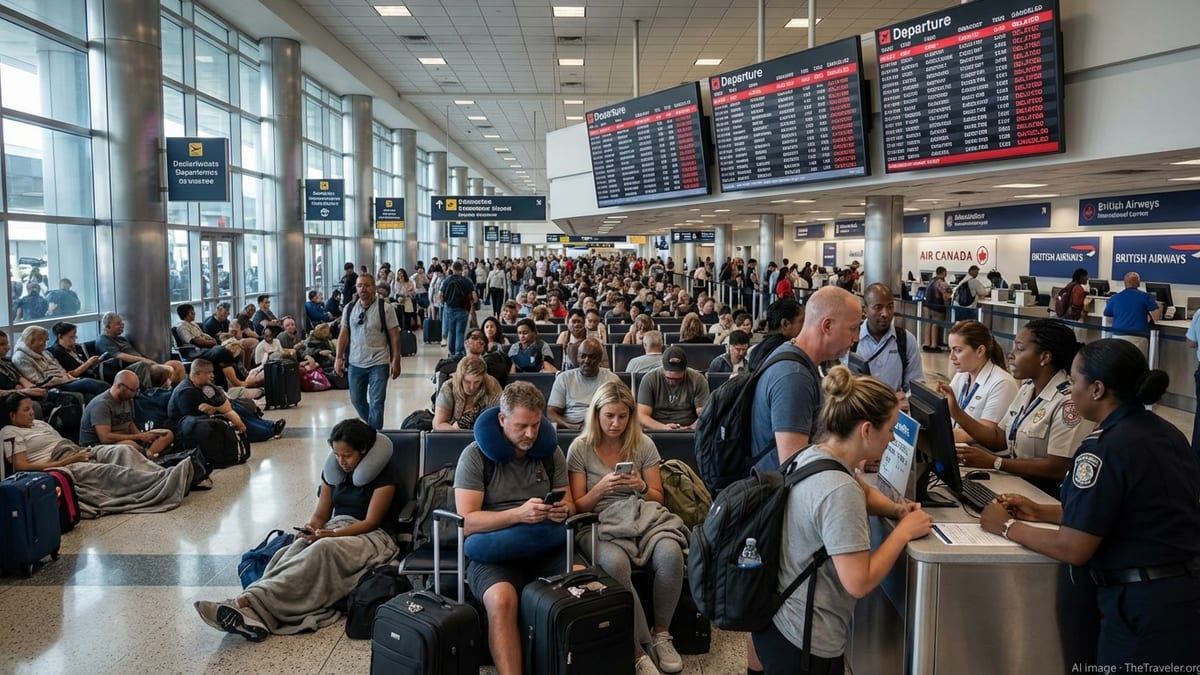
Fresh Day of Disruption at a Key U.S. Gateway
Miami International Airport, one of the busiest hubs for transatlantic and Latin American travel, reported a cluster of cancellations and a high volume of delayed departures and arrivals on February 19. The disruptions affected a cross section of airlines, with legacy U.S. carriers and major international operators among those forced to scrub or significantly push back flights.
Operational data and federal aviation status reports indicated departure delays averaging between 15 and 30 minutes across parts of the day, with longer waits building at peak times as ground operations and air traffic controllers worked to reset schedules. While the raw number of cancellations remained in the low double digits, the knock on effect of delayed aircraft and missed connections magnified the impact for many travelers.
The turbulence in Miami came amid a broader pattern of strains across the U.S. air network in recent weeks, with severe winter weather farther north, tight aircraft and crew availability, and heavy leisure demand all contributing to recurring bottlenecks. For many passengers, Miami’s latest bout of disruption felt like a familiar story playing out again at the height of the winter travel season.
By early afternoon, lines at check in counters and rebooking desks had swollen, and departure boards at Miami International told the story in real time, flashing a mix of “delayed” and “canceled” notices alongside a scattering of on time flights.
Air Canada, British Airways and American Among Hardest Hit
Several of the cancellations logged at Miami International involved Air Canada, British Airways and American Airlines, underscoring the airport’s role as a major connecting point between North America, Europe and Latin America. Routes to and from key hubs such as Toronto, London and several U.S. cities saw their schedules trimmed or reshuffled as carriers attempted to consolidate loads and recover from earlier delays.
American Airlines, which operates a large schedule from Miami and uses the airport as one of its primary connecting hubs, was forced to cancel multiple departures and adjust timings on numerous others. Travelers reported last minute gate changes, rolling departure estimates and long waits in crowded gate areas as crews and aircraft were repositioned. Some American flights marketed jointly with British Airways were also affected, adding a layer of complexity for codeshare passengers.
For Air Canada, Miami is an important link between Canadian cities and sun destinations in Florida and beyond. Several services experienced extended delays as aircraft arrived late from weather affected airports in the U.S. and Canada, while at least one planned rotation was removed from the schedule to help restore operational balance. The impact was felt most sharply by passengers with tight onward connections to the Caribbean and Latin America.
British Airways travelers, many connecting between Europe and destinations across the Americas, faced long queues at transfer desks as staff attempted to reroute customers whose onward Miami departures had been delayed or canceled. In some cases, passengers were moved onto flights later in the day, while others were accommodated overnight or rebooked via alternative U.S. hubs.
Knock On Effects from Wider U.S. and Weather Disruptions
The latest turmoil in Miami did not occur in isolation. In recent weeks, winter storms across large parts of the United States have triggered waves of cancellations and delays, particularly at northern and midwestern hubs. Even when skies over South Florida remain clear and temperatures mild, disruptions elsewhere in the network can cascade down to Miami, where many flights rely on inbound aircraft from weather affected regions.
Earlier this winter, a powerful storm system snarled operations across the Southeast and East Coast, forcing airlines to cancel thousands of flights over several days. Aircraft and crews displaced by those events have left schedules more fragile than usual, with limited slack when new issues arise. With demand for leisure travel still elevated, especially on routes to Florida, carriers have had little room to maneuver when unexpected maintenance or air traffic restrictions occur.
Miami’s role as a connecting hub further amplifies the impact. A late arriving aircraft from a snow bound city can throw off a full day of flying if it is due to operate multiple legs through Miami. Each delay risks missed connections and crew scheduling complications, forcing airlines to make rapid decisions about which sectors to operate and which to cancel outright.
Even when current conditions at Miami International are relatively calm, those upstream pressures can generate a patchwork of disruption on the departure board. Passengers at the gate may see clear skies outside and still hear announcements about delayed inbound aircraft, air traffic flow programs or crew timing limits that trace back to events hundreds of miles away.
Stranded Travelers Face Long Lines and Uncertain Plans
For travelers caught up in Thursday’s disruption, the operational details mattered less than the immediate reality of missed holidays, delayed business meetings and upended family plans. Inside Miami International, scenes were typical of a system under stress: families clustered on the floor around phone chargers, business travelers refreshing airline apps, and long, snaking queues at customer service counters and baggage claim.
Some passengers who had already boarded delayed flights reported being asked to deplane when aircraft exceeded permissible crew duty times or when fresh technical checks were required. Others described receiving a string of push notifications showing successive departure estimates slipping later into the afternoon or evening, before a final notice of cancellation was issued.
Hotel availability became a growing concern for travelers whose flights were canceled outright. With Miami’s hotel market already buoyed by strong tourism demand and events season, last minute room searches proved both challenging and expensive for some. Social media posts from stranded passengers described difficulty securing affordable accommodation within a reasonable distance of the airport.
The emotional toll was clearest among those traveling with children or on tight schedules, including cruise passengers trying to meet departure times at PortMiami and Port Everglades, as well as international visitors with limited vacation windows. For many, the day’s events served as another reminder of how a single canceled or heavily delayed flight can ripple through complex travel plans.
What Is Driving the Cancellations and Delays in Miami
While each airline and flight can have its own specific cause, several common factors have been at play in the latest round of disruptions at Miami International. Industry analysts point to a combination of residual weather impacts in other parts of the network, ongoing aircraft maintenance demands, tight pilot and crew rosters, and congestion in the national airspace system during peak travel periods.
Operational constraints at the airport itself can also contribute. As a busy hub with heavy international traffic, Miami often runs close to capacity at certain times of day. Any slowdown in arrivals and departures, whether due to temporary runway restrictions, air traffic spacing requirements or ground handling challenges, can quickly create a backlog that takes hours to unwind.
Technical issues on individual aircraft remain another recurring trigger. Modern jets typically require small but time consuming checks or repairs when automated systems flag anomalies. Even when safety is never in question, these interventions can push back departure times, particularly if specialized maintenance staff or replacement parts need to be sourced. In a tightly scheduled network, one such delay early in the day can disrupt multiple subsequent flights that rely on the same aircraft.
Underlying all of this is sustained passenger demand. Miami has continued to draw strong volumes of both domestic and international travelers, with airlines scheduling aggressively to capture the market. That leaves little buffer in the system when things go wrong, making days like Thursday especially painful for those whose flights happen to be among the relatively small number that are canceled outright.
Advice for Passengers Traveling Through Miami Now
With Miami International still experiencing intermittent disruption, travel experts urge passengers with upcoming flights to build extra time into their plans and to stay closely informed about their specific itineraries. Checking flight status directly with the operating airline in the hours before leaving for the airport remains essential, as departure times and gate assignments can change quickly on days when the system is under strain.
For those holding same day connections through Miami, allowing longer layovers than usual can offer valuable protection against missed onward flights. Travelers who booked the tightest possible connections during peak hours have found themselves particularly vulnerable when incoming flights arrive behind schedule. Where feasible, selecting earlier departures in the day can also reduce risk, as there is often more flexibility to rebook onto later services if problems arise.
Passengers are also advised to keep key essentials in their carry on bags rather than checked luggage, including medications, chargers, basic toiletries and a change of clothes. When cancellations occur after bags have been checked, it can take time to retrieve them, adding to the stress of rebooking and accommodation arrangements. Mobile boarding passes and airline apps can help speed rebooking in some cases, allowing travelers to secure limited seats on alternative flights before lines at airport counters lengthen.
For international travelers, particularly those connecting onward to cruises or long haul flights, travel insurance with interruption coverage can provide a financial buffer against the cost of unexpected hotel stays and rebooked tickets. Policies vary widely, but many offer at least partial reimbursement when delays or cancellations lead to significant additional expenses.
Impact on Tourism and the Wider South Florida Economy
Repeated days of disruption at Miami International carry implications well beyond the terminal building, affecting South Florida’s tourism driven economy. The airport is a primary gateway for visitors heading to Miami Beach, the Keys, the Everglades and destinations across the Caribbean and Latin America, and any sustained perception of unreliability can weigh on traveler sentiment.
Local tourism officials and hospitality operators have been closely monitoring the pattern of delays and cancellations, mindful that first impressions often form at the airport. Visitors who begin a vacation with hours stranded in the terminal or a missed hotel night may be less inclined to return, or may consider competing destinations perceived as easier to reach. This is particularly sensitive in the winter high season, when occupancy levels and nightly rates are at their peak.
Cruise operators based at PortMiami and Port Everglades are also exposed to airline disruptions, as a significant share of passengers rely on flights through Miami to reach their ships. Even a relatively small number of canceled or severely delayed flights can translate into dozens of missed cruise departures, with knock on effects for onboard revenue and customer satisfaction. Some cruise lines already recommend that passengers fly in at least a day before embarkation, guidance that looks increasingly prudent when airport operations are unsettled.
At the same time, Miami International remains a critical hub for cargo traffic, with disruptions to passenger flights sometimes spilling over into air freight schedules. Delays in the movement of high value goods and perishable items can impose additional costs on businesses and supply chains that depend on predictable delivery windows.
Steps Underway to Restore Stability at Miami International
Airport officials and airline representatives have signaled that they are working to stabilize operations and limit the duration of Thursday’s turmoil. On the ground, that has meant deploying additional staff to check in halls and customer service points, adjusting gate allocations to ease congestion, and coordinating closely with federal air traffic managers to smooth the flow of departures and arrivals.
Airlines operating at Miami are also making tactical schedule adjustments, including consolidating lightly booked flights, swapping aircraft types where possible to add capacity for stranded passengers, and repositioning crews in anticipation of ongoing ripple effects. Some carriers have issued limited travel waivers for affected routes, allowing customers to change flights without standard penalties when their original plans fall on the most disrupted days.
Longer term, Miami International and its airline partners continue to invest in infrastructure and capacity enhancements intended to make the hub more resilient to spikes in demand and operational shocks. Expansion projects in the terminal complex, upgrades to baggage systems and improvements in ramp and gate management are all designed to reduce bottlenecks and speed recovery when delays occur.
For travelers passing through the airport today, those structural improvements remain in the future. The immediate reality is one of monitoring flight status screens, juggling alternative options and, for many, simply waiting out the backlog as Miami International works to move disrupted passengers on their way.