

More news on this day
Hundreds of U.S. travelers departing from and connecting through Miami International Airport faced a day of mounting frustration on February 21, 2026, as at least 154 flights were canceled or heavily delayed, disrupting operations for major carriers including Delta Air Lines, LATAM Brasil, Air Canada, Envoy Air and several partner airlines.
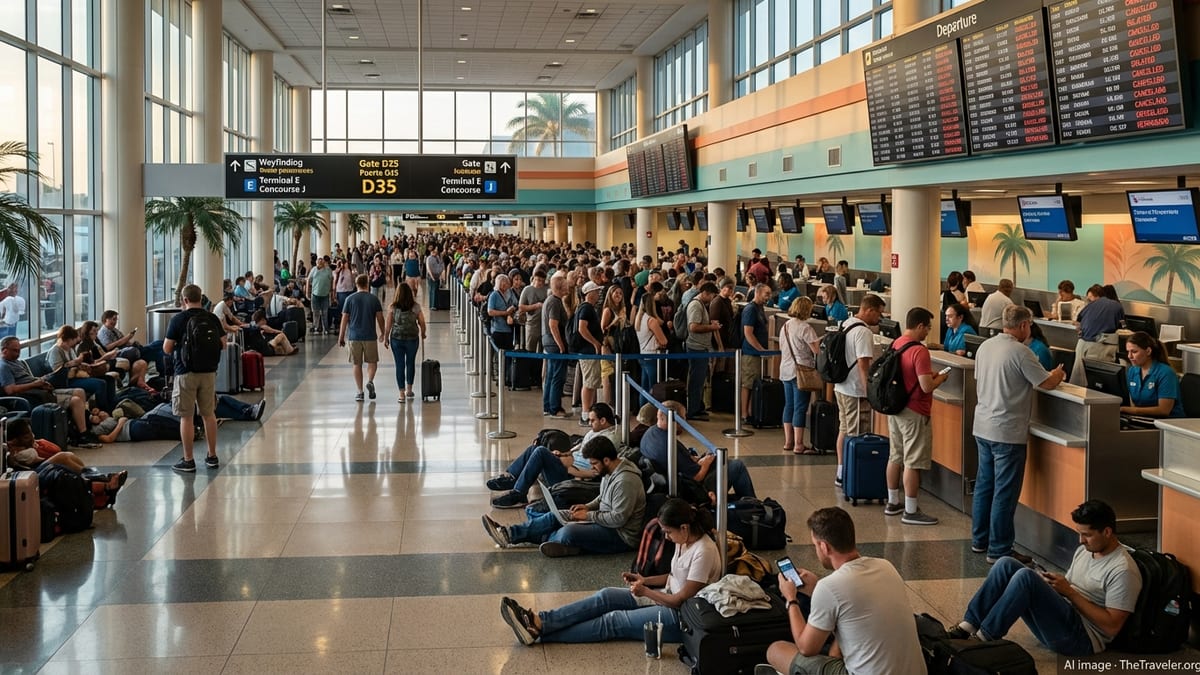
Severe Weather Across the U.S. Ripples Into Miami Operations
The latest wave of disruption at Miami International Airport is not rooted in local weather, with South Florida remaining largely warm and partly cloudy, but in a powerful winter system sweeping across large sections of the United States. This pattern, driven by Winter Storm Hernando and a broader series of cold fronts and low-pressure systems, has snarled air traffic at key East Coast and Midwestern hubs.
Major airports in cities such as New York, Boston and Chicago have reported accumulating delays and cancellations as snow, strong winds and low visibility conditions reduced runway capacity and triggered cascading ground stops. As airlines reroute aircraft and crews to cope with the storm, Miami, a crucial international gateway, has been drawn into the broader disruption despite operating under favorable skies.
Aviation analysts note that this kind of knock-on impact is increasingly common in a tightly interconnected network. Even when individual airports like Miami show no immediate weather issues, their reliance on aircraft, crews and connections originating from storm-hit cities can rapidly translate into local schedule chaos.
154 Flights Affected as Major Carriers Scramble
According to live operational data and airline updates, approximately 154 flights linked to Miami International Airport were either canceled outright or subjected to significant delays over the course of the day. The figure includes both departing and arriving services, as well as some aircraft operating through Miami as part of multi-leg itineraries.
Delta Air Lines, which has been proactively canceling flights at several East Coast hubs in anticipation of worsening conditions, reported adjustments that rippled through its Miami schedule. Flights connecting Miami with northeastern hubs and key transatlantic gateways faced particular pressure as the carrier attempted to pre-position aircraft outside the storm’s most intense impact zone.
LATAM Brasil, a major operator on the Miami to South America corridor, also saw disruptions as aircraft and crews became entangled in wider North and South American weather-related delays. While many of its services are long-haul and less frequent, even a handful of cancellations or extended holds can leave hundreds of travelers in limbo, particularly those relying on Miami as a transit point between U.S. domestic and international routes.
Regional Partners and Codeshares Add to the Disruption
Beyond the large network carriers, regional affiliates and codeshare partners such as Envoy Air have played a central, if less visible, role in the day’s disruptions. Envoy, which operates regional services under the American Airlines brand, has seen its tightly scheduled short-haul flights squeezed by congestion at both origin and destination airports connected via Miami.
Regional flights tend to run more frequently, with quicker turnarounds, which leaves less room to absorb delays. A single aircraft arriving late into Miami can trigger a cascade of knock-on impacts, forcing last-minute gate changes, rolling departure times and, in some cases, cancellations when crews reach their duty-time limits.
Air Canada and other international carriers operating into Miami have also grappled with the turbulence in the wider network. With flights linking Miami to Canadian and European cities that are more directly affected by winter weather, carriers have been forced to adjust schedules on short notice, rebooking passengers and juggling aircraft rotations to keep at least a portion of services running.
Passengers Face Long Lines, Missed Connections and Uncertain Timelines
For travelers on the ground at Miami International Airport, the operational complexities translated into long lines at check-in counters, crowded boarding areas and jammed customer service desks. As cancellations mounted and scheduled departure times slipped further into the afternoon and evening, passengers scrambled to secure alternative routes or overnight accommodations.
Families returning from Caribbean holidays, business travelers heading to financial hubs and international passengers connecting between South America, Europe and domestic U.S. destinations all found themselves competing for limited rebooking options. Because the disruptions are driven primarily by weather in other regions rather than by a localized technical failure, spare capacity across the network has been slow to free up.
Travelers reported spending hours in queues to speak with airline agents, while others tried to manage their own changes via carrier apps. Airport concourses saw passengers camped out near power outlets and information screens, monitoring rolling updates in the hope that delayed flights would ultimately depart rather than be scrubbed altogether.
Airline Responses: Waivers, Rebookings and Proactive Cancellations
Airlines serving Miami have framed the latest disruptions as part of a necessary strategy to prioritize safety and minimize longer-term chaos. Delta Air Lines, for example, has issued weather-related exception policies and travel waivers tied to Winter Storm Hernando, encouraging passengers whose trips involve affected East Coast airports to shift their plans outside the worst weather window at no additional charge.
Carriers are increasingly resorting to proactive cancellations rather than allowing flights to linger for hours with uncertain departure times. Industry experts say this approach, while frustrating in the short term, can help airlines stabilize their schedules more quickly once the weather-related constraints ease. By trimming the most vulnerable flights in advance, carriers free up aircraft and crews for services that are more likely to operate close to schedule.
For many Miami-bound and Miami-originating passengers, this has meant being automatically rebooked onto later flights or even onto alternative routings through less affected hubs. While these rebookings can extend total travel times by many hours or even by a day, they provide a clearer path home than clinging to a heavily delayed original itinerary that risks eventual cancellation.
Miami’s Role as a Gateway Intensifies the Impact
Miami International Airport occupies a unique position in the U.S. aviation network, acting as a primary gateway between North America, Latin America and the Caribbean. This hub role magnifies the impact of disruptions, even when they originate far from South Florida. A canceled or delayed inbound flight from a storm-battered northern city may strand hundreds of passengers expecting to connect in Miami to destinations throughout the hemisphere.
At the same time, Miami’s heavy schedule of international departures complicates recovery efforts. Long-haul flights, especially those to South American capitals and major European cities, require precise crew scheduling, slot coordination and aircraft availability. When just one element in that chain is disrupted by external weather or air traffic constraints, rescheduling can become a complex, multi-airport puzzle.
The result is a visible ripple effect on the departures boards across Miami’s terminals. Even domestic flights to relatively unaffected regions can end up delayed if they rely on aircraft repositioning or inbound crews that have been held up elsewhere in the network, deepening the sense of uncertainty for passengers who see clear skies outside but little movement on the tarmac.
Operational Strain Highlights Fragility of Airline Networks
The latest episode of cancellations and delays at Miami underlines a structural challenge facing U.S. aviation: a system operating near capacity, with limited buffer for major weather events. Airlines have spent years optimizing schedules, turning planes quickly at gates and maximizing utilization of both staff and aircraft to protect profitability. These efficiencies, however, leave little margin when storms, air traffic restrictions or technical issues strike.
Industry observers point out that disruptions like those seen at Miami and other major airports this week are exacerbated by continuing staffing strains. While airlines and airports have rebuilt much of their workforce after the pandemic-era downturn, shortages in specialized roles such as pilots, maintenance technicians and air traffic controllers still constrain flexibility, making it harder to recover swiftly from sudden schedule shocks.
Analysts also note that passenger demand remains high, with many flights departing close to full. This limits rebooking options during disruption events, as there are fewer empty seats across the network to accommodate stranded travelers. The result is a cascading effect in which a relatively modest number of cancellations and delays can translate into an outsized impact on traveler experiences.
What Travelers Through Miami Should Expect Next
With Winter Storm Hernando expected to continue affecting large swaths of the eastern United States over the coming days, travelers with plans involving Miami International Airport have been urged to build in extra time and to remain flexible. Even if Miami’s own runways remain clear and its weather favorable, the airport’s dependence on aircraft and connections from storm-hit regions means that rolling delays are likely to persist until the broader network stabilizes.
Passengers are being advised to monitor their flight status frequently through airline apps and airport information boards, and to pay close attention to any travel waivers or flexible change policies announced by carriers. For those with tight connections through Miami, particularly onto international services, considering earlier departures or alternative routings may reduce the risk of missed onward flights.
Airport officials and airline representatives in Miami continue to stress that safety remains the top priority as crews and operations teams work through the backlog created by the 154 affected flights. While they expect conditions to improve once the worst of the weather system moves on, they caution that the recovery will be gradual, and that some degree of disruption could linger even after clear skies return along the eastern seaboard.