

More news on this day
Spring travelers moving through Miami International Airport on April 6 faced a wall of disruption as 265 delayed flights and a cluster of cancellations rippled across packed domestic and international routes at the height of the early April getaway rush.
Get the latest news straight to your inbox!
Peak Spring Traffic Meets Tight Airline Schedules
Publicly available flight tracking data and travel industry coverage indicate that Miami International Airport recorded 265 flight delays and nine cancellations on April 6, affecting a mix of major U.S. carriers and low cost airlines serving routes across North America, Latin America and Europe. The disruption hit as passenger volumes remained elevated following the Easter period and overlapping spring break travel, leaving many terminals crowded from early morning through late evening.
Reports describe long lines at departure gates and congested arrival halls as aircraft continued to depart behind schedule. Some travelers attempting to connect through Miami to destinations such as New York, Chicago, Los Angeles, Dallas and London found their itineraries unraveling when late inbound aircraft missed narrow connection windows, forcing rebookings and overnight stays.
Travel analysis published in recent days points to an overall strain in the U.S. aviation system this spring, with multiple hubs experiencing heavy delay days linked to unsettled weather patterns and tight aircraft and crew utilization. Miami’s role as a gateway to the Caribbean and Latin America, combined with its popularity for cruises and beach vacations, has amplified the impact of even modest schedule disruptions on busy days.
Separate data reviewed by travel outlets in March and early April already ranked Miami International among the country’s more delay prone large airports, with average tardiness creeping higher during peak leisure seasons. The April 6 spike in late departures and arrivals fits into that broader pattern of pressure as demand continues to run at or above pre pandemic levels.
Carriers and Routes Most Affected
Coverage of the April 6 disruption notes that delays and cancellations were spread across several major operators including American Airlines, United Airlines and Frontier Airlines, along with additional carriers that rely on Miami as a key gateway. The affected flights ranged from short haul domestic hops within Florida and to nearby states to longer services to major hubs in the Northeast and Midwest as well as transatlantic links.
Travel news reports specify that a portion of the late departures involved east coast and Midwestern connections, where ongoing weather variability and congestion at other hubs created knock on effects. When aircraft and crews encountered earlier disruptions elsewhere, rotations into and out of Miami increasingly ran behind schedule, contributing to rolling delays through the day.
International services were not spared. Publicly available data cited in coverage of the incident shows that departures and arrivals on routes to Central America, the Caribbean and South America also logged significant delays. For some passengers, that meant extended waits at immigration and baggage claim as multiple late arriving flights converged within the same time window.
Although the total number of outright cancellations remained relatively small next to the overall flight volume at Miami, the nine scrubbed services added to the sense of uncertainty for travelers already contending with hours long pushbacks. For passengers on the canceled flights, options often involved being rebooked onto already crowded services later in the day or even on subsequent dates.
Why Miami Keeps Feeling the Strain
Analyses released in recent weeks by travel data firms and insurance providers have repeatedly flagged Miami International as one of the more challenging major U.S. airports for on time performance, particularly during high demand periods. Recent breakdowns of historic punctuality show Miami posting elevated averages for both delays and cancellations compared with many peer hubs, reflecting its vulnerability to seasonal storms, heavy international demand and complex airline networks.
Travel industry coverage points out that Miami’s growth as a hub for connections to Latin America and the Caribbean means that many flights are tightly sequenced. When an inbound aircraft operates late due to weather or congestion in another region, there is often little slack in the schedule to absorb the disruption before the aircraft is needed for its next departure.
Recent reporting on spring 2026 travel trends across the United States underscores how regional weather can quickly spill over into Florida. Storms impacting cities such as Chicago, New York and Dallas over the Easter and early April period produced nationwide waves of delays and cancellations. Even when skies over South Florida remained relatively calm, those broader network disruptions still reverberated across Miami’s departure boards.
At the same time, Miami International has been managing record or near record passenger volumes. Traffic reports from airport authorities covering the past year show sustained growth in both domestic and international operations as airlines add capacity to meet leisure demand. That growth has raised the stakes on peak travel days, when even small operational hiccups can cascade into a day of rolling delays such as those seen on April 6.
Passenger Experience: Crowded Halls and Missed Connections
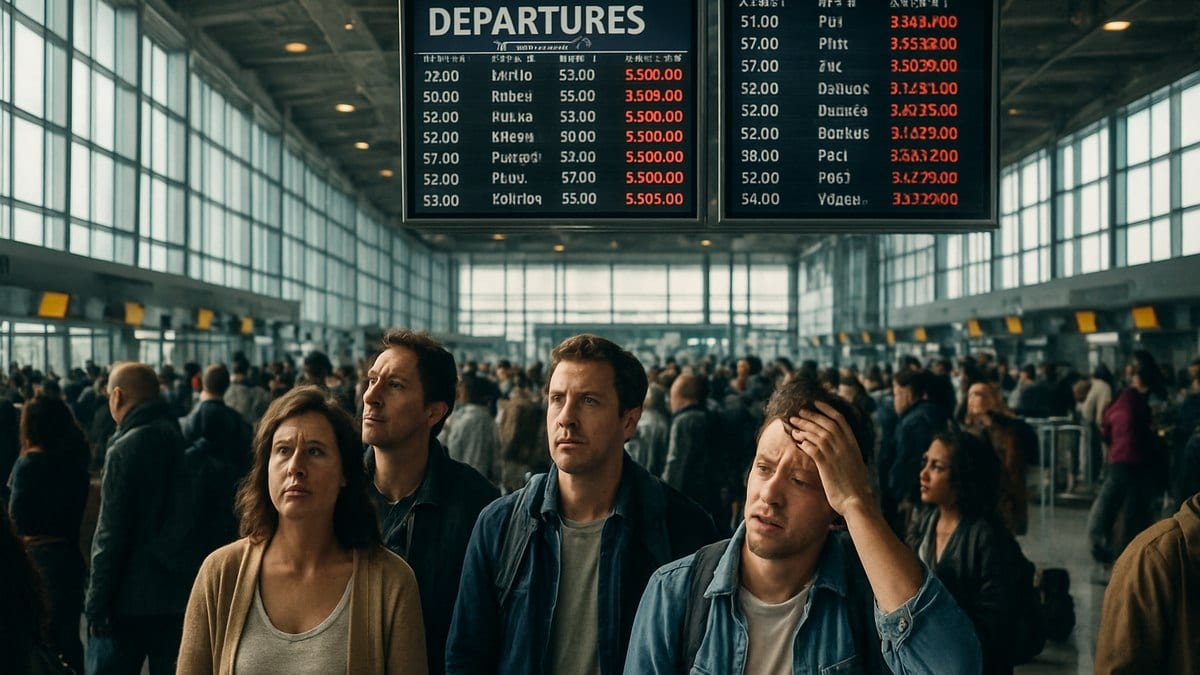
Accounts compiled by travel news outlets and social media monitoring describe a familiar picture inside Miami International during the April 6 disruption: crowded check in areas, long gate queues and passengers huddled around busy customer service counters and self service kiosks searching for alternatives. Families returning from holidays and cruise passengers heading home after weekend sailings were especially exposed to long waits as queues built across multiple terminals.
Passengers on connecting itineraries faced particular challenges. With hundreds of flights operating behind schedule, some travelers who had planned tight connections found their onward departures leaving without them, even when those onward flights were themselves delayed. This dynamic left many scrambling to secure new routings, often through other hubs that were also contending with delays.
Extended ground time for aircraft also affected those already onboard. Reports from flight tracking coverage and traveler accounts indicate that some departures experienced lengthy waits at the gate or on the taxiway as air traffic flow programs regulated departures and arrivals to keep runway operations manageable. In several instances, what began as a short delay stretched into multiple hours as crews waited for available slots.
For visitors unfamiliar with Miami International’s layout, the combination of time pressure, crowded corridors and gate changes compounded the stress. Although recent real time data suggests that security checkpoint waits have often remained relatively short compared with other busy hubs, the main bottlenecks on April 6 emerged at boarding areas and in the broader flight schedule rather than at screening lines.
What the Disruptions Mean for Upcoming Spring Travel
While the April 6 episode represents only a snapshot in a long and busy travel season, analysts quoted in recent travel coverage view it as another sign that U.S. aviation remains finely balanced during peak periods. With airlines operating dense schedules and aircraft utilization running high, even localized surges in delays such as the 265 late flights and nine cancellations in Miami can ripple outward and affect passengers far beyond South Florida.
Industry observers note that early April sits at the intersection of several strong demand drivers, including school spring breaks, late season ski trips, cruise returns and early warm weather vacations. Many of those itineraries pass through Florida or connect to Caribbean and Latin American destinations via Miami, leaving relatively little margin for error when operational challenges arise elsewhere in the network.
Travel guidance issued by consumer advocates and covered widely in recent reporting emphasizes tactics that may help reduce the risk of being caught in similar disruption waves. Recommendations commonly include booking early morning departures when possible, allowing generous connection times through busy hubs such as Miami and monitoring both weather forecasts and live flight status tools in the days leading up to departure.
The April 6 disruption underscores that for the remainder of the spring travel period, passengers using Miami International Airport should prepare for the possibility of shifting departure and arrival times, particularly on peak weekends. Even as airlines work to stabilize schedules and airports invest in capacity and infrastructure improvements, the experience at Miami shows how quickly a single day can tilt into widespread delay when high demand and tight operations converge.