

More news on this day
Spring travelers passing through Miami International Airport on April 6 faced another day of severe disruption as 265 delayed flights and nine cancellations rippled through one of the nation’s busiest aviation hubs.
Get the latest news straight to your inbox!
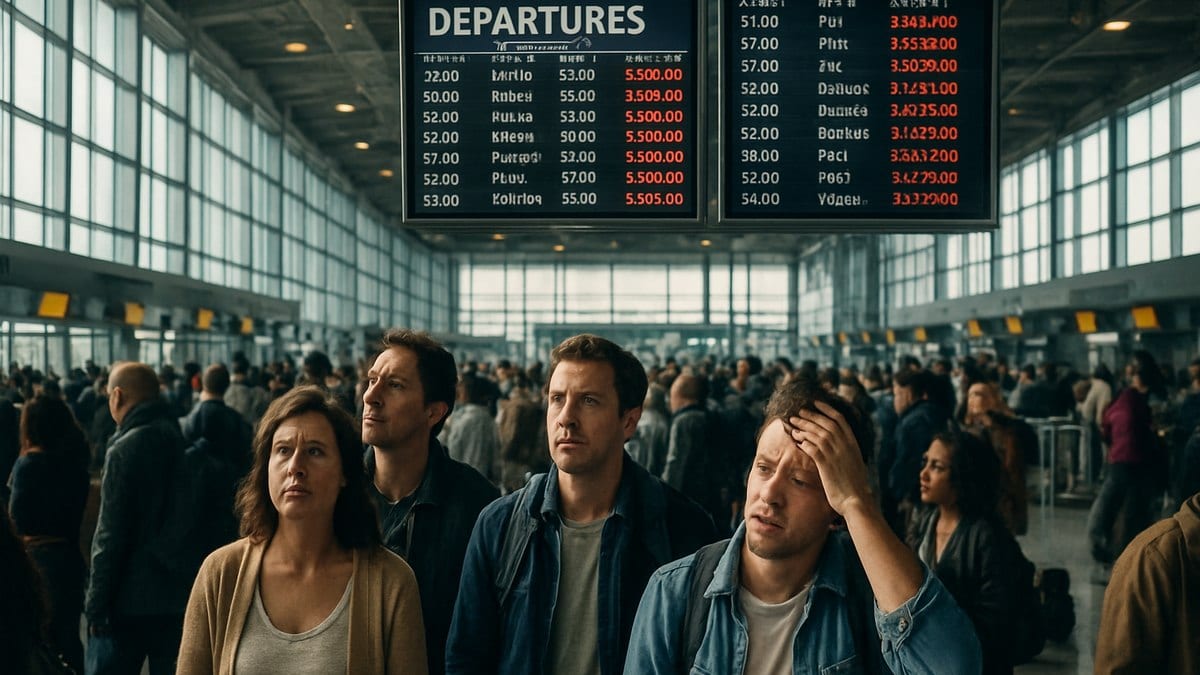
Heavy Disruptions Across Domestic and International Routes
Publicly available flight-tracking data and industry reports for April 6 indicate that Miami International Airport experienced one of its most turbulent days of the spring travel period, with delays affecting a wide range of domestic and international services. The disruption touched flights to and from major U.S. cities including New York, Chicago, Dallas and Los Angeles, as well as transatlantic and Latin American connections.
Coverage from aviation and travel outlets describes a pattern in which departure banks that would normally cycle through the morning and afternoon became backed up, forcing rolling delays across multiple carriers. The combination of late-arriving aircraft, air traffic constraints and congested turnaround windows contributed to longer ground times and missed connection windows for many passengers.
Reports also note that the impact in Miami did not occur in isolation. Network effects meant that delays on Miami-bound flights created secondary slowdowns at origin airports, where aircraft were held at gates or on taxiways while slots into South Florida were re-timed. This dynamic added further strain to a national system already operating at elevated volume for early April.
Although only a small fraction of services at Miami were fully canceled, the nine cancellations recorded for the day significantly complicated travel for those whose itineraries relied on tight connections or limited-frequency international routes.
Spring Surge Meets a Fragile Flight Network
The Miami disruption on April 6 comes at the height of a broader seasonal surge. Early April traditionally marks a busy period for U.S. aviation as Easter holiday travel overlaps with spring break itineraries and the first wave of early summer planning. Recent analyses of 2026 flight data show that national delay and cancellation figures have climbed sharply around the Easter and early April window, with several days surpassing thousands of delayed flights across the country.
Miami International has been under particular scrutiny this year due to its role as a primary gateway for Caribbean and Latin American travel, along with heavy inbound tourism linked to cruises and beach destinations. Separate delay rankings and airport performance studies published in recent weeks have highlighted Miami as among the more disruption-prone large U.S. airports, reflecting both its heavy schedule density and its exposure to weather and airspace constraints.
In this context, the 265 delays logged on April 6 fit into a pattern of elevated operational stress that has developed since late March. Travel-focused coverage has traced a sequence of storms, air traffic control slowdowns and high-load holiday weekends that left carriers with little margin to absorb new disruptions. When individual hubs such as Miami encounter a surge of late departures, the entire connected network can feel the effects for days.
For passengers, this environment translates into longer lines at check-in and security, congested gate areas and increased competition for rebooking options, particularly on nonstop routes and popular leisure corridors.
Knock-On Effects for Airlines and Travelers
Published coverage of the April 6 disruption notes that multiple major and low-cost carriers operating at Miami were affected by the wave of delays. When schedules are tightly structured around high aircraft utilization, even short interruptions can cascade into multi-hour hold-ups, aircraft swaps and crew scheduling challenges.
Analysts tracking the latest spring disruption cycle point to late-arriving aircraft as a key driver. When an inbound flight lands behind schedule, the same aircraft may be slated to operate one or two subsequent departures within a narrow time window. That structure leaves little room to recover once departure banks begin to slip, creating the kind of rolling delays visible on Miami’s departure boards.
For travelers, the practical effects were visible across the terminal complex. Public information from the airport and airlines pointed to crowding at customer service counters, longer-than-usual rebooking times and increased reliance on digital tools as passengers attempted to secure alternative itineraries. Those holding connecting tickets through Miami faced particular uncertainty if inbound flights arrived too late to make onward segments.
Some travel advisories circulating over the weekend encouraged passengers with flexible plans to monitor conditions closely and, where possible, adjust departure times or dates to avoid the most congested periods. Others recommended leaving additional buffer time for connections through Miami and other high-volume hubs during the remainder of the spring peak.
Broader Pattern of Early 2026 U.S. Flight Disruptions
The Miami delays form part of a wider theme in early 2026, when U.S. travelers have confronted repeated waves of flight disruption linked to weather systems, air traffic flow management and operational bottlenecks. Data compiled by aviation news and travel analysis sites for late March and early April shows that national totals for delays have repeatedly spiked as storms moved across major hub regions.
Recent reporting highlights that airports such as Chicago O’Hare, Dallas Fort Worth and Atlanta have all endured heavy delay days in the past week, with knock-on effects across the domestic network. Against this backdrop, a localized surge of 265 delays at Miami underscores how quickly a single hub can experience strain when network conditions are already fragile.
Industry-focused research into air travel reliability has also emphasized how disruption tends to cluster at large connecting hubs that serve as transfer points between domestic and international markets. Miami’s role in linking North American, Caribbean and South American routes places it squarely in this category, particularly during holiday travel periods when load factors are high and spare seat capacity is limited.
The early 2026 pattern is reviving questions among travelers and analysts about the resilience of the U.S. flight network during peak seasons. While operational data sometimes frames airport-wide delay averages as manageable, the passenger experience on days like April 6 in Miami can feel significantly more acute, especially for those dealing with missed cruises, tours or onward international connections.
What Today’s Chaos Means for the Rest of Spring
With the latest Miami disruption unfolding in the first full week of April, travel observers are watching closely for signs of how quickly airlines can restore more stable schedules. Historical patterns and recent expert commentary suggest that several days are often needed to fully unwind the effects of a major delay surge, particularly when aircraft and crews must be repositioned across multiple hubs.
For the remainder of the spring travel period, publicly available guidance from airlines and travel organizations continues to emphasize preparation and flexibility. Travelers connecting through Miami are being encouraged to build longer layover windows, check flight status frequently and consider earlier departures in the day, when schedules are typically less exposed to accumulated delays.
At the same time, ongoing infrastructure and traffic growth in South Florida mean that Miami International is likely to remain both a vital gateway and a pressure point in the U.S. aviation system. As the industry looks ahead to the summer high season, the events of April 6 serve as another reminder of how quickly routine operations can give way to large-scale disruption when demand surges and network conditions tighten.
For now, the 265 delays and nine cancellations recorded at Miami stand as one of the starkest snapshots yet of the challenges facing spring travelers in 2026, and a signal that passengers planning trips in the coming weeks should keep a close eye on conditions at key hubs.