

More news on this day
Travelers passing through Miami International Airport faced widespread disruption as more than 260 flight delays across multiple airlines snarled operations, stretching queues, stranding connections, and complicating already busy spring travel plans.
Get the latest news straight to your inbox!
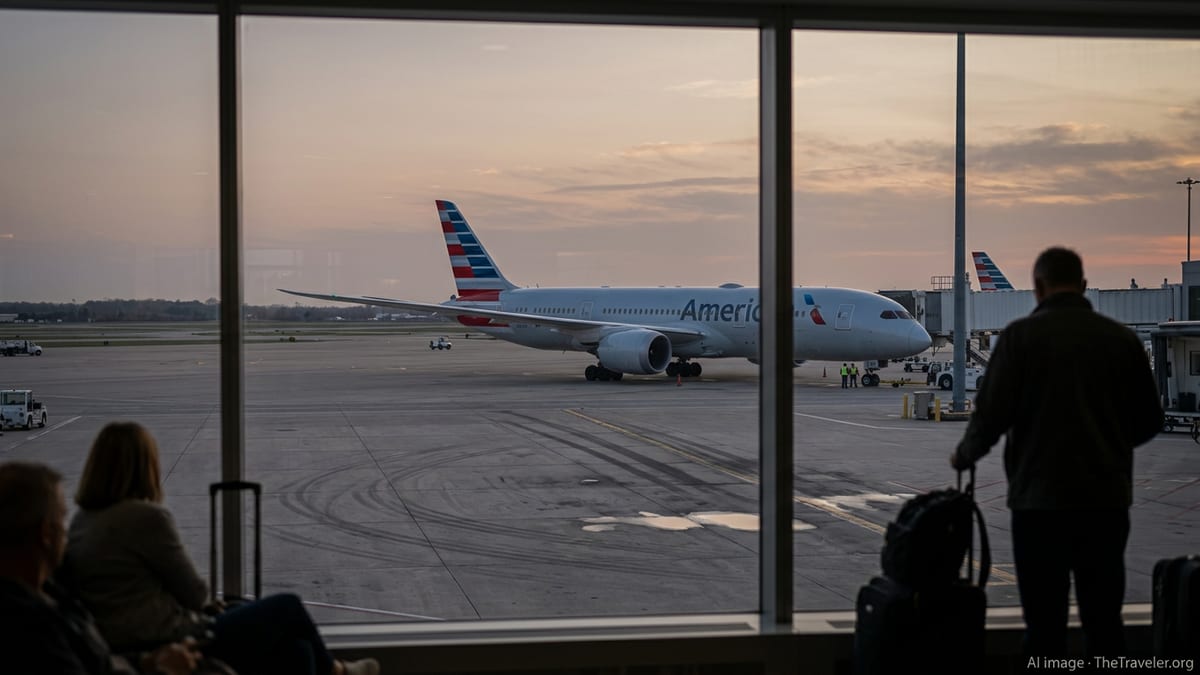
Delays Mount Across Major and Low-Cost Carriers
Publicly available flight-tracking data for Miami International Airport on Friday showed a sharp spike in late departures and arrivals, with more than 260 flights delayed across a mix of full-service and low-cost airlines. The disruption appeared broadly distributed among major U.S. network carriers as well as smaller operators, indicating an airport-wide challenge rather than a single-airline issue.
Reports from aviation trackers and consumer-facing dashboards indicated that delays clustered during the afternoon and evening departure banks, when Miami typically sees heavy domestic and international traffic. As departure times slipped, gate holds and aircraft turnaround bottlenecks began to cascade across the schedule, affecting flights to hubs in the Northeast, Midwest, and Latin America.
Published coverage and live operational data suggested that while some airlines absorbed the disruption with modest schedule adjustments, others recorded delay rates well above their daily averages. That uneven performance translated into longer waits at individual concourses, where passengers for certain carriers faced more frequent rolling departure-time changes.
The spike at Miami came at a time when U.S. airlines are already operating near peak capacity on many routes, leaving limited slack in the system to re-accommodate disrupted travelers. With aircraft and crew scheduled tightly, a wave of late departures in one block of the day can reverberate well into the night.
Weather, Congestion, and Network Fragility Collide
Available operational information pointed to a combination of factors behind the snarled operations at Miami, including convective weather in South Florida and along key East Coast corridors, air traffic control flow restrictions, and knock-on effects from earlier delays at other hubs. When those elements combine at a major connecting point, even modest thunderstorms can trigger substantial schedule instability.
Industry data from recent years show that Miami International is particularly sensitive to summer-style storm patterns and low visibility events, with periods where arrivals must be slowed or temporarily rerouted. When arrival rates are reduced, aircraft often wait on the ground at their origin airports or linger in extended taxi queues after pushback, driving up delay minutes on both ends of a route.
Analysts note that the broader U.S. system has become more vulnerable to such disruptions as airlines streamline fleets and seek to maximize aircraft utilization. With fewer spare planes and crews on hand, a single weather cell lingering near a busy approach path can spill over into missed connections, extended gate holds, and late-night rescheduling. Miami’s role as a gateway to Latin America and the Caribbean amplifies the impact when delays occur during long-haul departure windows.
The situation on Friday reflected that fragility, with delays at Miami interacting with congestion at other East Coast airports already dealing with spring storm systems. As national aviation maps filled with weather advisories, Miami’s departure and arrival flows had less room to flex around the constraints.
Passenger Experience Strained by Long Waits and Missed Connections
Travelers transiting Miami reported extended lines at check-in counters, security checkpoints, and boarding gates as the day progressed. With multiple carriers adjusting their schedules in real time, monitors across the terminals showed a growing list of flights tagged as delayed, many by more than an hour.
For connecting passengers, the 260-plus delays translated into missed onward flights and unplanned overnight stays. Miami’s role as a hub for both U.S. domestic links and international services means that a late inbound flight can easily break a multi-leg itinerary, leaving passengers scrambling for limited alternative options on already full departures.
Publicly available information from consumer forums and social media posts highlighted common themes: difficulty reaching airline call centers, limited same-day rebooking options, and uncertainty about whether to leave secure areas of the terminal while waiting on rolling departure estimates. Some passengers described waiting on board aircraft during prolonged ground holds, while others encountered last-minute gate changes that added to the confusion.
As airlines worked through their backlogs, some travelers were rebooked onto flights departing many hours later or rerouted through alternative hubs, extending total travel times well beyond original plans. In a few cases, overnight hotel stays became necessary when final outbound flights of the evening departed before delayed inbound connections could arrive.
Airline Responses and Operational Adjustments
According to published coverage and airline status pages, carriers serving Miami implemented a familiar playbook to manage the disruption. Measures included issuing flexible travel notices that allowed customers on affected flights to rebook without change fees, consolidating lightly booked departures, and prioritizing aircraft utilization on long-haul and high-demand routes.
Some airlines repositioned aircraft from less affected stations in an effort to restore balance to their Miami operations, while others opted to protect morning departures the following day by grounding certain late-night flights rather than pushing schedules deeper into the overnight hours. That strategy is often used to ensure that crews remain within federal duty-time limits and that aircraft are in place for early wave departures when airports are less congested.
Operational dashboards indicated that maintenance teams and ground handlers at Miami were working against the clock to turn aircraft quickly once they arrived at the gate. However, longer inbound delays reduced the time window available for cleaning, fueling, and baggage loading, creating additional pressure on already stretched staff.
Industry observers noted that the Miami disruption fits into a broader pattern of recent strain across U.S. airports, where even localized weather events or minor system issues can lead to outsized ripple effects. With travel demand remaining strong, airlines have little choice but to keep schedules dense, leaving limited margin when irregular operations occur.
What Travelers Can Do When Miami’s Schedule Unravels
Travel experts recommend several practical steps for passengers traveling through Miami on days of heavy disruption. First, monitoring flight status directly through airline channels and airport dashboards can provide earlier notice of schedule changes than third-party apps that may refresh less frequently. Checking status before leaving for the airport can help avoid unnecessary time in terminal queues when significant delays are already building.
Second, travelers with tight connections at Miami may benefit from selecting longer layovers during seasons when storms are most common along the Gulf and Atlantic coasts. While extended connections can mean more time in the terminal, they also increase the odds of making onward flights when earlier segments run late.
Third, passengers are advised to understand the basic contours of their rights under U.S. Department of Transportation rules and individual airline policies around rebooking and care during lengthy delays. Publicly available guidance outlines circumstances in which meal vouchers, hotel accommodations, or refunds may be available, particularly when disruptions are within an airline’s control.
Finally, industry analysts suggest that flexibility is key when Miami’s schedule begins to fray. Being open to alternative routings through other hubs, nearby airports in South Florida, or departures on the following day can expand the set of options an airline can offer. On days like Friday, when more than 260 delays crowded the departures board, that flexibility often makes the difference between arriving late and not arriving at all.