

More news on this day
Travelers moving through Miami International Airport on Easter Monday faced a fresh wave of disruption, as nearly 200 delayed flights and nine cancellations upended connections across major US hubs including New York, Atlanta, and Chicago.
Get the latest news straight to your inbox!
Heavy Disruptions Centered on Miami International Airport
Publicly available aviation tracking data and industry reports indicate that Miami International Airport recorded 197 delayed flights and nine cancellations over the course of the Easter Monday travel period, compounding an already strained national network. The disruption hit both domestic and international operations, affecting departures and arrivals that connect South Florida with the rest of the United States.
The disruption figures place Miami among the more heavily impacted airports in the country during the post-holiday rush, although it remained below the most severely affected hubs in terms of total cancellations. Nevertheless, the high volume of delays meant that many aircraft pushed back well behind schedule, creating a cascade of missed or tight connections for travelers bound for other cities.
Reports highlight that the affected schedule ranged from short regional hops to long-haul routes, with flights linking Miami to New York, Atlanta, Chicago, Dallas, and several West Coast destinations experiencing significant timetable pressure. For many passengers, a single delayed leg out of Miami proved enough to unravel carefully timed multi-stop journeys.
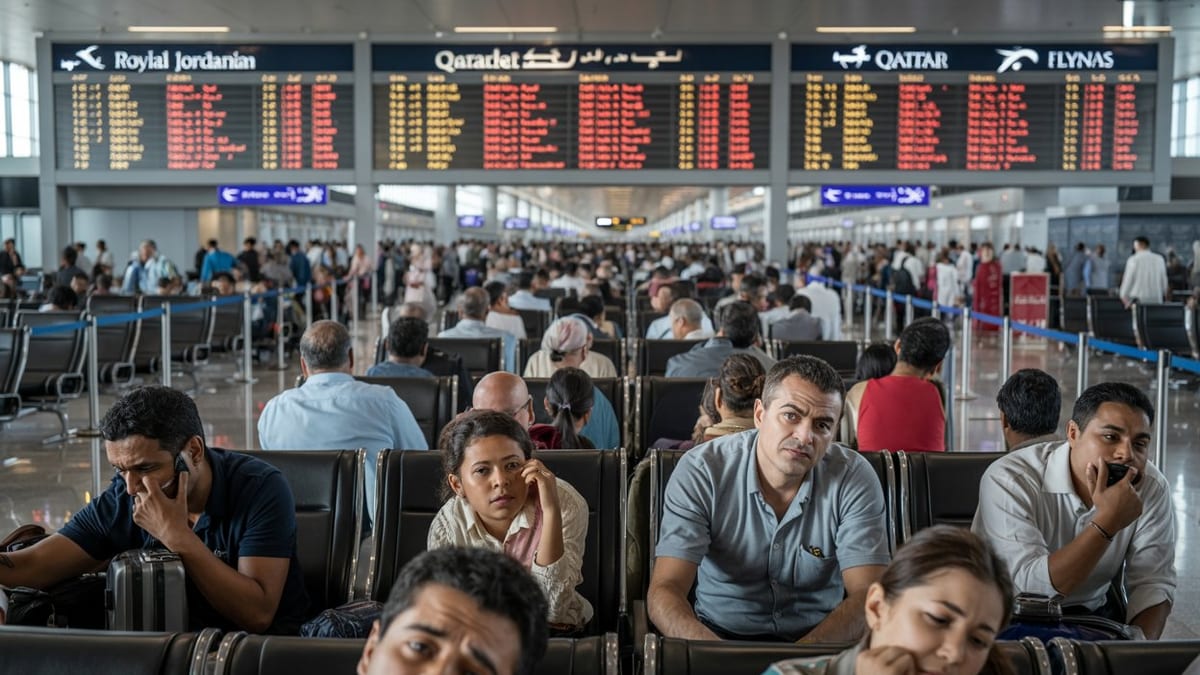
Passenger accounts shared across social platforms describe crowded concourses, long customer service lines, and difficulty securing same-day alternatives once delays began to stack up. While only a small share of flights were formally canceled, the breadth of late departures and arrivals effectively turned Miami into a chokepoint for much of the day.
Frontier, Delta, Spirit and Legacy Carriers All Hit
The disruption at Miami did not fall on a single carrier. Published tracking data and travel industry coverage show operational impacts across a mix of low-cost and full-service airlines, including Frontier Airlines, Delta Air Lines, Spirit Airlines, American Airlines, and United Airlines. Each of these carriers uses Miami to feed broader networks that span the East Coast, Midwest, and international markets.
Frontier and Spirit, both prominent in South Florida leisure traffic, saw substantial schedule pressure on routes linking Miami with major metropolitan centers such as New York and Chicago. Late-running departures increased the likelihood of missed onward flights at northern hubs, particularly when travelers were booked on separate low-cost itineraries that offer limited protection during irregular operations.
Delta and other legacy airlines contended with similar issues on key trunk routes to Atlanta, New York, and other connection-heavy airports. According to airline performance dashboards maintained by federal transportation agencies, rebooking options, hotel vouchers, and food assistance vary widely by carrier, leaving some passengers better supported than others when flights do not operate as planned.
Operationally, airlines appeared to lean more heavily on delays than outright cancellations, reflecting a broader national strategy seen over the Easter travel period. By holding flights rather than scrubbing them entirely, carriers aimed to keep aircraft and crews positioned for later departures, although the tradeoff for passengers often came in the form of extended waits at the gate.
Ripple Effects Across New York, Atlanta, Chicago and Beyond
Miami’s flight problems quickly rippled through other major nodes in the US air travel system. Reports on nationwide disruption patterns over the same multi-day period point to elevated delays and cancellations at Atlanta’s Hartsfield Jackson, New York area airports, and Chicago’s O’Hare and Midway, all of which have extensive connectivity with South Florida.
When an early-morning departure from Miami left late or failed to operate, aircraft and crew were often delayed in reaching their next assignment at another hub. This contributed to additional late pushes and occasional cancellations on subsequent flights, including services only indirectly tied to Miami. Travelers starting their journeys in New York or Chicago sometimes encountered delays that could be traced back to earlier disruptions in Florida.
Large connecting airports such as Atlanta were particularly vulnerable to these knock-on effects. Aviation data reviewed by news outlets over the Easter weekend recorded hundreds of delays and several dozen cancellations centered on Atlanta alone, figures that combined locally driven weather and congestion challenges with upstream issues from other cities, including Miami.
For passengers, the interconnected nature of airline scheduling meant that even those not passing through South Florida could feel the impact. A delayed inbound aircraft from Miami might result in a later departure to secondary markets in the Midwest or Northeast, creating a complex chain of inconvenience extending far beyond the original disruption point.
Weather, Holiday Demand and System Strain
The timing of Miami’s latest bout of disruption coincided with one of the busiest travel windows of the spring. According to published aviation and travel analysis, the Easter 2026 period produced thousands of delays and hundreds of cancellations nationwide over several days, as strong storms in parts of the country met elevated passenger demand and tight airline staffing.
While Miami itself did not bear the brunt of the worst weather, its role as a major connecting point for Caribbean, Latin American, and domestic traffic left it exposed to schedule turbulence originating elsewhere. Delays at major hubs like Chicago, Dallas, and Atlanta could easily translate into late arrivals into Miami, compressing turnaround times and pushing departures further behind schedule.
Industry assessments emphasize that modern airline operations operate close to capacity during peak periods, leaving limited slack in aircraft and crew rotations. When a disruption window opens, even a modest set of cancellations or ground stops in one part of the country can echo through the system for many hours. Miami’s 197 delays and nine cancellations fit into this wider pattern of a network under strain rather than a purely localized breakdown.
In addition, staffing constraints in areas such as air traffic control and ground handling continue to play a role in how quickly airlines can recover from irregular operations. Travel analysis published in recent months notes that the combination of high demand, weather volatility, and persistent staffing challenges has made rapid recovery from disruptions more difficult across the US aviation system.
What Travelers Can Do as Disruptions Mount
The latest wave of delays at Miami International Airport serves as another reminder for travelers to build more flexibility into their plans, particularly when connecting through busy hubs. Federal transportation resources and consumer travel advisories commonly recommend allowing longer layovers, especially when journeys depend on tight connections through airports like Miami, Atlanta, or New York.
Publicly available information from the Department of Transportation’s Airline Cancellation and Delay Dashboard underscores that each airline maintains its own customer service commitments. Some carriers offer meal vouchers and overnight accommodations during controllable disruptions, while others provide more limited assistance, especially low-cost operators that keep base fares lower in exchange for fewer amenities.
Travel experts frequently advise passengers to monitor flights through both airline apps and independent tracking tools, which can sometimes flag equipment or routing changes before they appear on airport departure boards. In high-demand periods such as Easter and summer holidays, same-day alternative flights can fill quickly once a delay stretches into several hours.
For those flying routes that commonly connect through Miami and other high-traffic hubs, the current pattern of disruptions suggests that advance planning and flexible booking options may be increasingly valuable. As the latest episode at Miami International illustrates, a handful of cancellations and a few hundred delayed flights at a single airport can be enough to reverberate across the national network and reshape travel plans far beyond South Florida.