

More news on this day
Hundreds of passengers were left stranded across the United States on Sunday as operations at Miami International Airport were severely disrupted, with at least 16 flights canceled and more than 200 delayed, snarling schedules for American Airlines, Delta, United and other major carriers and rippling out to key destinations including New York, Chicago, Atlanta and Dallas.
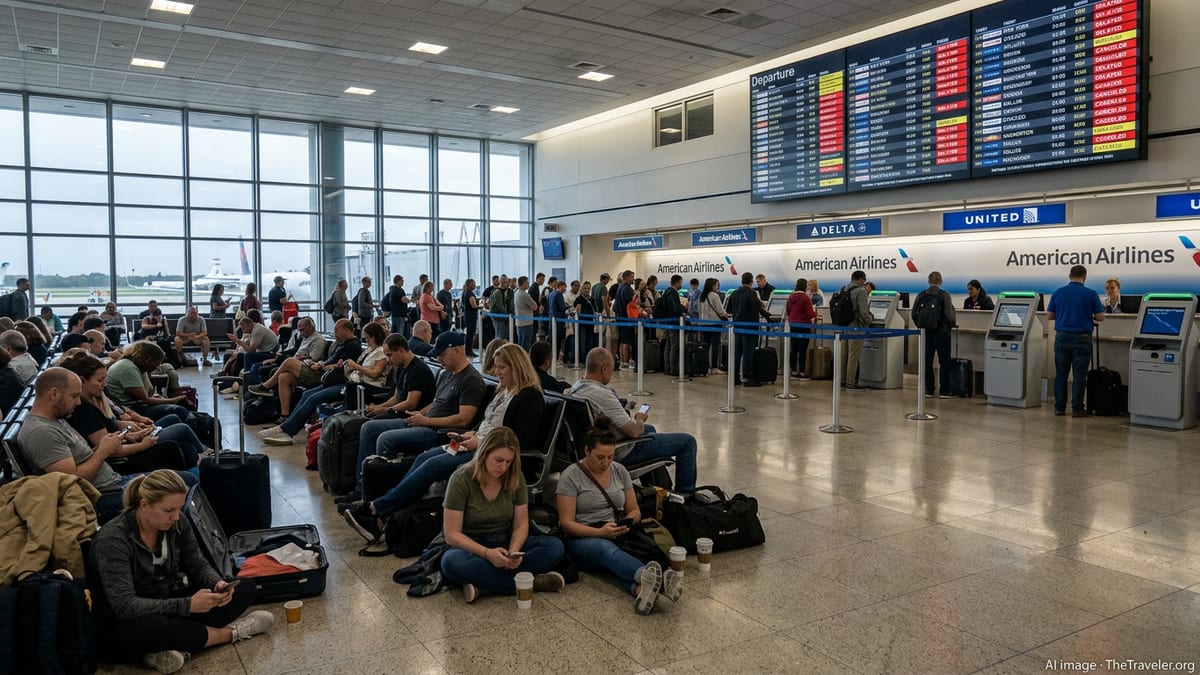
Disruptions at Miami Ripple Across Major U.S. Hubs
The latest day of air-travel turbulence unfolded at Miami International Airport on March 8, where a combination of operational constraints and lingering weather effects turned routine Sunday travel into an ordeal for many flyers. By midafternoon, airport status boards and tracking services showed 16 cancellations and 217 delays tied to departures and arrivals at Miami, leaving aircraft and crews out of position and itineraries in disarray.
Because Miami functions as a critical connecting hub for both domestic and international routes, the knock-on effects quickly spread beyond South Florida. Flights linking Miami with New York, Chicago, Atlanta, Dallas and other large markets were among those delayed, pushing back subsequent legs and stranding travelers in airports thousands of miles apart from the original disruption.
Passengers reported long lines at customer service counters as airlines worked to rebook disrupted itineraries, with many being offered connections through secondary hubs rather than their originally planned nonstop routes. Others were left waiting on aircraft already pushed back from the gate, as air traffic managers slowed the flow of departures and arrivals to cope with congestion in and out of South Florida.
The timing is particularly challenging for airlines, coming as the early spring travel period begins to pick up. With planes already running close to full, the availability of spare seats on alternative flights was limited, making it harder to accommodate displaced passengers quickly.
American, Delta, United and Other Carriers Scramble
Sunday’s disruption at Miami cut across airlines, affecting both the largest legacy carriers and their regional partners. American Airlines, which maintains one of its most important hubs at Miami International Airport, bore a significant share of the impact as cancellations and rolling delays cascaded through its tightly scheduled network.
Delta Air Lines and United Airlines also faced operational headaches, particularly on flights feeding into and out of their own major hubs such as Atlanta, Chicago and New York. Regional operators that fly under big-carrier brands were forced to adjust their schedules as aircraft and flight crews ended up in the wrong cities at the wrong times, worsening delays for travelers who were not even passing through Miami.
Airline operations teams spent much of the day reshuffling aircraft assignments, swapping routes and, in some cases, consolidating lightly booked departures to free up capacity. While these adjustments are intended to stabilize the network over the next 24 to 48 hours, they often bring short-term pain for passengers whose original flights are canceled or retimed as part of the recovery plan.
Industry analysts noted that even a relatively modest number of cancellations at a major hub can reverberate widely, especially when airlines are operating with limited slack in their fleets. Each aircraft that misses an assigned rotation can affect several subsequent departures, turning a localized problem into a multi-state disruption.
Stranded Passengers Face Long Lines and Tough Choices
For travelers caught in Sunday’s disruption, the statistics translated into hours of uncertainty. Inside Miami International Airport, departure boards were dotted with new timings and rolling updates, while gate agents fielded a steady stream of questions from anxious flyers worried about missed connections and disrupted plans.
Some passengers reported being offered rebooking options that involved overnight stays or multi-stop routings through cities far from their original paths, as airlines tried to piece together workable itineraries amid scarce remaining seat inventory. Others opted to cancel or postpone their trips entirely when faced with the prospect of spending much of the day in transit or in terminal waiting areas.
Families traveling at the start of the spring break period were among the hardest hit, as disrupted flights from Miami to leisure destinations forced changes to hotel bookings and vacation plans. At the same time, business travelers heading to Monday meetings in cities such as New York and Chicago scrambled to secure alternative flights or remote participation options, wary that further delays could spill into the workweek.
Airport staff and airline customer-service teams urged patience, emphasizing that rebooking priority would go to those with imminent departures or tight international connections. Nonetheless, photos and accounts from inside terminals described crowded seating areas, packed food courts and long waits for assistance at ticket counters.
Weather, Congestion and a Fragile System
While Miami itself was experiencing relatively mild conditions by early afternoon, Sunday’s problems came on the heels of a broader spell of unsettled weather and congestion across key flight corridors in recent days. Storm systems and low clouds in parts of the Southeast and Midwest earlier in the weekend had already forced airlines and air traffic controllers to reduce arrival and departure rates at several large airports.
Those earlier cutbacks left airlines working through a backlog of repositioning flights and delayed aircraft, leaving little room for additional strain. When new operational constraints emerged at Miami, the system had limited capacity to absorb them without visible pain for passengers. Industry observers say this pattern has become increasingly common as carriers push to maximize aircraft utilization while contending with crew availability rules and infrastructure bottlenecks.
Miami’s role as a gateway to Latin America and the Caribbean adds another layer of complexity. Disruptions at the South Florida hub can interfere not only with domestic connections but also with long-haul routes requiring specific aircraft types and rested international crews. Adjusting those pieces on short notice is challenging, particularly when other hubs are also feeling the ripple effects of earlier weather and traffic issues.
Experts note that even on days when headline cancellation numbers are relatively contained, the cumulative effect of delays across multiple hubs can mirror the experience of a major storm day for individual travelers. A single missed connection can lengthen a journey by many hours and force overnight stays far from a passenger’s intended destination.
Airlines Urge Passengers to Monitor Flights Closely
As carriers worked to stabilize their Sunday operations, airlines urged passengers with flights touching Miami or major connecting hubs such as New York, Chicago, Atlanta and Dallas to keep a close eye on their itineraries. Same-day schedule changes, gate swaps and aircraft substitutions remained likely into the evening as operations teams reacted to evolving conditions.
Travel advisors said flyers facing trips in the coming days should build extra time into connections, especially when traveling through congested hubs, and consider early-morning departures, which are less vulnerable to the cumulative effect of rolling delays. They also emphasized the importance of using airline apps and airport display boards for real-time updates, given that email or text alerts may lag behind rapid-fire operational changes.
With airlines under pressure to maintain reliability during a busy travel period, Sunday’s disruption at Miami highlighted once again how quickly the U.S. air travel system can become strained when one major node experiences trouble. For the hundreds of passengers left waiting in terminals across the country, the hope now is that the network can reset before Monday’s business traffic and additional spring break crowds put even more stress on already stretched schedules.