

More news on this day
Travel plans for hundreds of passengers were upended as Miami International Airport recorded 197 delayed flights and 9 cancellations, disrupting operations for Frontier, Delta, Spirit and other carriers on busy links to New York, Atlanta, Chicago and additional U.S. destinations.
Get the latest news straight to your inbox!
Miami Becomes a Focal Point in a Wider U.S. Disruption Pattern
The latest figures from publicly available flight-tracking data show Miami International Airport bearing a significant share of operational strain, with nearly 200 delayed flights and a small but impactful cluster of cancellations. The totals place Miami among the more heavily affected U.S. hubs during a broader spell of spring travel disruption tied to peak holiday demand and unsettled weather across multiple regions.
Reports from sector-focused outlets describe Miami’s 197 delays and 9 cancellations as part of a nationwide surge in irregular operations that has also swept through Atlanta, New York area airports and Chicago. While Miami’s cancellation count remains limited compared with some larger hubs, the high volume of late departures and arrivals triggered missed connections, extended layovers and last-minute rebookings for travelers moving through the South Florida gateway.
Miami’s role as both a domestic and international connection point amplified the impact. Aircraft and crews arriving late from weather-affected cities in the Midwest and Northeast often turned around behind schedule, pushing knock-on delays into subsequent departures for New York, Atlanta and Chicago and compressing turnaround times for carriers already operating tight schedules.
Industry watchers note that this spike comes on the heels of a busy Easter and spring break period, when traffic at Florida airports typically rises sharply. With full flights and limited spare capacity, even a modest number of cancellations at Miami translated into crowded gate areas and intense competition for alternative seats on later departures.
Frontier, Delta, Spirit and Other Carriers Juggle Tight Schedules
The disruption at Miami did not concentrate on a single airline. Budget carriers such as Frontier and Spirit, along with network operators including Delta and several other U.S. airlines, all posted delayed or cancelled services as they navigated the strain on aircraft rotations and crew availability. Publicly available operational data and recent performance summaries suggest that low-cost carriers remain particularly sensitive to disruptions, as their point-to-point networks often rely on high aircraft utilization and limited schedule slack.
Frontier and Spirit, which maintain strong presences on routes linking Miami with East Coast and Midwest cities, were prominent among the airlines recording late departures. When a single aircraft arrived behind schedule from a weather-affected origin, ensuing Miami departures often left late as well, creating a chain reaction that radiated to onward destinations such as New York, Atlanta and Chicago.
Delta, operating a smaller but strategically important schedule from Miami alongside its larger hub in Atlanta, also encountered timetable pressure. Connections funneling through Atlanta in particular were vulnerable when Miami departures pushed back late, narrowing the window for same-day onward flights. Travelers aiming to reach Midwestern or transcontinental destinations often faced unplanned overnight stays or complex rerouting when missed connections could not be accommodated the same day.
Other U.S. airlines with domestic and international links from Miami reported scattered delays and selected cancellations as they adjusted to air traffic control programs, ground-handling constraints and weather-related flow restrictions along key corridors. With airlines across the board seeking to keep aircraft positioned for future flying, many opted for extended delays instead of outright cancellations, resulting in crowded terminals and extended waits.
Key Routes to New York, Atlanta and Chicago Bear the Brunt
Routes connecting Miami to major hubs in New York, Atlanta and Chicago emerged as some of the most affected, reflecting their importance within airline networks and their exposure to both local and distant operational issues. Flight-tracking snapshots and route maps indicate dense schedules on these city pairs, especially at peak times, which can magnify the effect of each delay or cancellation.
Services between Miami and the New York metropolitan area faced compounded pressure when airspace constraints and weather-related slowdowns intersected with already heavy spring traffic. A delayed arrival into Miami from New York could easily cascade into a late evening departure back to the Northeast, straining crew duty limits and reducing the room for recovery later in the day.
Connections between Miami and Atlanta played a central role in the broader disruption story. As a giant connecting hub, Atlanta handled traffic bound for much of the United States, meaning slippages on the Miami leg often translated into missed onward flights toward the Midwest, Mountain West and West Coast. Travelers reported extended waits in both Miami and Atlanta as they sought open seats on subsequent departures following earlier misconnects.
Links from Miami to Chicago also saw notable timing issues, particularly where flights relied on aircraft arriving from other disrupted airports before heading south to Florida. In several cases, late inbound arrivals narrowed maintenance windows and heighted the risk of rolling delays, especially late in the day when options for re-accommodation typically diminish.
Weather, Holiday Crowds and Structural Strain Behind the Numbers
While Miami enjoyed relatively stable local conditions for parts of the disruption period, the airport was strongly affected by bad weather and operational constraints elsewhere in the system. Reports covering the Easter and early April travel window highlight a mix of thunderstorms, residual winter weather and congestion in key air corridors, forcing air traffic managers to slow departures and arrivals and compelling airlines to stack delays across the day.
Peak holiday and spring break demand added another layer of complexity. With planes operating close to full and spare seats scarce, carriers had limited flexibility to absorb passengers from cancelled or severely delayed flights. Even when aircraft were physically available, duty-time limitations for pilots and flight attendants sometimes prevented crews from operating additional segments, leading to selective cancellations such as those recorded at Miami.
Industry performance reviews and recent government data also point to underlying structural issues that can amplify the effect of any single disruption. Tight schedules, constrained staffing in some operational areas and the growing reliance on large coastal and Sun Belt hubs create conditions in which minor weather or technical problems can escalate quickly into widespread delays across multiple airlines and regions.
Observers note that while airlines have invested heavily in technology to anticipate bottlenecks and reassign aircraft more efficiently, the rapid growth in post-pandemic travel demand has often outpaced the pace of infrastructure and staffing improvements. Miami’s experience, with nearly 200 delays stemming in part from issues far beyond South Florida, underscores how interconnected the system has become.
What Travelers Through Miami Are Experiencing and How They Can Respond
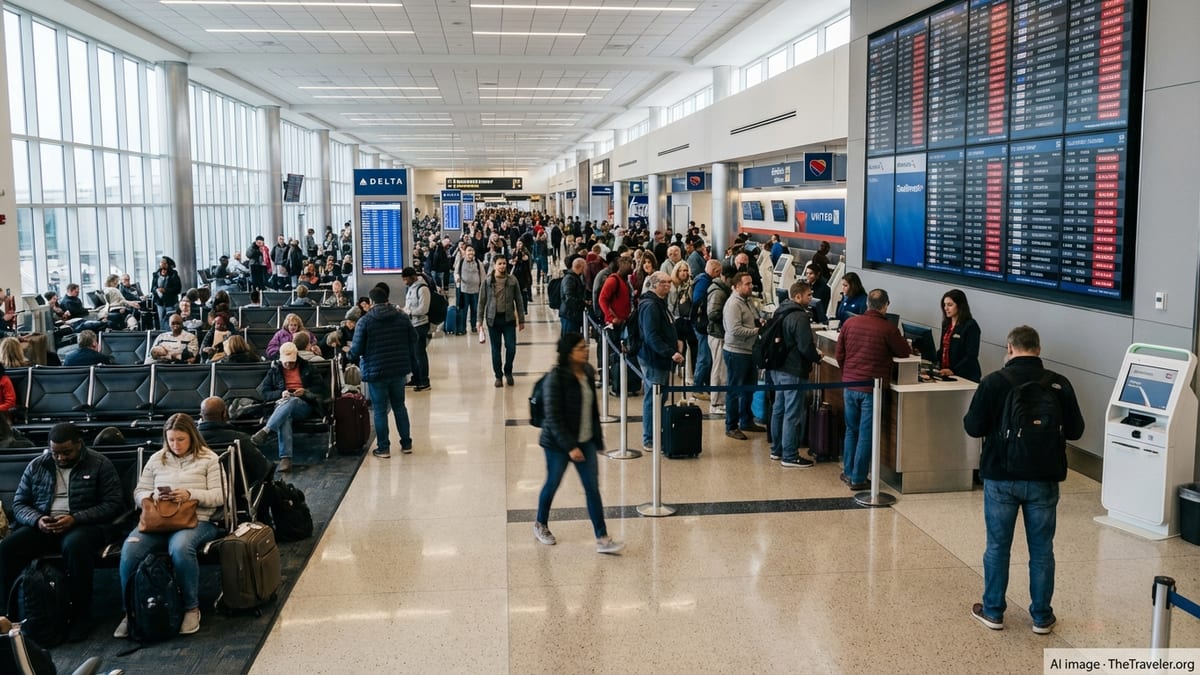
For passengers passing through Miami, the disruption translated into long lines at customer service desks, congested gate areas and a scramble for real-time information. With aircraft and crews out of position, some travelers faced rolling departure estimates that shifted repeatedly over the course of the day, complicating plans for ground transportation, hotels and onward connections.
Consumer travel advisories and airline communications emphasize the importance of monitoring flight status closely through official apps and airport dashboards, particularly when traveling during peak periods or through weather-sensitive hubs. Same-day schedule changes, gate reassignments and equipment swaps have become common tools for airlines attempting to keep as much of the network moving as possible when individual flights fall behind.
Travel analysts also highlight the value of building extra time into itineraries that connect through major hubs such as Atlanta, New York and Chicago when originating or ending in South Florida. Longer layovers reduce the risk that a modest delay departing Miami turns into a missed connection and unexpected overnight stay, especially on international or long-haul routes.
In the wake of the latest disruptions, passenger advocates are again drawing attention to existing federal resources that explain how individual airlines handle delays and cancellations. Public dashboards and customer service plans outline what carriers typically provide in cases of controllable disruptions, including rebooking, meal vouchers or hotel support, and can help travelers understand their options when an irregular operation at Miami or any other U.S. airport threatens to derail their plans.