

More news on this day
A confrontation at a Miami International Airport gate involving an elite-status passenger who was blocked from using a priority boarding lane has sparked intense backlash online, adding fresh scrutiny to how U.S. airlines manage boarding privileges for their most loyal customers.
Get the latest news straight to your inbox!
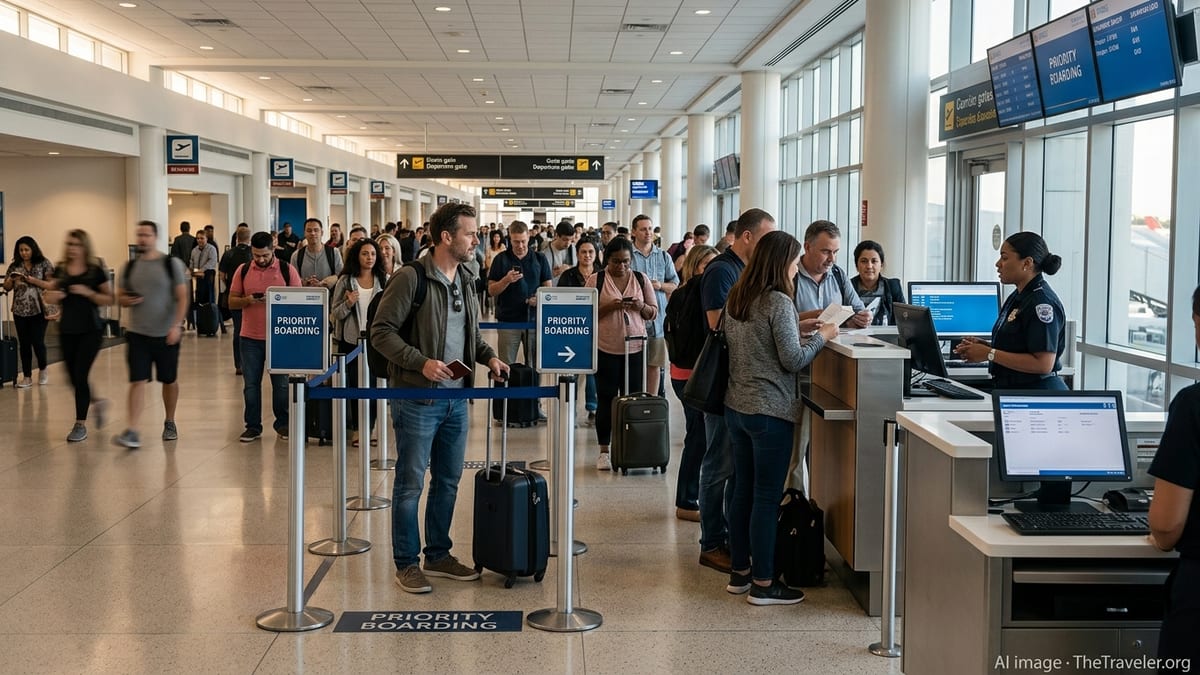
Viral Complaint Highlights Tensions at Miami Gate
According to accounts circulating on frequent flyer forums and social media, the incident unfolded at a busy Miami International Airport departure gate when a passenger with elite status attempted to enter the priority boarding lane. Despite holding a boarding pass that the traveler said reflected access to an elevated boarding group, a gate agent reportedly redirected the passenger away from the lane and instructed them to join a later boarding group.
Witness descriptions suggest the exchange quickly became tense, with other passengers filming and weighing in as boarding continued. The passenger at the center of the dispute later shared details online, arguing that the agent’s actions effectively nullified the value of the expensive loyalty status and premium fares that are marketed around early boarding privileges.
Video clips and posts referencing the Miami gate dispute have been viewed and shared widely in recent days, reinforcing long-running frustrations among frequent travelers who say they encounter inconsistent enforcement of boarding rules. Publicly available coverage shows that similar flare-ups at U.S. airports routinely generate strong reactions from both disgruntled passengers and defenders of strict boarding order.
Priority Boarding Under Pressure as Lines Blur
The Miami case comes amid broader changes in how airlines sell and enforce boarding access. Major U.S. carriers increasingly slice the boarding process into numerous groups, combining elite status, premium cabins, co-branded credit cards and paid boarding options. Industry reporting on large legacy airlines describes as many as nine or more distinct boarding groups, each promising some degree of early access to the aircraft.
Analysts note that as more passengers qualify for “priority” through different channels, the front of the line has grown more crowded. Coverage in national business outlets has described how airlines are tightening when boarding passes can be scanned and directing travelers who step forward too early to wait until their group is called. In that context, gate staff are expected to police the exact sequence of groups, which can heighten friction when a customer is convinced their boarding rights are being ignored.
Consumer travel guides also point out that airlines’ internal boarding codes and what is printed on a boarding pass do not always align clearly for passengers. Documents submitted to regulators and advocacy letters reviewed by the Department of Transportation have cited cases in which designations such as “priority verification” signaled standby status rather than guaranteed early boarding, leading to misunderstanding at the gate.
Elite Flyers Question the Value of Loyalty Perks
The latest backlash from Miami fits into a wider reevaluation of airline loyalty programs by frequent travelers. Recent commentary on elite status in the United States notes that many core perks, such as early boarding and access to overhead bin space, are increasingly available for purchase by non-elite customers. As more passengers buy into those options, the relative advantage of status levels can appear diminished.
Travel industry analysis has outlined how some elite members feel that the emotional payoff of status has eroded as interactions at the gate become more transactional and automated. Gate agents juggling tight departure timelines, software prompts and capacity limits may have limited flexibility to accommodate individual expectations, especially when flights are heavily booked and space in the forward cabin and overhead bins is scarce.
For elite flyers, visible incidents like the Miami priority-lane dispute reinforce concerns that advertised benefits do not always materialize in practice. Loyalty experts often advise travelers to treat priority boarding as a practical tool for comfort and convenience, rather than a guarantee of special treatment, yet situations in which a clearly labeled boarding group is turned away can feel like a direct challenge to that message.
Rules, Rights and Oversight in Boarding Disputes
Boarding conflicts such as the one reported in Miami sit in a complex regulatory environment. Under U.S. Department of Transportation rules, airlines that oversell flights must follow formal procedures when they deny boarding to ticketed passengers, including compensation requirements in certain situations. However, many boarding disputes hinge not on oversales but on interpretation of airline-specific policies, such as dress codes, perceived intoxication, disruptive behavior or arrival times at the gate.
Recent consumer guidance from air travel compensation services and advocacy groups emphasizes that passengers generally have fewer protections when boarding is denied for reasons tied to conduct or policy disputes rather than oversales. Publicly available advice frequently encourages travelers to document interactions, request written explanations of the reason for denial and, when appropriate, file complaints directly with airlines and the Department of Transportation.
Legal filings and past high-profile cases involving denied boarding and removals have shown that airlines retain considerable discretion to determine who may board an aircraft, provided safety and anti-discrimination laws are observed. At the same time, regulators and lawmakers continue to examine how those powers are exercised at the gate, where split-second decisions by front-line staff can escalate into national controversies when captured on video.
Social Media Amplifies Every Gate Confrontation
The speed with which the Miami priority boarding dispute spread online reflects a broader trend in how travel incidents are perceived. In recent years, confrontations at gates in Denver, Atlanta, South Florida and other hubs have gone viral, often accompanied by partial footage and competing narratives about what led to the denial of boarding or change in boarding order.
Commentary on these cases shows that public reaction is rarely unanimous. Some viewers align with elite passengers who feel their loyalty has been disrespected, while others side with gate staff attempting to manage crowded boarding areas and follow complex procedures. In several documented incidents, online debate has centered on whether passengers arrived too late, whether disruptive behavior justified denying boarding, or whether staff misapplied company policies.
For airlines, each viral confrontation risks reputational damage that can far exceed the cost of a single ticket or accommodation voucher. Travel strategists note that carriers are investing in clearer announcements, improved app messaging and employee training to reduce confusion around boarding groups and eligibility. Still, as the Miami episode illustrates, the intersection of tight schedules, layered status tiers and smartphones ready to record means that disputes over a few minutes of early access can quickly become national talking points.