

More news on this day
Global air travel has been thrown into disarray as Qatar Airways joins Emirates, Singapore Airlines, Malaysia Airlines and SriLankan Airlines in suspending or rerouting services across the Middle East, following sweeping airspace closures after U.S. and Israeli strikes on Iran.
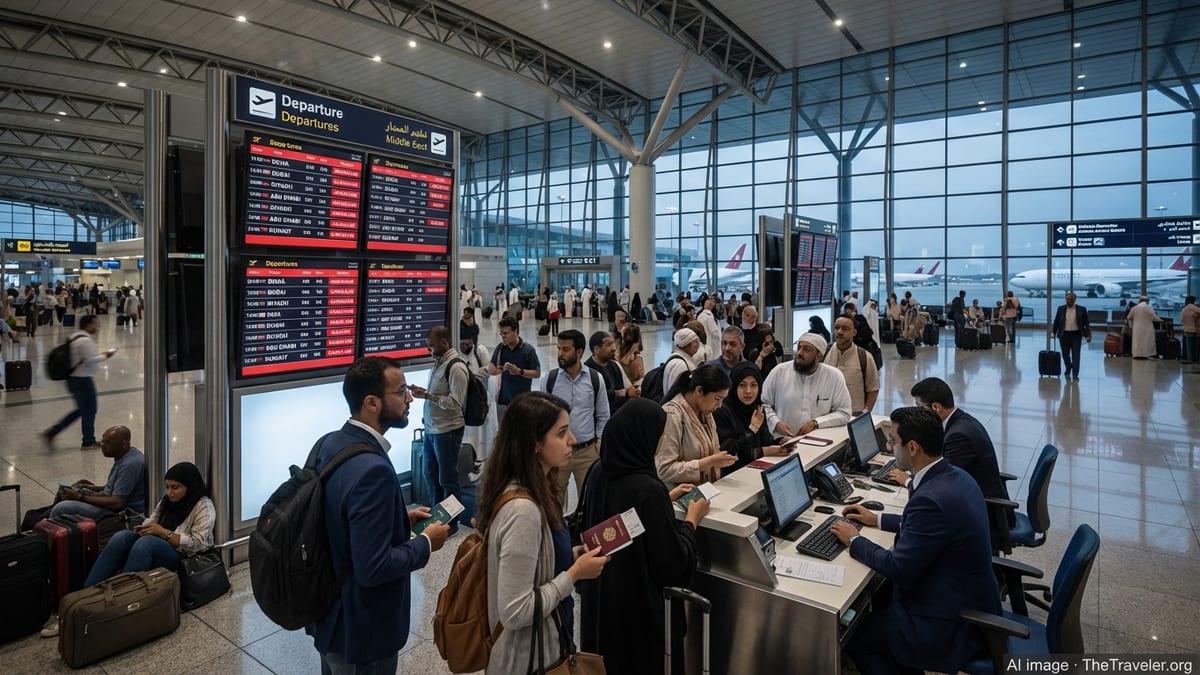
Airspace Closures Shut Down Key Gulf Hubs
Qatar’s complete airspace closure and partial restrictions across the United Arab Emirates, Kuwait, Bahrain, Iraq and Iran have emptied some of the world’s busiest corridors almost overnight. Authorities ordered Qatari skies shut after the latest wave of missile and drone attacks linked to the confrontation with Iran, forcing Doha-based Qatar Airways to halt all commercial operations in and out of Hamad International Airport.
Dubai International and Al Maktoum International airports have also suspended most traffic as Emirates and flydubai ground their networks at home. Data from aviation analytics firms show thousands of flights cancelled or diverted in less than forty-eight hours, with vast stretches of airspace over the Gulf, Iraq and western Iran effectively off limits.
The closures have stranded passengers not only in the Middle East but across Europe, Africa, Asia and Oceania, where flights that would normally overfly the region can no longer pass through. Airlines are scrambling to secure alternative routings via Central Asia, the Caucasus and the Indian Ocean, adding hours to some journeys and significantly increasing fuel and crew costs.
Industry analysts warn that the combined impact on Qatar Airways, Emirates and Etihad alone is unprecedented because these three carriers function as giant global connectors, funnelling tens of thousands of passengers a day between continents through their hubs.
Qatar Airways and Emirates Halt Networks Through Doha and Dubai
Qatar Airways confirmed that all flights remain temporarily suspended due to the closure of Qatari airspace, stating that operations will only resume once the national regulator declares it safe. The airline has deployed additional ground staff at Hamad International Airport and is offering fee-free rebooking and refunds to affected customers. With Doha effectively sealed off, inbound flights have been diverted to secondary hubs such as Athens, Cairo and Muscat, while others turned back mid-route.
In Dubai, Emirates has halted all passenger services to and from its main hub until at least the afternoon of March 2, as the carrier awaits clarity from civil aviation authorities. The shutdown at Dubai International and nearby Al Maktoum International has frozen one of the world’s most important transfer nodes, severing itineraries that connect cities from Sydney and Johannesburg to London, New York and São Paulo.
Operationally, the freeze has created a complex puzzle of aircraft and crew positioning. Widebody jets are parked out of place around the world, unable to reach maintenance bases or their next scheduled rotations, while pilots and cabin crew are timing out on duty limits in unexpected locations. Aviation experts say even a short closure window could take days to unwind across such highly interconnected long haul networks.
Passengers, meanwhile, are facing long queues at service desks and call centres, with many reporting difficulty reaching airlines amid surging demand for rebooking and refunds. Hotels near major transit hubs from Singapore to Istanbul are filling with involuntary stopovers as disrupted travellers wait for alternative routes to open.
Asian and Regional Airlines Cut Services to Gulf Destinations
Singapore Airlines has joined Gulf carriers in cutting back operations, cancelling its Singapore to Dubai rotation on selected days from February 28 to March 7 as a direct response to the volatile security situation and uncertain airspace availability. The airline has warned that additional services may be adjusted at short notice as flight paths and overflight permissions shift.
Malaysia Airlines and SriLankan Airlines have begun quietly trimming or rerouting flights that normally pass through or serve Gulf hubs, according to regional aviation and airport notices. Services from Kuala Lumpur and Colombo to cities such as Dubai, Doha, Jeddah and Riyadh are among those affected, with some flights diverted to alternative gateways on the Arabian Sea rim or suspended outright on specific days.
Low cost and secondary carriers across Asia and Africa are also feeling the shock. Flights between Accra and Dubai, for example, have been cancelled as Ghanaian authorities and Emirates confirm that departures cannot safely operate into the closed Emirati airspace. Similar patterns are emerging at airports in India, Pakistan and East Africa, where a large share of long haul traffic has historically transited through Doha and Dubai.
For many of these airlines, the disruption has a disproportionate effect on migrant worker flows and religious travel, particularly to Saudi Arabia. Seasonal demand for pilgrim and labour routes that depend on Gulf connections now faces sudden uncertainty, with limited spare capacity available on alternative corridors.
Ripple Effects Across Global Routes and Fares
The sudden loss or restriction of Middle Eastern corridors is complicating long haul planning for airlines worldwide. Carriers that would usually cross Iranian, Iraqi or Gulf airspace between Europe and Asia are now plotting longer tracks over the Black Sea, Central Asia or the southern Indian Ocean, adding flying time and fuel burn to already thin-margin routes.
Analysts expect airlines to pass at least part of those added operating costs on to consumers through higher fares and fuel surcharges if restrictions persist. With aircraft and crews tied up on detours and extended rotations, spare capacity will shrink, further tightening seat availability during what was shaping up to be a robust early-year travel period.
Logistics chains are also under strain. Cargo operators that rely on bellyhold capacity in passenger jets through Doha and Dubai are rushing to charter dedicated freighters and secure slots at less congested hubs. Sensitive high value freight, from pharmaceuticals to electronics, is particularly exposed to the sudden loss of predictable overnight connections between manufacturing centres in Asia and consumer markets in Europe and North America.
Travel insurers and corporate travel managers are updating advisories and coverage rules in real time, with some business travel programs temporarily blacklisting routings that would normally pass through Qatar, the United Arab Emirates or adjacent conflict zones. Tour operators are being forced to redesign itineraries for onward trips that once depended on quick Gulf transfers.
Uncertain Timeline for Reopening and Passenger Guidance
Despite assurances from some Gulf governments that there are no immediate security threats to civilians on the ground, aviation regulators are proceeding with caution, coordinating closely with military planners before reopening airspace. Qatar’s civil aviation authority has indicated that it will issue an update on the status of Qatari airspace on March 2, but has not committed to a full reopening.
Industry observers point to previous regional flare ups, when airspace closures lasting just over a week created residual disruptions for far longer as airlines rebuilt schedules and repositioned aircraft. With multiple countries involved in the current round of restrictions and active military operations still being reported, there is no clear consensus on how quickly normal traffic patterns can resume.
Airlines are urging passengers with upcoming itineraries touching the Middle East, or using Doha, Dubai, Abu Dhabi or Riyadh as transit points, to monitor their bookings frequently and ensure contact details are up to date. Many carriers have implemented flexible change policies, allowing free date changes or refunds for travel within the affected window.
For now, global aviation is operating around a conspicuous hole in the map. As long as key Gulf hubs remain constrained, travellers and airlines alike face a period of prolonged uncertainty, improvised routings and rising pressure on already stretched international networks.