

More news on this day
Travel disruption caused by the Middle East conflict is beginning to stabilise for UK passengers, with data showing a sharp fall in flight cancellations after a turbulent March for airlines and airports.
Get the latest news straight to your inbox!
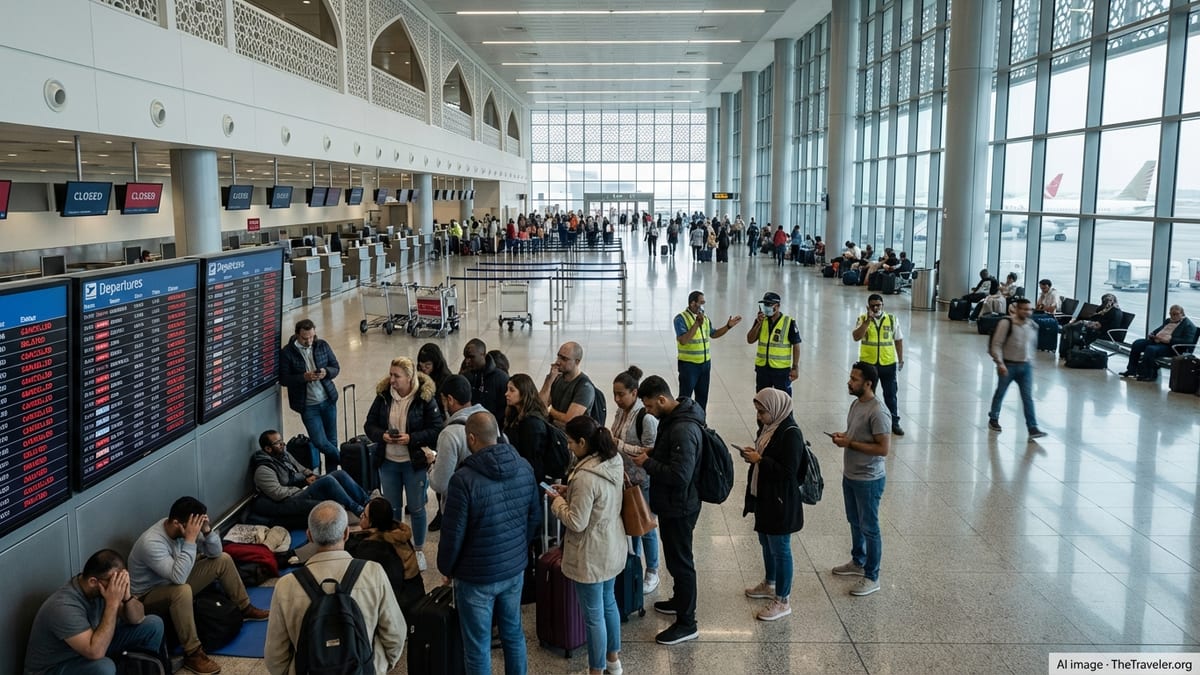
Sharp drop in UK cancellations after March turmoil
Publicly available flight-tracking and aviation operations data indicate that UK airlines and airports are seeing a marked improvement in reliability following weeks of disruption linked to conflict and airspace closures in the Middle East. After elevated cancellation rates through much of March, recent figures for the opening days of April show far fewer grounded services and a return to more typical levels of schedule changes.
Coverage in UK and international media points to a significant gap between the worst days of the crisis and current conditions. At the height of the disruption, some Gulf hubs saw around 70 per cent of flights scrubbed as airspace over Iran, Iraq and parts of the Eastern Mediterranean was restricted or closed, forcing detours, diversions and mass cancellations across long-haul networks connecting Europe and Asia. Those cancellations rippled into UK schedules, particularly on routes relying on Middle Eastern hubs for onward connections.
In contrast, recent operational snapshots suggest that UK departure cancellation rates have fallen back into mid-single digits on many days, a level more consistent with normal weather or technical disruption. While individual carriers continue to adjust timetables, the broad pattern shows that airports such as London Heathrow, London Gatwick and Manchester are now handling the vast majority of scheduled flights, including services that overfly the Middle East via alternative routings.
Aviation consultancy analysis notes that airlines have progressively shifted from emergency response to medium-term planning, rebalancing fleets and redeploying capacity on routes less affected by closed airspace. That adjustment appears to be feeding through to passengers, with fewer last-minute cancellations registered in UK data despite ongoing regional tensions.
Middle East airspace remains constrained but more predictable
The easing in UK cancellations does not mean the underlying Middle East aviation crisis has ended. Industry assessments and regional briefings describe a patchwork of restrictions that continue to affect air traffic corridors over Iran, Iraq, Israel, Syria and neighbouring states. Several major airports in the region, which together handled a substantial share of global long-haul traffic before the conflict, are still operating at reduced capacity or remain closed to most civilian flights.
However, compared with the sudden closures that followed the late February escalation, the current pattern is more stable and predictable. Airlines have been able to file repeatable flight plans around restricted zones, often adding hours to journey times between Europe and Asia but avoiding the kind of last-minute route changes that previously forced cancellations. Egypt, Saudi Arabia and Turkey have emerged as critical waypoints, with published reports highlighting Egypt’s growing role as a corridor between Europe and Asia as carriers divert around the Gulf and Iranian airspace.
According to sector analysis, Middle East airline capacity remains dramatically lower than before the conflict, with some Gulf carriers still operating at a fraction of normal seat supply. Nonetheless, schedules published for April show that the steepest cuts have already taken place and that airlines now expect a period of constrained but relatively steady operations rather than fresh waves of airport shutdowns.
This greater predictability is key for UK and European networks, which depend on long-haul aircraft cycling reliably through hub systems. While many flights are continuing on extended routings that skirt conflict zones, the fact that they can operate at all reduces the need for wholesale cancellations that characterised the early days of the crisis.
Knock-on impact on fares, flight times and UK travellers
Even as cancellations fall, UK travellers are still feeling the consequences of the Middle East aviation shock. Analytical pieces from aviation finance and consultancy firms point to a sharp rise in fuel prices since early March, coinciding with disruptions to energy exports and a surge in oil benchmarks. With fuel accounting for a significant share of airline operating costs, many carriers are imposing or increasing fuel surcharges, particularly on long-haul routes now flying longer detours.
Longer sector lengths are also adding to crew and aircraft utilisation costs. Flights that previously crossed the Middle East on relatively direct great-circle paths are now often routed over Central Asia, North Africa or southern Europe, extending block times and tightening turnaround schedules at European hubs. While UK cancellations are down, delays remain elevated on some corridors, with published tracker data showing knock-on schedule slippage for selected flights arriving from or departing to Asia.
For passengers, the practical effect is more time in the air, higher average fares and less flexibility when plans change at short notice. Travel advisories and airline notices continue to encourage passengers flying between the UK and destinations in South or Southeast Asia to allow additional time for connections and to monitor booking conditions carefully, including rebooking and refund options for itineraries that involve affected transit hubs.
Consumer rights organisations and legal commentators in Europe and the UK also highlight the complex interaction between war-related disruption and compensation rules. While statutory regimes in the UK and European Union provide protections in cases of avoidable cancellation, many airlines classify conflict-related disruption and government-mandated airspace closures as extraordinary circumstances, limiting entitlement to cash compensation even when schedules are heavily altered.
Airlines recalibrate networks as summer season approaches
The timing of the Middle East crisis, just ahead of the busy northern summer travel period, has prompted airlines with major UK operations to reassess their capacity plans. Industry reports describe a shift in focus towards transatlantic and short-haul European routes, where exposure to Middle East airspace is minimal, while some Asia-bound frequencies are trimmed or retimed to fit workable routings.
Several carriers serving the UK have already announced revised timetables into late spring, consolidating flights on certain Asia and Africa routes and deploying larger aircraft where demand remains strong but available slots are limited. Analysts observe that this strategy helps maintain overall seat numbers while cutting the complexity that comes with operating many lightly loaded services on heavily disrupted corridors.
At the same time, airlines based in regions less directly affected by the conflict are seeking to capture demand displaced from traditional Gulf and Levant hubs. European, Turkish and North African carriers are marketing one-stop connections between the UK and Asia that avoid the most heavily restricted areas, a development that could accelerate competitive shifts on long-haul markets if the conflict endures.
For airports, the evolving landscape presents both challenges and opportunities. UK hubs that previously saw large volumes of transfer passengers routed via the Gulf may need to accommodate new wave patterns built around alternative partners, while regional airports could benefit from additional point-to-point capacity as airlines look to spread risk and tap resilient leisure demand.
Outlook: fewer cancellations, persistent uncertainty
Looking ahead, aviation forecasters suggest that the worst phase of immediate disruption may be over for UK travellers, at least in terms of outright cancellations. If current airspace arrangements hold and no further regional escalation occurs, the industry expects cancellation rates to remain closer to seasonal norms, even if delays and lengthened journeys are likely to persist.
Nevertheless, the situation remains highly sensitive to geopolitical developments and energy markets. Any renewed closure of key corridors or further damage to airports in the Middle East could quickly reverse recent gains in reliability and send cancellation statistics higher once more. Airlines and airports are therefore expected to retain contingency schedules and flexible crew planning throughout the spring and early summer.
For passengers planning trips from the UK, the latest data and published commentary point to a more stable, if still challenging, environment than just a few weeks ago. Seats are available on most routes, and large-scale last-minute cancellations have become less common. Yet longer routings, higher fares and the ever-present possibility of sudden airspace changes mean that caution, flexibility and close monitoring of flight status remain essential for anyone travelling on paths that intersect the Middle East.