

More news on this day
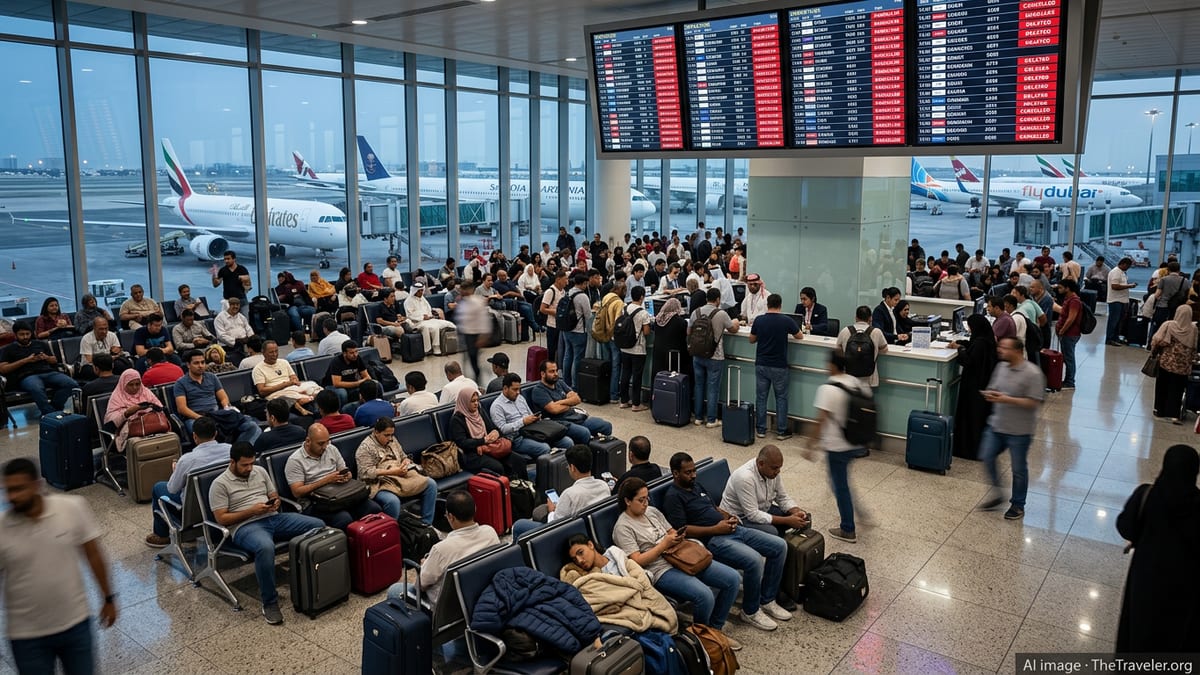
Thousands of air travelers were left stranded across the Middle East on March 7 as authorities in the United Arab Emirates, Saudi Arabia, Türkiye, Egypt, Qatar, Kuwait and Bahrain tightened airspace restrictions, triggering a wave of more than 1,200 flight cancellations and hundreds of delays at some of the region’s busiest hubs.
Regional Airspace Restrictions Trigger Mass Disruptions
The latest wave of disruption follows a series of rapid airspace closures and restrictions introduced after the regional security situation deteriorated at the end of February. Authorities in key Gulf states including the UAE, Qatar, Kuwait and Bahrain have either fully or partially closed their skies to civilian traffic, forcing operators to scrap services or undertake lengthy detours around newly established no-fly zones.
Data compiled by aviation analytics firms and regional aviation authorities indicates that well over a thousand flights were cancelled in a single 24-hour period, with hundreds more suffering significant delays as airlines struggled to reposition aircraft and crew. Industry sources say that in several Gulf hubs, cancellation rates have reached well above half of scheduled operations at the height of the shutdowns, an impact not seen in the region since the early months of the pandemic.
While some airports in Saudi Arabia and Türkiye continue to function as partial relays for diverted traffic, the knock-on effect of the closures is global. Long-haul routes between Europe and Asia that typically rely on the Gulf as a refuelling and connection corridor have been especially hard hit, with flight times extended by several hours where services are operating at all.
Although regulators in the region stress that the measures are temporary and purely precautionary, aviation planners warn that even short-lived closures can generate days of operational disruption as aircraft, crews and passengers are left out of position across multiple continents.
Major Gulf Carriers Forced to Ground Large Parts of Their Fleets
Flag carriers and low-cost giants that depend on Gulf hubs have been at the center of the turmoil. Dubai-based Emirates and flydubai, Abu Dhabi’s Etihad Airways, Qatar Airways in Doha, Saudia in Riyadh and Jeddah, and other regional operators have all been forced to cancel large portions of their schedules as airspace restrictions took hold.
Emirates and Etihad, which anchor the UAE’s global connectivity, initially halted normal passenger operations from Dubai and Abu Dhabi as the country moved to close its airspace to most civil traffic. Limited services have since begun to reappear at both hubs, prioritizing stranded passengers and essential routes, but schedules remain sharply reduced compared with normal levels and subject to rapid change.
Qatar Airways, whose Doha hub sits at the heart of east–west traffic flows, has faced some of the most severe constraints. With Qatar’s airspace closed for extended periods, regular passenger flights in and out of Hamad International were suspended, leaving tens of thousands of travelers in limbo. The airline has started operating a limited program of relief flights and selective operations via nearby airports to assist stranded customers, but full connectivity remains far from restored.
Carriers based in Saudi Arabia, Egypt, Kuwait and Bahrain have also adjusted operations. Saudia has rerouted and consolidated services through airports where overflight remains possible, while EgyptAir and other regional airlines have cancelled routes touching closed airspace. Budget and hybrid carriers serving secondary Gulf cities report that several days’ worth of rotations have been wiped from the timetable as safety restrictions ripple outward.
Hubs From Dubai to Istanbul Strain Under the Pressure
Airports across the Middle East and surrounding region have been transformed into ad hoc holding zones for waylaid travelers. Dubai International, usually one of the world’s busiest hubs, has seen the majority of its departures and arrivals scrapped or heavily delayed in recent days, with parts of the terminal complex repurposed to accommodate passengers awaiting rebooking.
In Doha, the closure of the airspace effectively froze normal passenger traffic for periods at Hamad International, resulting in crowded departure halls and long queues at transfer and ticket counters even as airlines urged passengers not to travel to the airport without confirmed itineraries. Some travelers have reported spending multiple nights on camp beds and seats while waiting for scarce onward options.
Elsewhere, major airports in Riyadh, Jeddah, Cairo, Kuwait City and Manama have faced swings in traffic as cancellations, diversions and relief flights create an uneven flow of passengers. Istanbul’s airports, along with select gateways in Saudi Arabia and Oman, have emerged as critical alternate transit points for those trying to bypass Gulf closures, increasing pressure on facilities that were not expecting such sudden surges in connecting traffic.
Airport operators and ground handlers across the region are working extended shifts to manage the influx of stranded travelers, but they warn that facilities such as hotels, seating areas and catering are being stretched close to capacity as the disruption drags on.
Stranded Passengers Face Long Waits, Complex Rebookings
For passengers, the operational challenges translate into long delays, fast-changing information and a patchwork of rebooking options. Airlines across the region have activated emergency waivers, allowing affected travelers to change dates, reroute through alternative hubs or seek refunds, but availability remains tight on routes that are still operating and call centers are under heavy strain.
Travelers interviewed at Middle Eastern hubs describe a landscape of departure boards dominated by the word “Cancelled,” with remaining services to open destinations heavily oversubscribed. Many report being rebooked two or three times as airlines adjust schedules in real time, while others have turned to rival carriers or overland options in an attempt to reach their destinations sooner.
Consumer and aviation experts say that while airlines are generally honoring refund and rebooking obligations for canceled flights, the extraordinary nature of the airspace closures means that traditional passenger rights regimes offer limited comfort, especially where forces beyond the airline’s control are involved. They advise passengers to retain all documentation of delays and cancellations and to contact both airlines and travel insurers as soon as practical.
For now, the advice from airport authorities and carriers in the Gulf is consistent: travelers should not go to the airport unless they have been specifically informed that their flight is operating and should use official airline channels to verify status rather than relying on third-party apps or anecdotal reports.
Uncertain Outlook as Airlines Watch Security Situation
The wider outlook for Middle Eastern air travel depends heavily on how the regional security situation evolves in the coming days. Aviation regulators have made clear that airspace will only reopen fully when they are satisfied that overflight corridors and key hubs can operate safely, a judgment that rests on complex military and diplomatic developments beyond the industry’s direct control.
Industry groups warn that prolonged closures would have significant economic implications not only for Gulf carriers and airports but also for global trade and tourism, given the region’s outsized role as a connection point between Europe, Asia and Africa. Even as some routes resume on altered flight paths via the Caucasus or the Arabian Sea, longer journey times and higher fuel burn are likely to raise costs for airlines and, eventually, passengers.
Airlines are, however, signaling cautious optimism that the most severe restrictions may ease if tensions stabilize. Several Gulf-based carriers have begun publishing provisional timetables for a gradual ramp-up of operations, focused first on clearing backlogs of stranded passengers before restoring broader networks.
Until those plans translate into reliable daily schedules, travelers with itineraries touching Dubai, Abu Dhabi, Doha, Riyadh, Jeddah, Cairo, Kuwait City, Manama or Istanbul are being urged to monitor developments closely and prepare for continued volatility, with same-day cancellations and multi-hour delays still a distinct possibility.