

More news on this day
Thousands of travelers across the Middle East, Europe and the United States have been left in limbo after a fresh wave of airspace restrictions and operational suspensions in Bahrain, Qatar, the United Arab Emirates and Kuwait triggered 392 flight cancellations and 1,193 delays, disrupting services by Emirates, flydubai, IndiGo, Air France and other major carriers on key routes through Jeddah, Dammam, Paris, Munich and Dallas.
Get the latest news straight to your inbox!
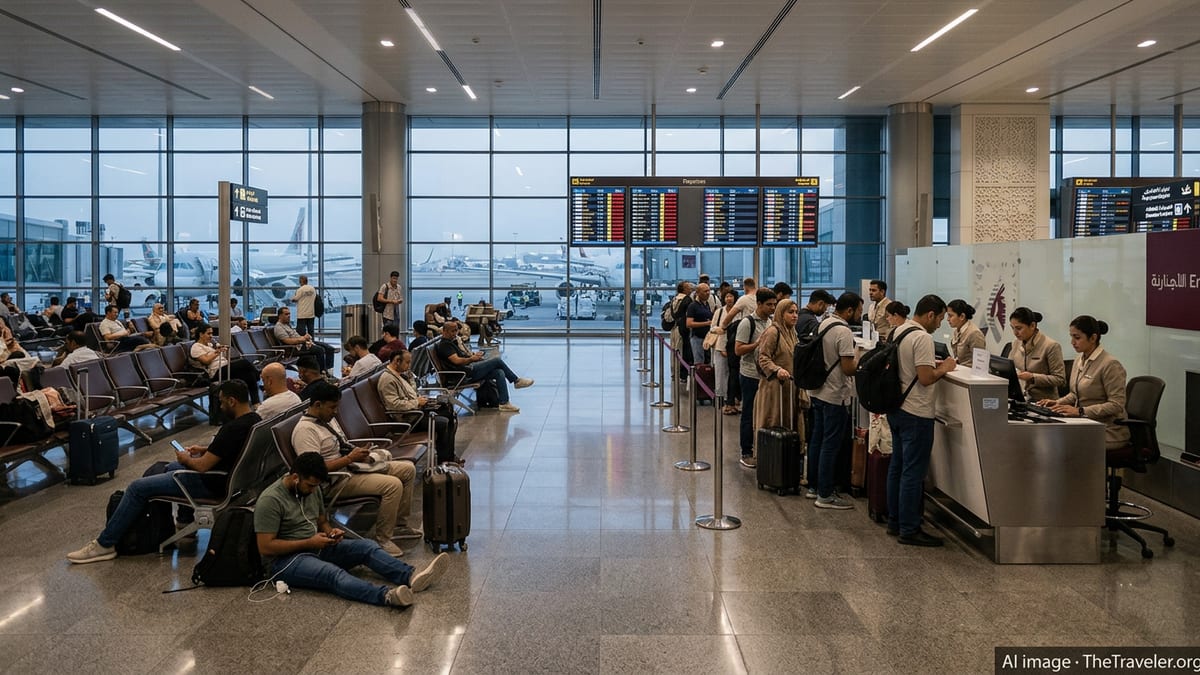
Regional Airspace Limits Trigger Chain Reaction
Publicly available flight-tracking data and airport departure boards indicate that closures and restrictions affecting airspace over Bahrain, Qatar, the UAE, Kuwait and neighboring states have forced carriers to ground or reroute large parts of their networks. The Gulf region functions as an essential bridge between Europe, Asia, Africa and North America, so even partial airspace shutdowns quickly cascade into widespread cancellations.
According to aggregated operational data monitored by aviation analysts, at least 392 flights linked to Gulf hubs were cancelled over a short window, with a further 1,193 services delayed. The figures reflect not only point to point routes in and out of the Gulf but also long haul services that normally transit the region’s crowded air corridors.
Major Middle East airlines, including Emirates and flydubai in the UAE and several Gulf and South Asian carriers, have temporarily thinned or suspended schedules on routes crossing the affected airspace. Publicly posted airline advisories describe the disruptions as a response to safety considerations and evolving operational constraints rather than localized technical issues at individual airports.
The ripple effects have extended far beyond the Gulf, as international airlines that typically use the region as a refuelling or connection point have been forced to redesign flight plans, lengthen routes or cancel services outright. The result has been a patchwork of cancellations, last minute delays and aircraft reassignments across multiple continents.
Airlines From Emirates to Air France Forced to Ground and Reroute
Network carriers that rely heavily on Middle East hubs have borne the brunt of the disruption. Emirates and flydubai, both based in Dubai, have seen multiple departures to and from key markets withdrawn from sale or scrubbed from departure boards as airspace options narrowed, while IndiGo has sharply reduced Gulf services from its Indian bases according to schedules circulated through airline and airport channels.
European and transatlantic operators have also been affected. Public timetables and operational updates show selected Air France and other European flag carrier services routed via or near the Gulf experiencing prolonged delays, equipment changes or outright cancellations, particularly on services that would ordinarily cross restricted corridors en route between Europe, South Asia and Australasia.
Observers note that airlines are juggling competing pressures: ensuring aircraft avoid shuttered airspace, staying within crew duty time limits on lengthened routings and finding spare aircraft and staff to operate alternative paths. The combination often leaves carriers with no option but to cancel frequencies, consolidate flights or substitute smaller aircraft, reducing capacity for stranded passengers.
Low cost and regional airlines that operate dense shuttle patterns between Gulf cities and South Asian or Levant markets are especially exposed. With airspace options constrained, high frequency shuttles that depend on fast turnarounds now face extended ground times, eroding the economics of their schedules and leaving aircraft and crews out of position for subsequent rotations.
Global Hubs From Jeddah to Dallas Feel the Strain
The impact has been felt most keenly at major connecting airports that depend on Middle East traffic. At Saudi Arabia’s Jeddah and Dammam airports, airport information screens and passenger reports describe busy terminals punctuated by cancellation notices, with long queues forming at transfer and ticketing desks as travelers seek rerouting options or hotel vouchers.
In Europe, Paris Charles de Gaulle and Munich have both reported disrupted operations on flights tied to Gulf or South Asia traffic flows. Passengers arriving from or bound for the Middle East have encountered misaligned connections, missed onward flights and rebookings over alternative hubs such as Istanbul or southern European gateways that remain accessible.
Across the Atlantic, Dallas Fort Worth has emerged as one of several North American airports dealing with schedule volatility on services normally routed through the Gulf. Long haul passengers traveling between the United States, South Asia and Africa have found itineraries abruptly modified, with some flights operating on significant delays and others removed altogether as airlines reoptimize their global networks.
The geographic spread of affected cities underlines how central Gulf airspace has become to long distance travel. Even travelers whose tickets show no Middle Eastern stopovers have discovered that their flights were planned to overfly the region, leaving them unexpectedly exposed to rerouting and extended flight times.
Thousands of Travelers Face Missed Connections and Uncertain Plans
For passengers, the operational data translate into very personal disruptions. With hundreds of cancellations and more than a thousand delays in a compressed timeframe, thousands of travelers have missed weddings, business meetings, cruise departures and school terms, often with little advance warning.
Posts shared across airline forums and travel communities describe travelers sleeping on terminal floors, queuing for hours to reach a human agent and struggling to secure last minute hotel rooms near hubs such as Dubai, Jeddah and Doha. Many passengers report being automatically rebooked onto later flights that still depend on airspace reopening, creating further uncertainty over whether revised itineraries will operate.
The complexity of modern multi leg journeys has compounded the confusion. A single cancelled leg through the Gulf can invalidate an entire round trip ticket, leaving passengers to negotiate protection on remaining segments with multiple airlines and alliance partners. Travelers holding separate tickets for connecting journeys have faced particularly difficult negotiations, as some carriers treat the onward legs as unrelated to the disrupted Gulf sector.
Travel insurance policies have also come under scrutiny. Publicly available policy wordings suggest that coverage for airspace related disruptions varies widely, with some insurers treating the situation as an extraordinary event and others requiring passengers to pursue refunds and rebookings directly with airlines before submitting any claim.
What Airlines and Passengers Are Doing Next
As the situation evolves, airlines are adjusting schedules in short cycles, sometimes loading tentative flights into reservation systems only to withdraw them again if overflight permissions or safety assessments change. Publicly available information from airlines and airports indicates that carriers are prioritizing repatriation style services on certain routes while trimming discretionary frequencies such as fifth freedom segments and less profitable rotations.
To manage the backlog, airlines are experimenting with a range of tactics: consolidating lightly booked flights, deploying larger aircraft on trunk routes, and offering voluntary rebooking for passengers whose travel is not time sensitive. Some carriers are allowing free date or destination changes within defined windows, while others are focusing on full refunds for outright cancellations.
For travelers, the most consistent advice in published coverage is to monitor flight status directly with airlines and airports rather than relying solely on email or text alerts, which can lag real time operational decisions. Passengers with upcoming itineraries that cross Middle East airspace are encouraged to check whether their routing can be adjusted via alternative hubs and to factor in the possibility of extended journey times.
With no fixed timeline for a full restoration of normal traffic flows across Bahrain, Qatar, the UAE and Kuwait, the travel picture for the coming days remains fluid. Airlines and passengers alike are navigating a landscape where a single change in airspace availability can instantly reshape global connections, leaving the outlook uncertain for anyone planning to cross the region’s skies.