

More news on this day
Air travel across the Middle East is slowly stabilising after one of the most severe aviation shocks in recent years, with new data and industry updates indicating that flight cancellations are falling sharply and that disruption at major UK airports has eased significantly.
Get the latest news straight to your inbox!
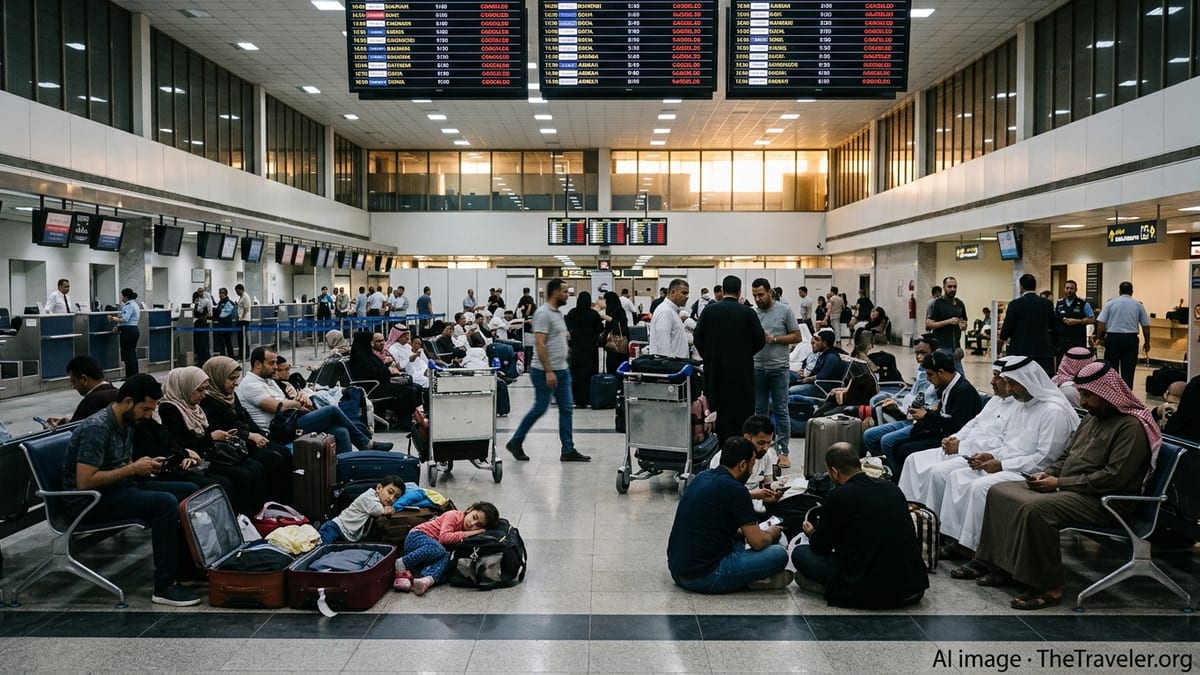
From near standstill to gradual reopening
Regional airspace closures and conflict-linked damage to key Gulf hubs in late February and early March triggered thousands of cancellations and diversions across the Middle East, disrupting a critical crossroads between Europe, Asia and Africa. Aviation summaries for 2026 describe a near-total halt in operations at some airports and extensive rerouting on intercontinental services that previously relied on Gulf stopovers.
Recent reporting shows that this initial shock has given way to a more measured operating environment. Several Middle East countries have begun to reopen portions of their airspace, while airlines refine longer detour routes that bypass the most sensitive conflict zones. Although flight times remain extended on many long-haul sectors, published coverage indicates that outright cancellations have dropped markedly from early March peaks.
The easing of restrictions has allowed major carriers based in the region to rebuild schedules in stages. Updated timetables show more consistent links between the Gulf, Europe and Asia, even if frequencies are still below pre-crisis levels and some secondary routes remain suspended or consolidated.
Cargo operations are also helping lead the recovery. Qatar Airways Cargo, for example, has announced a progressive restoration of freighter and belly-hold services through mid-April, signalling renewed confidence that dedicated corridors can be used safely under enhanced monitoring and coordination.
UK cancellations fall as airlines adapt
For UK travellers, the most visible sign of improvement has been a sharp reduction in cancellations linked to Middle East disruption. In the early days of the crisis, British airports experienced a wave of scrubbed departures and arrivals involving Gulf hubs and onward connections to Asia and Australasia. That pattern is now changing as carriers adapt their networks.
Industry tracking and news reports indicate that UK airports such as Heathrow, Gatwick and Manchester, which previously saw clusters of cancellations to Dubai, Doha and other regional hubs, are now handling more of these flights as planned. While delays remain relatively common and some services are operating on adjusted timings, the proportion of outright cancellations has fallen compared with March’s peak.
Part of this improvement reflects schedule consolidation carried out earlier in the disruption. Airlines trimmed frequencies, shifted passengers onto fewer flights and, in some cases, temporarily switched aircraft types to maximise capacity on operating services. With those leaner schedules in place and clearer airspace guidance now available, UK operations have become more predictable, even if they are still less frequent than before the crisis.
Travel-industry analysis also points to more resilient point-to-point demand between the UK and the Gulf. Despite lingering concerns about regional tensions, publicly available booking data suggests that passengers are returning to these routes as confidence in the stability of revised flight paths grows.
Longer routes and higher costs still shape the picture
Even as cancellations decline, the geography of global flying remains altered. Detailed reporting on the conflict’s wider economic impact notes that many airlines continue to avoid large swathes of Middle East airspace, instead routing over Central Asia, North Africa or the southern Indian Ocean. These detours often add several hours to flight times, raising fuel burn and crew costs.
The burden is particularly heavy on carriers operating between Europe and South or Southeast Asia, which historically used Gulf or Levantine corridors as efficient great-circle routes. Longer track miles and extra technical stops have become routine on some services, and analysts caution that these patterns could persist as long as risk assessments keep large regions effectively off limits.
Higher operating costs are feeding into fares. Industry commentary from energy and aviation specialists points out that detours coincide with elevated jet fuel prices, themselves influenced by broader disruption to oil exports from the Gulf. Some airlines have already adjusted fuel surcharges, while others are signalling that yields will need to rise to offset additional expenses.
Travel insurers are also scrutinising policies in light of the conflict. Consumer-focused coverage highlights that many standard policies include exclusions for disruptions tied to war or hostilities, limiting compensation for passengers affected by cancellations or rerouting in the region. Travellers heading through the Middle East are being encouraged, in public advisories, to check the fine print before departure.
Regional bright spots and uneven recovery
The pattern of disruption and recovery is not uniform across the Middle East. Some states continue to face significant operational challenges, while others have emerged as relative safe havens for transit traffic. Recent analysis highlights Oman, and particularly Muscat International Airport, as one of the more stable aviation markets in the region throughout the crisis period.
Reports indicate that Omani carriers such as Oman Air and SalamAir maintained comparatively high schedule integrity, experiencing fewer cancellations than peers based in more directly affected hubs. As a result, Muscat has attracted additional connecting traffic from travellers and airlines seeking reliable alternatives to more volatile transit points.
Elsewhere, major Gulf hubs are reopening in phases. Timetable updates from global carriers show a gradual reintroduction of services to Dubai, Abu Dhabi and Doha, although capacity remains constrained and many flights are operating with revised routings that skirt closed or restricted airspace.
Industry observers caution that this uneven recovery could reshape regional competitive dynamics. Airports and airlines that managed to operate consistently through the crisis may gain market share in transfer traffic, while those facing longer closures or damage may need time and investment to fully regain their pre-disruption roles.
What travellers through the UK and Middle East should expect now
For passengers planning journeys that touch the Middle East or connect through UK airports, the latest developments suggest a more reliable, if still fragile, travel environment. Publicly available travel advisories and airline updates stress that most scheduled flights are now operating, particularly on core trunk routes between Europe, the Gulf and South Asia.
However, caution remains warranted. Even with cancellations declining, day-of-travel changes remain more likely than in calmer periods, especially on itineraries involving multiple connections or secondary airports in the region. Travellers are being urged, in widely circulated guidance, to monitor their bookings closely, enable airline notifications and allow extra time for connections where possible.
At UK hubs, operational pressures from earlier disruption are easing, but ground handling and crew scheduling systems are still working through residual backlogs from the worst of the cancellations. This can translate into longer queues and occasional knock-on delays, even when flights depart broadly on time.
Looking ahead, analysts suggest that a sustained reduction in cancellations will depend on continued de-escalation of regional tensions and on the stability of the alternative routes currently in use. For now, the sharp fall in scrapped flights in both the Middle East and the UK represents a cautious step back toward normality, even if the path to a full recovery in connectivity and capacity remains uncertain.