

More news on this day
Hundreds of passengers across the Middle East have been left stranded or facing long waits as a fresh wave of airspace restrictions and operational disruptions triggered 29 flight cancellations and at least 517 delays affecting services in and out of major hubs including Dubai, Riyadh, Cairo and Istanbul, according to aviation data and published reports.
Get the latest news straight to your inbox!
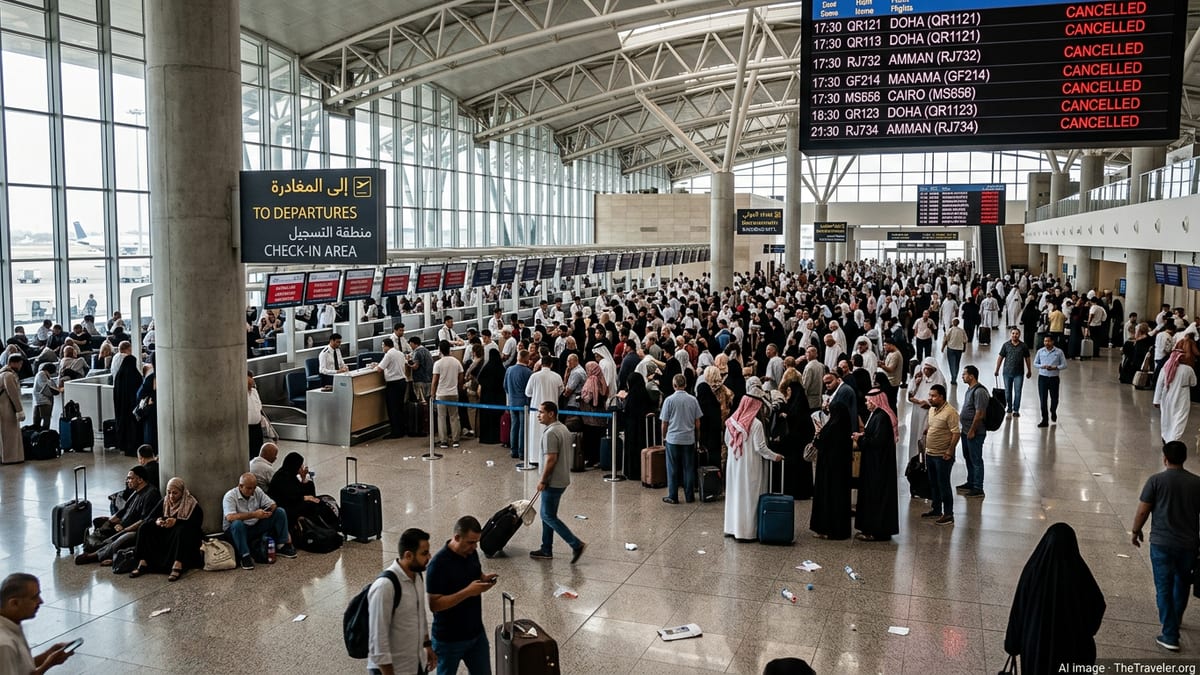
Regional Airspace Turmoil Hits Major Middle East Hubs
Published coverage of recent disruptions shows that volatile security conditions and intermittent airspace closures across parts of the Middle East continue to ripple through airline operations in early April 2026. Flight tracking data and airport operations summaries indicate that carriers in Saudi Arabia, the United Arab Emirates, Egypt, Türkiye and Kuwait have collectively cancelled 29 services and delayed more than 500 flights over a short window, as airlines adjust routings and ground aircraft for safety and regulatory reasons.
These figures reflect the latest phase of an ongoing crisis that escalated in late February, when airspace over or near Iran, Iraq, Lebanon, Jordan and parts of the Gulf region was periodically closed to civilian traffic. Aviation analytics cited in regional media show that overall flight activity for Gulf carriers fell sharply at the height of the closures and has only partially recovered, with operations still running at just over half of pre disruption levels by early April.
The immediate impact has been most visible at large transfer hubs, where a single corridor closure can trigger knock on disruptions across Europe Middle East Asia networks. Dubai International, Riyadh, Cairo and Istanbul have all reported banks of delayed departures and arrivals as carriers hold aircraft on the ground or reroute around restricted airspace, lengthening flight times and reducing daily rotations.
Industry observers note that while the number of outright cancellations has eased compared with the peak of the crisis, the volume of delayed flights remains elevated, creating a challenging environment for passengers who often learn of schedule changes only hours before departure.
Emirates, Saudia, Etihad And Pegasus Among Hardest Hit
Flag carriers and major network airlines have been among the most severely affected. Publicly available schedules and travel advisories show Emirates, Saudia and Etihad operating reduced or modified timetables, with selective suspensions on routes that transit the most sensitive airspace and rolling delays on others as aircraft and crew are repositioned.
Emirates has been managing a constrained schedule from its Dubai hub since large scale airspace closures in late February forced the suspension of many services for several days. Recent travel updates indicate that the airline has restored much of its network but continues to warn of potential last minute changes and advises passengers to monitor flight status closely, particularly for long haul connections linking North America and Europe with Asia and Africa through Dubai.
In Saudi Arabia, Saudia has faced recurring disruption on services touching affected corridors, including flights to and from Gulf neighbors and key regional capitals. Airport information from Riyadh and Jeddah in recent days has listed Saudia among the carriers with delayed arrivals and departures, alongside Gulf and Asian airlines adjusting routings around restricted zones.
In Türkiye, Pegasus Airlines has also seen notable impact. Earlier announcements from the low cost carrier outlined cancellations on services to Iran, Iraq, Jordan and Lebanon during the most acute phase of the crisis, and more recent operational summaries indicate continuing knock on effects, including delayed departures from Istanbul as aircraft operate longer routings or wait for newly allocated slots.
Knock On Effects In Cairo, Istanbul, Dubai And Beyond
While the primary drivers of the disruption lie in airspace restrictions and security considerations, the operational consequences are being felt unevenly across the region. Cairo, Istanbul and Dubai, which all serve as major connecting points for Africa Europe Asia traffic, have experienced pronounced congestion as delays cascade through tightly banked schedules.
Reports focused on Istanbul Airport describe days in March when more than one hundred flights were delayed and a double digit number cancelled, as corridor closures between Europe and the Gulf created bottlenecks for both Turkish and foreign carriers. Even after initial suspensions were lifted, airlines operating from Istanbul have had to adapt to elongated routings around restricted areas, reducing schedule resilience and leaving little buffer for weather or technical issues.
In Egypt, disruption has affected both national carrier Egyptair and foreign airlines serving Cairo, with some flights from the Gulf and Levant cancelled or rescheduled at short notice. Operational updates from regional outlets show Cairo featuring prominently among diverted or delayed services as carriers rebalance fleets away from the most constrained sectors.
Dubai International, the region’s largest international hub, continues to play a central role in absorbing the shock. While cancellations at the airport have fallen sharply from the peak, delays remain common on certain waves of departures and arrivals, particularly for flights that would normally traverse now sensitive airspace. That pattern has contributed to the tally of more than 500 delayed services tied to the latest round of adjustments across the Middle East.
Passenger Strain And Flexible Policies Across Airlines
The operational turbulence has translated into long waits, missed connections and unplanned overnight stays for passengers traveling through the region. Observers at affected airports have described crowded transfer areas and queues at customer service desks as travelers seek rerouting options and updated information following late breaking schedule changes.
In response, several airlines have introduced or extended flexible policies covering ticket changes and refunds. Public advisories from Gulf carriers including Emirates and Etihad outline options such as free rebooking within specified travel windows, refunds without penalties for unused portions of itineraries, or the ability to change destinations within the same network, depending on fare rules.
Low cost and regional airlines have adopted similar measures on routes most directly affected by airspace issues. Pegasus Airlines, for example, has published additional rights for customers holding tickets on flights to and from a range of Middle Eastern destinations, including options to change travel dates or receive vouchers where services have been cancelled.
Passenger rights groups and consumer platforms are also highlighting existing protections under local and international regulations, urging travelers to retain documentation of delays and cancellations and to check whether they qualify for compensation or assistance such as hotel accommodation and meals during extended disruptions.
Uncertain Outlook As Airlines Rebuild Schedules
Despite some signs of recovery in recent days, the outlook for air travel across the Middle East remains uncertain. Data referenced in regional business media indicate that Gulf airlines are operating at just over half of their pre crisis flight activity, underlining the scale of the challenge in restoring full schedules while security warnings and intermittent restrictions persist.
Airlines in Saudi Arabia, the UAE, Egypt, Türkiye and Kuwait are continuing to rebuild networks cautiously, adding back frequencies and destinations as conditions allow while maintaining contingency plans for renewed closures. Industry analysts note that even minor shifts in regional tensions could prompt further temporary suspensions or rerouting, with immediate consequences for punctuality and capacity.
For passengers, that means the possibility of additional short notice changes in the weeks ahead, particularly on itineraries involving multiple connections through hubs such as Dubai, Riyadh, Cairo and Istanbul. Travel experts recommend allowing extra time between connections, avoiding extremely tight layovers where possible, and monitoring airline and airport communications closely on the day of travel.
With 29 cancellations and 517 delays already recorded in the latest reporting period, the episode underscores how quickly regional airspace issues can disrupt global travel flows. As airlines, airports and regulators seek to stabilize operations, travelers across the Middle East and beyond are likely to feel the effects of these disruptions for some time.