

More news on this day
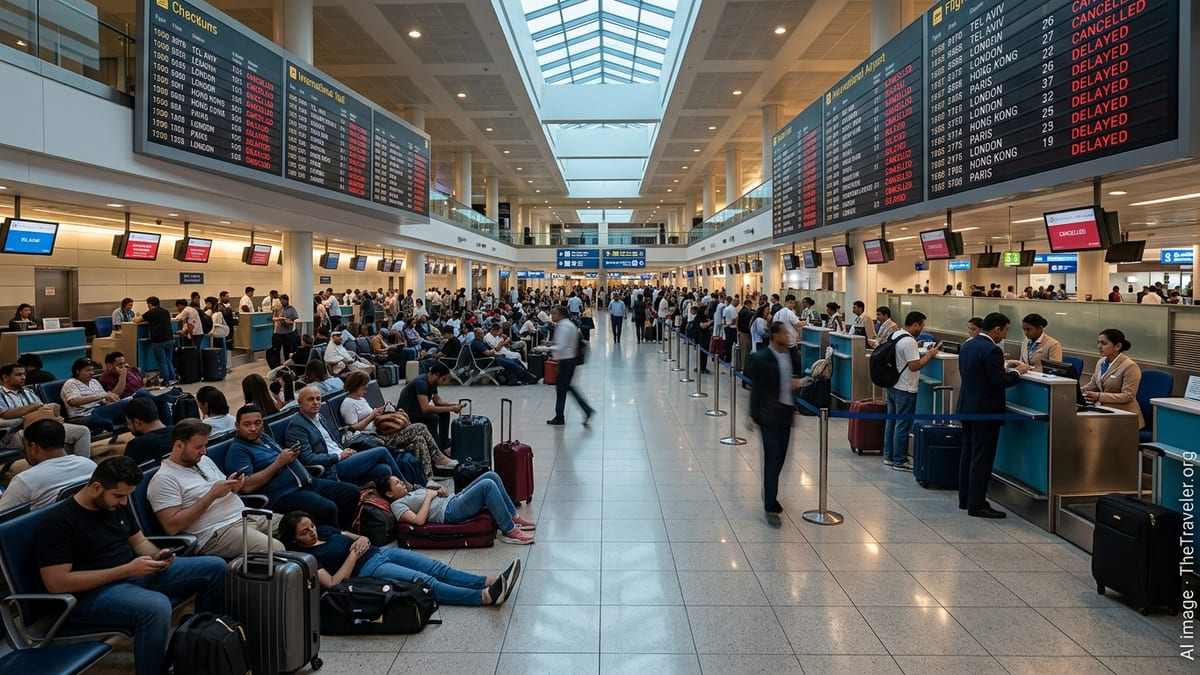
Thousands of travelers across the Middle East are facing severe disruption as airports in Saudi Arabia, Türkiye, Egypt, the United Arab Emirates, Bahrain, and Israel report 212 flight cancellations and 1,229 delays in a single day, snarling operations for carriers including Emirates, Pegasus Airlines, Saudia, EgyptAir, and others at major hubs such as Jeddah, Dubai, and Istanbul.
Get the latest news straight to your inbox!
Airspace Restrictions Ripple Across Regional Hubs
Publicly available aviation tracking data and operational advisories show that airspace closures and restrictions linked to the broader regional security crisis continue to weigh heavily on commercial schedules. Flights that do operate are often rerouted around sensitive areas, extending journey times and compressing airport capacity at alternative corridors through Saudi Arabia, Egypt, and Türkiye.
In the latest 24 hour snapshot, the combined tally of 212 cancellations and 1,229 delays across Saudi Arabia, Türkiye, Egypt, the UAE, Bahrain, and Israel illustrates how fragile regional connectivity has become. Many of these flights involve long haul links connecting Europe, Asia, and Africa, magnifying the impact well beyond the Middle East and triggering missed connections and overnight backlogs at transit hubs.
Advisories issued in early March already highlighted limited or suspended operations in parts of the Gulf, and current patterns suggest that airlines are still struggling to rebuild reliable timetables. Even where airports are technically open, reduced airspace corridors and intermittent security alerts are producing rolling knock on effects for departure and arrival punctuality.
Travel risk consultancies note that aviation systems in the region are operating under constrained conditions, with carriers adjusting routes and aircraft rotations on short notice as circumstances evolve. Passengers are being urged, through public statements and online channels, to verify flight status frequently and to expect potential last minute changes.
Dubai, Jeddah, And Istanbul Struggle To Stabilize Schedules
Dubai International remains one of the most visible symbols of the disruption. Earlier in March, published corporate and travel management updates documented temporary suspensions of flights to and from the city, followed by a phased resumption that has still not restored full schedule stability. Although more services have been added back, the airport continues to manage a complex mix of regular departures, repatriation flights, and aircraft repositioning operations.
Jeddah’s King Abdulaziz International Airport in Saudi Arabia is experiencing a similar pattern of partial normalisation. Risk advisories describe it as operational but subject to persistent delays and intermittent cancellations, particularly on regional services. This has proven especially challenging during peak religious travel periods, when demand for flights operated by Saudia and other carriers rises sharply.
In Türkiye, Istanbul’s major airports have largely remained open, but Turkish and foreign carriers are affected by knock on route changes across Middle East airspace. Low cost operators such as Pegasus Airlines, which rely on high aircraft utilisation and tight turnarounds, are especially exposed to cascading delays when a single sector is held on the ground or forced to divert.
Egypt’s Cairo hub is absorbing additional traffic as airlines seek alternative routings between Europe, East Africa, and the Gulf. While operations there are more stable than at some Gulf airports, industry data indicates increased congestion, extended taxi times, and irregular operations on services to affected countries, all of which contribute to the high regional delay count.
Major Carriers Cut, Consolidate, And Reroute Flights
Flag carriers and low cost airlines across the region are relying on a mix of cancellations, consolidations, and reroutings to cope with the turbulence. Emirates, which earlier paused most regular operations before gradually restoring a limited network, is now operating a patchwork of scheduled and special flights to key cities such as Jeddah and Istanbul. Reddit-based travel communities and airline communications have tracked waves of repatriation services as stranded passengers are moved out in phases.
Saudi Arabia’s Saudia is focusing on maintaining connectivity within its own network while adjusting services to nearby states where airspace or airport access remains constrained. Publicly available traveler reports point to multiple last minute schedule changes, including aircraft swaps and departure time shifts, as the airline navigates evolving restrictions and demand patterns.
EgyptAir, Pegasus Airlines, and other regional players are meanwhile trimming frequencies on certain routes while boosting capacity on safer corridors. For some carriers, narrowbody fleets are being redeployed to shorter intra regional sectors less affected by the most severe overflight bans, while widebody aircraft are concentrated on high demand trunk routes that can still operate along adjusted paths.
Global airlines with stopovers in the Middle East have also reworked their schedules, sometimes routing services through secondary hubs or introducing technical stops outside the region. These changes complicate onward travel for passengers accustomed to seamless one stop connections through Dubai, Jeddah, or other Gulf and Levantine airports.
Passengers Face Long Queues, Overnight Stays, And Shifting Itineraries
For travelers on the ground, the statistics translate into crowded terminals, long queues at transfer desks, and uncertain onward plans. Social media posts and forum discussions from Dubai, Jeddah, and Istanbul describe passengers sleeping in departure halls, competing for limited hotel vouchers, and trying to rebook complex multi segment journeys as waves of delays ripple through the day.
Many travelers report that flights often remain listed as scheduled until just hours before departure, only to be delayed repeatedly or cancelled outright as airspace allocations and crew duty time limits shift. This dynamic environment has made it difficult for passengers to predict whether to remain at the airport or attempt to rebook for a later date.
Families traveling for holidays, workers returning to their jobs in the Gulf, and pilgrims heading to or from Saudi Arabia are all among those affected. The uneven recovery of operations, where some short haul regional services resume more quickly than long haul links, has left certain passenger groups with fewer alternatives and longer waiting times.
Travel advisers are increasingly recommending that passengers build in longer connection windows, avoid tight same day onward links, and travel with flexible tickets where possible. Those already in the region are being encouraged by airlines, through public announcements and online tools, to monitor apps and airport displays rather than relying solely on original booking confirmations.
Outlook: Prolonged Disruption Likely As Security Situation Evolves
Aviation and security analysts broadly agree, in published commentary, that the disruption is unlikely to ease completely in the short term. The ongoing regional conflict and repeated incidents affecting critical infrastructure have prompted governments to keep certain airspace segments restricted, with direct consequences for civilian aviation.
Industry observers note that even a partial reopening of affected corridors will not immediately erase the backlog. Airlines must reposition aircraft and crews, rebuild predictable rotations, and reassess demand on routes that have been intermittently suspended. This process can take weeks, particularly for carriers with large long haul fleets and complex global networks.
Travel management firms are advising corporate clients to treat the Middle East as a high risk region for schedule reliability over the coming weeks, recommending contingency plans such as alternative routings via Europe or South Asia where feasible. Leisure travelers, meanwhile, may face higher fares on remaining routes as reduced capacity meets sustained demand during peak travel periods.
For now, the figures of 212 cancellations and 1,229 delays across key Middle Eastern markets underscore a simple reality for passengers: any journey touching the region is at elevated risk of disruption, and flexible planning has become a necessity rather than a luxury.