

More news on this day
Europe’s aviation regulator has widened and extended its conflict-zone warning over the Middle East and Persian Gulf, forcing airlines to redraw routes, rethink stopover strategies and reassure nervous travelers as the region grapples with renewed war and airspace closures.
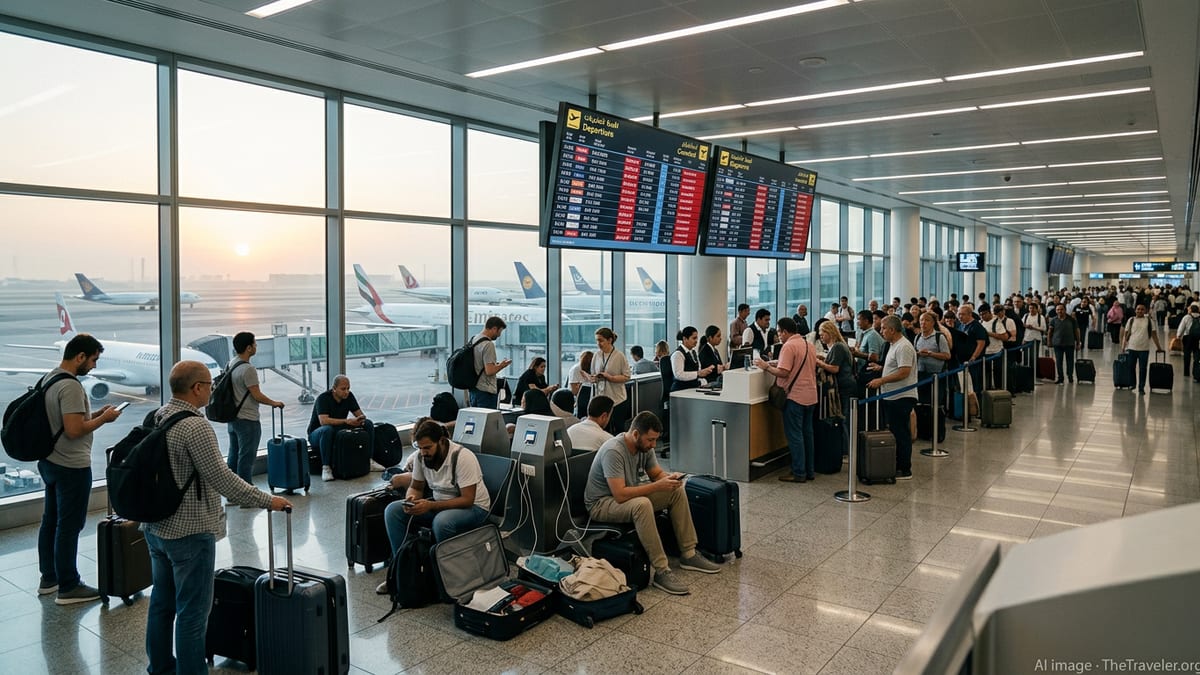
What the New EASA Warning Actually Says
The European Union Aviation Safety Agency (EASA) last week issued an updated Conflict Zone Information Bulletin (CZIB) covering much of the Middle East and Persian Gulf, classifying the region as high risk for civil aviation across all flight levels. The bulletin, which runs through at least March 6, 2026, advises operators to avoid the airspace of Iran, Iraq, Israel, Jordan, Lebanon, and several Gulf states wherever possible, and to treat any transit through the region as an elevated security risk requiring additional assessment.
The CZIB is not a blanket flight ban, but it has strong practical effects. European airlines are obliged to include EASA’s assessment in their own safety risk management and routing decisions. Many carriers interpret such language conservatively, preferring to reroute or suspend flights rather than risk flying near active missile and drone trajectories, degraded air-defense systems, or stressed air traffic control networks.
The latest guidance layers on top of earlier conflict-zone notices and information notes for Israel, Iran and the southern Red Sea, which had already warned of threats from long-range missiles, drones and potential misidentification of civil aircraft. Taken together, the documents amount to the most comprehensive set of European safety cautions over Middle Eastern skies since large sections of regional airspace were closed at the outset of the current Iran war in late February 2026.
How Airlines Are Rerouting and What Travelers See
For travelers, the most visible impact is in the sky map. Flights that once took near-straight lines between Europe and Asia or southern Africa are now bending north over Turkey, the Caucasus and Central Asia, or far south over Egypt and the Arabian Sea to avoid high-risk flight information regions. Aviation tracking data over the past week shows dense traffic funnelling through alternative corridors as aircraft steer clear of Iranian, Iraqi, Israeli and adjacent Gulf airspace.
Hub operations have also been hit. After coordinated US and Israeli strikes on Iran on February 28, multiple countries, including Iran, Iraq, Kuwait, Qatar, Bahrain and at times the United Arab Emirates, temporarily closed their airspace, shutting or curtailing flights at mega-hubs such as Dubai, Abu Dhabi and Doha. While some controlled corridors have since reopened, the new EASA bulletin encourages airlines to treat any routing via the Gulf as subject to rapid change, and many carriers continue to thin schedules or swap widebodies for smaller jets on remaining services.
Passengers are encountering longer flight times, missed connections and last-minute diversions. Carriers from Europe to East Asia have added up to two hours to some itineraries as they loop around the conflict zone, burning extra fuel and compressing crew duty limits. Business-class cabins that once transited smoothly through Gulf hubs are now detouring through secondary European airports or alternative hubs such as Istanbul, Riyadh and Jeddah, which are working to absorb redirected demand while managing their own risk postures.
Tourism Fallout for Gulf Hubs and Regional Destinations
The timing of the expanded EASA warning is acutely sensitive for Middle Eastern tourism. Gulf states have spent years positioning themselves as global stopover destinations, drawing visitors to Dubai’s beaches and malls, Abu Dhabi’s museums and theme parks, and Doha’s waterfront developments. The current conflict and airspace risk designation have abruptly undercut that model just as high season was under way for European and Asian visitors.
Hotel and tour operators in the major Gulf hubs report a sharp wave of cancellations and deferrals for March and April trips, particularly from corporate and family segments sensitive to security advisories. Travel management companies say many European firms have frozen non-essential travel to the region outright, while others are rerouting conferences and incentive trips to alternative destinations in the Mediterranean, Southeast Asia or East Africa until the airspace picture stabilizes.
Leisure destinations on the eastern Mediterranean rim, such as Jordan’s Petra and Red Sea resorts, Lebanon’s coastal cities and Israel’s cultural and religious sites, are seeing even more dramatic drops, compounded by national-level travel warnings from Western governments. Even when airports technically remain open, the combination of EASA risk language, foreign office advisories and volatile flight schedules makes it difficult for tour operators to guarantee itineraries or price packages with confidence.
Some destinations on the periphery of the conflict zone are attempting to position themselves as safer alternatives. Tourism boards in countries such as Greece, Cyprus and Armenia are emphasizing their role as gateways that sit on the edge of rerouted air corridors while remaining outside the highest-risk airspaces. Early booking data suggests a modest uptick in demand, but industry analysts caution that the overall regional tourism balance remains heavily negative compared with a year ago.
Operational and Cost Pressures for Airlines
Behind the scenes, complying with the EASA warning is reshaping airline operations and balance sheets. Longer routings around the Middle East add significant fuel burn, particularly for widebody aircraft on intercontinental sectors. Carriers must adjust crew rosters and rest periods to account for extended duty times, sometimes adding additional pilots to a rotation or scheduling technical stops that were not previously required.
Insurance and security costs are also climbing. Underwriters typically reassess war-risk premiums when conflict-zone bulletins are updated, and operators that still choose to overfly portions of the region in accordance with their national regulators can face higher premiums or stricter safety conditions. Airlines are investing more heavily in real-time intelligence, satellite communications and scenario planning teams to monitor missile launches, drone activity and sudden airspace closures that may force in-flight rerouting.
These pressures arrive as many airlines were just beginning to rebuild financial resilience after the pandemic and earlier regional crises. Network planners now must weigh whether high-yield markets in the Middle East and onward to Asia justify the additional cost and complexity, or whether capacity should instead be shifted to North American or intra-European routes less exposed to conflict-driven volatility. Several European and Asian carriers have quietly reduced frequencies to Gulf hubs or suspended plans for new services announced before the latest escalation.
What Travelers Should Expect in the Months Ahead
For now, industry experts expect EASA’s heightened risk posture over the Middle East to remain in place for months, even if battlefield dynamics shift. Aviation safety regulators tend to move cautiously when downgrading conflict-zone assessments, waiting for sustained reductions in missile and drone activity, reliable air-defense coordination and evidence that regional air traffic control systems are stable and resilient.
That means travelers planning trips between Europe, Asia and Africa through March and into the summer should brace for continued schedule changes, less predictable connections and higher fares on some routes as fuel and insurance costs filter into ticket prices. Travel advisers recommend allowing extra connection time, avoiding tight self-made transfers between separate tickets, and checking bookings frequently in the days before departure as airlines adjust routings in response to overnight security briefings.
For tourism boards and airlines across the Middle East, the priority over the coming months will be to rebuild confidence without overpromising on stability they do not control. Clear, timely communication about flight status, flexible rebooking policies and visible coordination with international regulators such as EASA will be crucial to reassuring wary travelers. Until the skies over the region are deemed safer, the Middle East’s role as a seamless bridge between continents will remain constrained by warnings written far from its beaches and skylines.