

More news on this day
More than 5,200 flight cancellations across the Middle East since late February have pushed Emirates, Qatar Airways, Etihad, Flydubai, Saudia, Turkish Airlines, Air Arabia, Gulf Air, Royal Jordanian and other regional carriers into steep financial losses, as grounded jets wipe out billions in ticket revenue and rack up unprecedented airport parking and operational costs.
Get the latest news straight to your inbox!
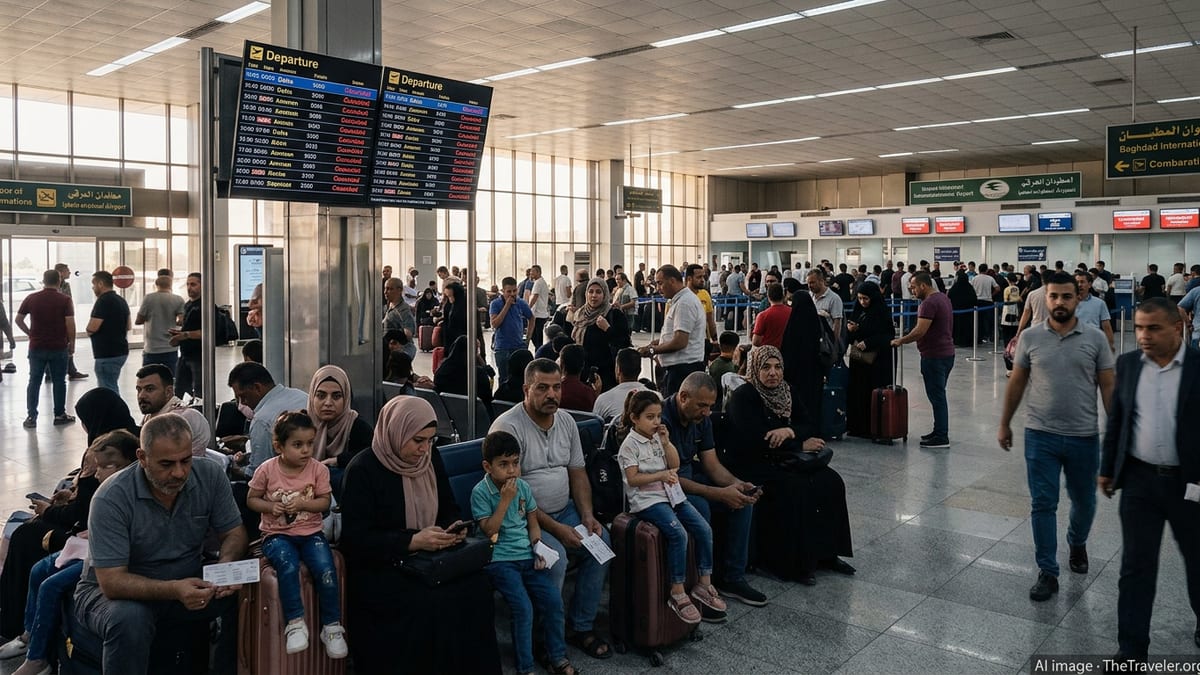
Aviation Shutdown Ripples Across Gulf Hubs
According to published coverage of the Iran war’s impact on aviation, a wave of airspace closures and missile and drone strikes beginning on February 28 triggered one of the most severe disruptions to Gulf air travel on record. Governments across the region temporarily closed skies or restricted routes, while airports in the United Arab Emirates and Qatar reduced or halted operations during peak security alerts. Flight tracking analyses cited in recent reports show that more than 52,000 flights were cancelled worldwide between February 28 and April 5, with over 5,200 of those cancellations directly tied to Middle Eastern carriers.
Emirates, Qatar Airways, Etihad, Flydubai, Saudia, Turkish Airlines, Air Arabia, Gulf Air and Royal Jordanian all sharply scaled back schedules as key air corridors over Iran, Iraq, the Gulf and parts of the Levant became unusable. Some carriers temporarily halted flights to cities such as Tel Aviv, Beirut, Amman, Dammam and Tehran, while others cut frequencies on trunk routes linking Europe and Asia through Dubai, Doha, Abu Dhabi and Riyadh. Publicly available data indicate that in the first two weeks of the crisis, daily departures from major Gulf hubs fell from several hundred flights to just a fraction of normal operations.
Industry monitoring platforms and specialist aviation outlets describe the resulting network as a patchwork of rescue services, limited commercial frequencies and long detours around closed airspace. While some airlines have cautiously reinstated select flights, analysts warn that the combined impact of cancellations and diversions has already erased a large share of first-quarter revenues for the region’s flagship and low cost carriers.
Billions in Lost Airfares and Surging Ground Costs
The immediate financial hit for Middle Eastern airlines is concentrated in lost ticket sales. A detailed breakdown published by industry news sites estimates that the 5,200 plus cancellations involving Emirates, Qatar Airways, Etihad, Flydubai, Saudia, Turkish Airlines, Air Arabia, Gulf Air, Royal Jordanian and peers have stripped away billions of dollars in booked and anticipated fares. Many of the cancelled flights were long haul services between Europe and Asia that typically generate some of the highest yields in global aviation.
At the same time, grounded fleets are accumulating heavy costs on the ground. Travel and tourism outlets report that aircraft parking charges linked to the wider 52,000 flight cancellations have climbed toward 35 million dollars worldwide in just a few weeks, with a significant share borne by Gulf and Turkish operators parking widebody jets at Dubai, Doha, Abu Dhabi, Riyadh, Jeddah, Istanbul and secondary airports. Airlines must also continue paying leasing fees, insurance, security and basic maintenance on aircraft that are not generating revenue.
Operational expenses have risen even where flights continue to run. Detours around conflict zones add hours to some Asia Europe routes, pushing up fuel burn and crew costs. Schedule disruptions are also triggering passenger compensation and rebooking liabilities in markets where consumer protections apply. Financial analysts reviewing the situation suggest that for several leading Middle Eastern carriers, the combined effect of lost income and higher operating costs could translate into quarterly losses that rival or exceed some of the worst months of the pandemic era.
Network Cuts, Diversions and Slow Recovery Plans
Publicly available airline notices and route updates show how quickly the crisis reshaped Middle East aviation networks. In early March, many Gulf carriers suspended flights to high risk destinations and stopped using airspace above Israel, Lebanon, Jordan, Iraq, Kuwait, Bahrain, Qatar and Iran. Reports from regional airports describe rows of parked widebody aircraft, while local media in Pakistan, India and Bangladesh detail knock on cancellations of flights that relied on Gulf hubs for onward connections.
As military tensions persisted through March, carriers adopted varying recovery strategies. Some, including Emirates, began cautiously rebuilding capacity on selected routes, targeting around two thirds of their pre war schedules by late March on the assumption that security conditions around Dubai would stabilize faster than elsewhere. Others, such as Saudia and certain low cost operators, extended full or partial suspensions on routes to and from Dubai, Abu Dhabi, Sharjah, Doha, Bahrain and Kuwait well into April, citing continued airspace and operational constraints.
Turkish Airlines and Gulf Air have faced additional complexity because of their roles as connecting hubs between Europe, the Middle East and Central Asia. Freight operators linked to these groups have also curtailed services to Bahrain, Iran, Iraq, Jordan, Kuwait, Lebanon, Qatar, Syria and the United Arab Emirates, further limiting options for passengers and cargo. Travel advisories from logistics firms and governments caution that schedules across the region are likely to remain unstable in the near term as airlines reassess risk, capacity and profitability route by route.
Passenger Disruption and Pressure on Reputation
Behind the financial statistics is a mounting human cost. Passenger advocacy sites and regional news outlets are filled with accounts of travelers stranded in Dubai, Doha, Riyadh, Jeddah, Cairo and Amman after their flights on Emirates, Qatar Airways, Saudia, Flydubai, Royal Jordanian and others were cancelled or severely delayed at short notice. In some cases, travelers faced long queues for rebooking and limited information as airlines struggled to reconfigure schedules amid rapidly changing airspace rules.
Operational data compiled by travel industry publications highlight days when hundreds of flights across Saudi Arabia, the United Arab Emirates, Egypt, Qatar, Syria and Jordan were delayed, with dozens cancelled outright, disrupting itineraries for tens of thousands of passengers. Additional reports from aviation tracking services in Asia show that delays and cancellations at Middle Eastern hubs cascaded across airports in China, Japan, Thailand, India and Southeast Asia as missed connections rippled through global networks.
Customer rights groups note that while many cancellations stem from security related airspace closures, which can qualify as extraordinary circumstances under international rules, airlines still face reputational pressure to provide timely communication, accommodation and alternative travel options. Observers suggest that the way Emirates, Qatar Airways, Etihad, Saudia, Turkish Airlines and their regional counterparts handle this crisis could shape traveler perceptions and booking patterns long after regular schedules resume.
Uncertain Outlook for a Strategic Aviation Region
The Middle East has spent two decades building itself into a central artery of global air travel, with Emirates, Qatar Airways, Etihad, Flydubai, Saudia, Turkish Airlines, Air Arabia, Gulf Air and Royal Jordanian turning cities such as Dubai, Doha, Abu Dhabi, Riyadh, Jeddah, Istanbul, Sharjah and Manama into powerful connecting hubs. Analysts now warn that the 2026 conflict has exposed how vulnerable this model is to prolonged geopolitical shocks affecting multiple neighboring airspace zones at once.
Economic assessments of the Iran war point to a double blow for Gulf economies, combining disrupted oil and gas exports with shuttered or reduced aviation activity. For airlines, the path forward will likely involve gradual capacity restoration, renegotiation of aircraft leases and careful management of debt and liquidity. Some market watchers anticipate a fresh round of consolidation discussions or strategic partnerships if prolonged losses weaken balance sheets across the region.
For now, reports indicate that most Middle Eastern carriers are prioritizing core routes, cargo operations and government supported rescue flights while they monitor developments. The experience of this crisis is expected to accelerate investment in risk modeling, flexible fleet deployment and diversified route strategies, as the region’s airlines seek to protect themselves against future shocks that could again turn thousands of flights into grounded assets almost overnight.