

More news on this day
Escalating confrontation between the United States, Israel, and Iran is inflicting severe disruption on Middle Eastern airlines, as widespread airspace closures and conflict zones turn one of the world’s busiest aviation crossroads into a patchwork of no-go areas, diversions, and emergency schedules.
Get the latest news straight to your inbox!
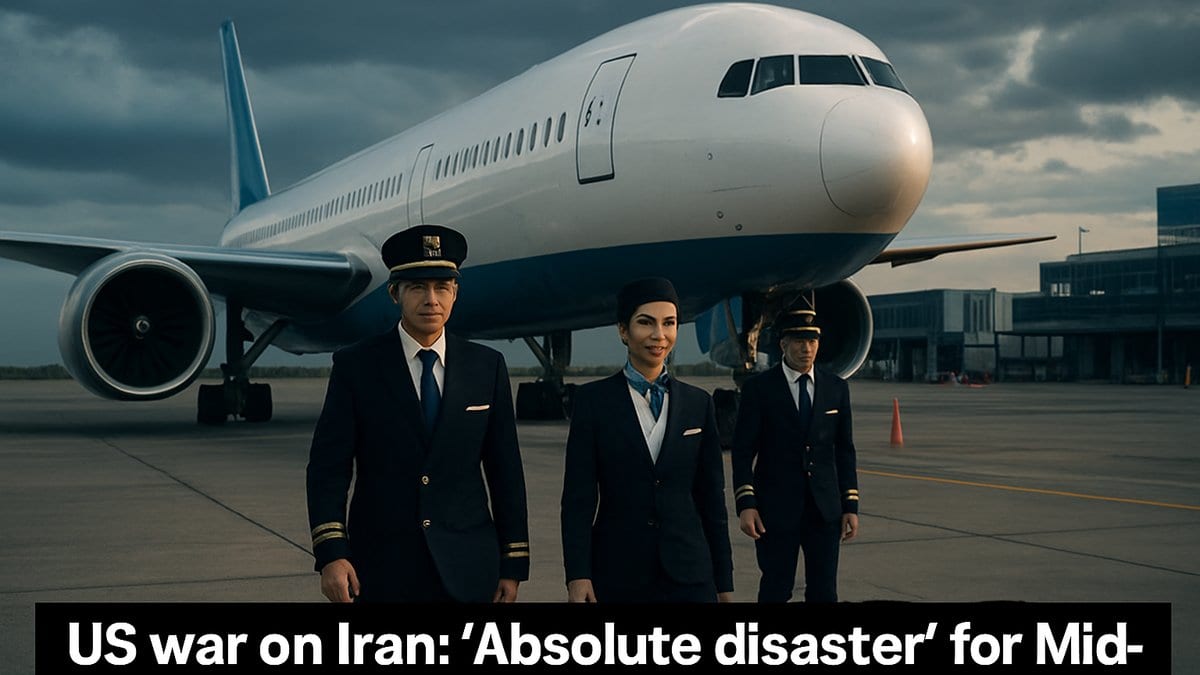
Airspace Closures Turn Gulf Hubs Into Operational Flashpoints
Since late February 2026, a rapid series of airspace restrictions across Iran, Israel, Iraq, Kuwait, Bahrain, and parts of Saudi Arabia has upended normal flight patterns across the Gulf. Publicly available aviation briefings describe a near-total ban on civilian operations over several states, with the United Arab Emirates and Qatar only gradually reopening under tight security controls and restricted corridors.
Doha, Dubai, Abu Dhabi and other key hubs built their rise on unconstrained access to east–west skies. The current war has abruptly removed that advantage. Travel industry reports indicate that Qatar’s Hamad International Airport and Bahrain International Airport suffered sharp cancellations and temporary suspensions as national airspaces were restricted, forcing airlines to shift limited operations to alternative airports or suspend services outright.
Aviation data firms now estimate that total flights to, from, and within the Middle East have fallen by nearly 60 percent since the conflict escalated at the end of February. This collapse in capacity has stranded travelers, choked off feeder traffic for long-haul networks, and left airlines with expensive fleets underutilized at precisely the moment global passenger demand had been rebounding.
Travel advisories from multiple governments now warn against non-essential travel to a wide swath of the region, adding a demand shock to the operational crisis. Even where airspace technically remains open, nervous passengers and corporate travel managers are diverting bookings away from Gulf routings, compounding the financial hit for carriers based there.
Rerouted Long-Haul Flights Drive Up Costs and Journey Times
For flights that continue to operate, the sky map around the Gulf has been redrawn. Safety advisories from European and other regulators urge airlines to avoid Iranian and Israeli airspace and parts of the Gulf, pushing long-haul routes into narrower corridors over Central Asia, the Caucasus, and occasionally North Africa.
Industry analyses suggest these reroutings are adding two to four hours to typical Europe–Asia journeys that once passed efficiently over Iran and neighboring states. The extra distance translates directly into higher fuel burn and crew costs. For hub-and-spoke carriers that specialize in connecting Europe, Asia, and Africa via the Gulf, the economics of flagship routes have degraded almost overnight.
The consequences reach far beyond the Middle East. Logistics updates for shippers now describe blocked or heavily constrained transshipment routes via Dubai, Doha, and Riyadh, with air freight capacity squeezed and rates on China–Europe and Southeast Asia–Europe lanes jumping sharply. Commercial passengers see the same pressure in the form of extended schedules, technical stops at intermediate airports, and increased surcharges tied to fuel and insurance.
Some non-Middle Eastern airlines have responded by creating ad hoc routings via southern Europe or Central Asia, inserting extra stops in Rome, Baku, or similar points to manage crew duty times and refueling. These workarounds keep key markets connected but erode punctuality, complicate crew planning, and expose airlines to volatile overflight fees in countries suddenly turned into critical transit states.
Regional Carriers Face Acute Revenue and Network Strain
While airlines worldwide are grappling with the fallout from the conflict, Middle Eastern carriers find themselves on the frontline. Their networks sit closest to the conflict zone, and many depend on cross-border connectivity within the Gulf and Levant that is now severely restricted or suspended.
Publicly available disruption trackers show Gulf-based airlines curtailing schedules, suspending routes to neighboring states, and consolidating remaining demand onto a skeletal set of flights. Bahrain’s Gulf Air, for example, has significantly reduced operations at its home hub, redirecting a limited number of flights through airports in Saudi Arabia to maintain at least basic connectivity for passengers.
In parallel, airlines from India, Central Asia, and Europe that previously relied on overflying Iran or using Gulf hubs for onward connections have cancelled services or shifted routings. One prominent South Asian carrier has extended a suspension of flights to multiple Middle Eastern destinations and is temporarily routing some North America services through southern Europe, underscoring how deeply entangled global networks are with Gulf airspace.
Financially, aviation analysts warn that the combination of lost traffic, higher fuel bills, elevated war-risk insurance, and disrupted fleet utilization could push weaker regional operators toward what some have described as an absolute disaster for balance sheets. Well-capitalized Gulf mega-carriers may be better positioned to absorb the shock, but even they face pressure as premium long-haul passengers reconsider routings that involve conflict-adjacent hubs.
Jet Fuel Spike and War-Risk Insurance Add to the Pain
The conflict’s impact on oil flows through the Strait of Hormuz is feeding directly into airline cost structures. As Iran threatens or restricts tanker movements through this critical chokepoint, benchmark crude prices and refined jet fuel costs have climbed sharply. Airline executives in North America and Europe have already warned that fuel price spikes are likely to show up in fares if the war persists.
For Middle Eastern airlines, the situation is particularly acute. Higher jet fuel costs hit just as many carriers are burning additional fuel on longer routings and flying less efficiently around closed airways. Analysts note that airlines with limited fuel-hedging programs are exposed immediately to spot price volatility, while those with hedges face an eventual step-up in costs as contracts roll off.
On top of fuel, war-risk insurance premiums for aircraft operating near the conflict zone have risen, according to industry briefings. Underwriters are reassessing exposures in and around the Gulf, and some are narrowing coverage or demanding higher rates for flights that enter designated high-risk areas. Middle Eastern carriers now have to choose between avoiding such areas altogether or paying significantly more to operate there, with both paths weighing heavily on profitability.
These pressures come at a delicate moment for the industry. Many airlines in the region expanded rapidly over the past decade, taking on new widebody aircraft to capture post-pandemic demand and capitalize on ambitious national aviation strategies. The current shock threatens to undermine those plans, at least in the near term, as capacity growth turns into capacity idling.
Travelers Confront Cancellations, Complex Itineraries, and Ongoing Uncertainty
For passengers, the disruption is highly visible. Consumer-rights organizations tracking flight data report hundreds of cancellations and widespread delays each day affecting services into and out of the Middle East, with knock-on effects felt at major airports in Europe, Asia, and North America. Popular Gulf stopover itineraries have become some of the most unstable segments in global aviation.
Travel guidance now routinely urges passengers booked via Dubai, Doha, Abu Dhabi, Manama, Riyadh, or nearby hubs to monitor airline apps and updates closely, even on the day of departure. With schedules changing at short notice and operational decisions shaped by fast-moving security assessments, itineraries that appear confirmed can shift by several hours or be rerouted through unexpected transit points.
Airlines are generally rebooking affected travelers or offering refunds, but passenger advocates emphasize that many of these disruptions fall under war-related or extraordinary circumstances categories, limiting eligibility for statutory compensation in some jurisdictions. The result is a growing gap between what travelers expect in terms of protection and what regulations actually guarantee during armed conflict.
For now, most industry forecasts suggest that as long as the US–Iran confrontation and associated regional hostilities continue, Middle Eastern airlines will operate under severe constraints, with curtailed networks and inflated costs. The region’s role as a seamless bridge between continents has been abruptly compromised, and carriers are left navigating a fragmented sky where every routing decision carries both financial and security stakes.