

More news on this day
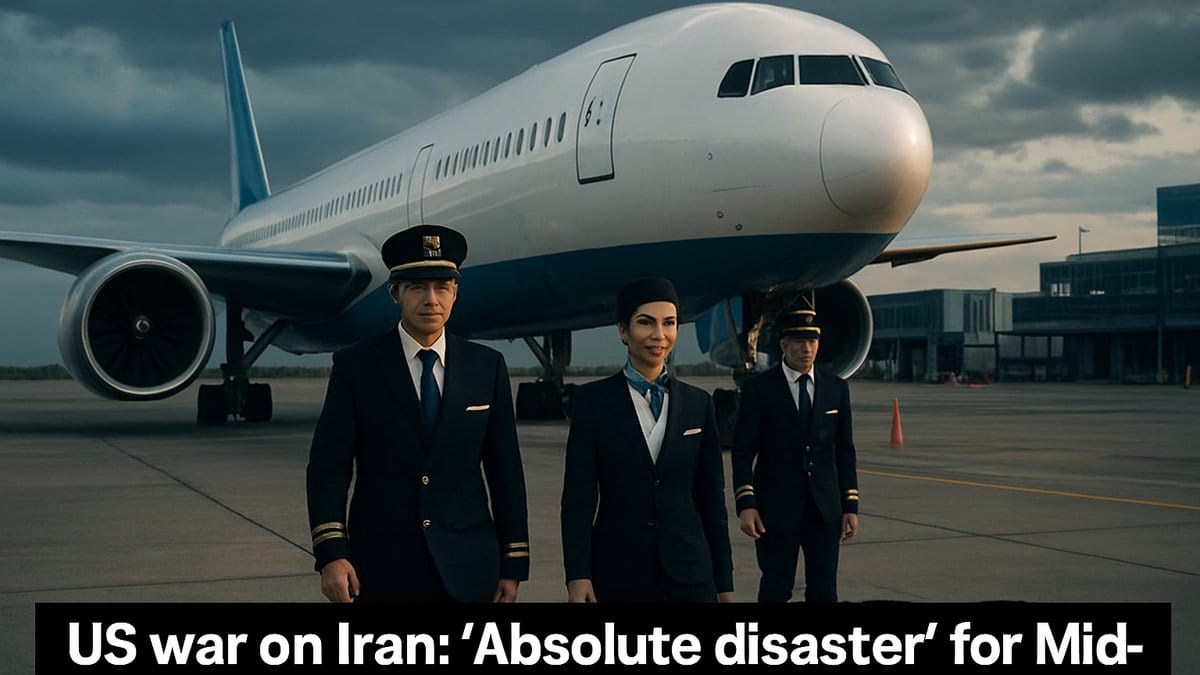
Middle Eastern and transit-reliant global airlines are confronting what industry observers describe as an absolute disaster as escalating military confrontation between the United States, its partners and Iran has forced widespread airspace closures, flight cancellations and costly rerouting across one of the world’s most important aviation corridors.
Get the latest news straight to your inbox!
Airspace Lockdowns Cripple Gulf Aviation Hubs
Publicly available information shows that the current crisis began on 28 February 2026, when strikes by the United States and Israel on Iranian targets triggered a rapid series of retaliatory attacks and security warnings across the Gulf. Within hours, airspace in Bahrain, Iraq, Israel, Kuwait, Qatar, Syria and the United Arab Emirates was successively shut or heavily restricted, removing much of the core sky bridge that connects Europe and Africa with Asia.
Reports indicate that Qatar, the UAE and several neighboring states moved to halt almost all civilian overflights as missile and drone attacks targeted military, energy and infrastructure sites. In Qatar, Hamad International Airport in Doha, ordinarily one of the world’s busiest long haul hubs, endured a near-total shutdown as air navigation was limited to emergency and evacuation traffic under special procedures, with regular commercial schedules suspended for days.
According to published coverage, a similar pattern played out in the UAE, where Iranian strikes near Dubai and Abu Dhabi led to temporary airport closures, damage assessments and a phased reopening under severe constraints. Flag carrier Emirates, normally operating hundreds of daily departures and arrivals through Dubai International Airport, cut back to a skeletal service on select routes, while Etihad Airways sharply reduced operations from Abu Dhabi.
Aviation advisories show that by early March most Gulf airspace remained either officially closed or subject to stringent risk warnings, effectively severing the region’s role as a high-frequency corridor for flights between Europe, South Asia, Southeast Asia and Australasia. The sudden loss of these transit shortcuts has cascaded through global timetables, stretching aircraft and crews and leaving passengers with few alternatives.
Flight Cancellations, Detours and Stranded Passengers
Operational data compiled by industry analysts suggests that regional airspace closures have triggered thousands of flight cancellations each day, with hundreds of thousands of travelers stranded or facing prolonged delays. In the Gulf, many outbound and inbound services were simply scrubbed from schedules, while airlines elsewhere in Asia, Europe and Africa scrambled to redesign long haul routes that previously crossed Iranian, Iraqi or Gulf skies.
Consumer-rights platforms tracking rerouting patterns report that carriers have pushed Europe to Asia flights onto two main detour corridors. One runs north over Central Asia and parts of Russia or China, while another follows a more southerly arc across the Indian subcontinent and the Arabian Sea, skirting the high-risk zones. These longer trajectories add between 30 minutes and several hours to individual journeys, increasing fuel burn and tightening aircraft rotation margins.
For travelers, the disruption has translated into missed connections, unexpected layovers and complex rebookings. Information published by diplomatic missions in Qatar describes visitors stuck in Doha following a week-long air traffic shutdown, urged to register as stranded passengers while limited evacuation and special charter flights were arranged. Similar scenes have been reported in the UAE and Saudi Arabia, where passengers have camped out in terminals amid rolling schedule changes.
Disruption has not been confined to regional carriers. Major European and Asian airlines have suspended or curtailed services to Gulf cities, Tel Aviv and key points in Iran, Iraq and Jordan, while also modifying routings on flights that once used Iranian and Iraqi airspace purely as overflight territory. These decisions, framed as responses to dynamic safety assessments, have removed capacity from some of the world’s busiest long haul markets and pushed demand onto remaining routes via North America or alternative Asian hubs.
Financial Shock for Gulf Super-Connectors
Before the current conflict, Gulf carriers such as Emirates, Qatar Airways and Etihad had built global networks around their strategically located hubs, funneling traffic between continents through tightly timed banks of connecting flights. Publicly available economic analysis now indicates that this model has been abruptly upended, with the three giants among those hardest hit by the sudden loss of reliable airspace and hub operations.
Sector assessments suggest that these airlines have faced a near-total cessation of normal activity at several points in recent weeks, slashing frequencies, parking widebody aircraft and focusing on repatriation, cargo and limited trunk routes judged viable under prevailing risk conditions. Analysts tracking the financial impact estimate that regional aviation losses already run into the billions of dollars when factoring in lost ticket revenue, refund obligations, higher insurance premiums and elevated fuel costs due to extended routings.
The turbulence extends into the broader travel and tourism economies of the Gulf states. Hotels that depend on long haul transfer passengers, inbound tour operators and airport-linked retail businesses report sharply reduced footfall. Industry commentary compares the scale of disruption to the early months of the COVID-19 pandemic, noting that in some hub airports the volume of international departures has fallen to levels unseen in more than a decade.
At the same time, the concentration of disruption in a key energy-producing region has compounded pressure on global fuel prices. Airlines already battling higher operating costs now face the dual challenge of paying more for each ton of jet fuel while flying less efficient, elongated routes. Some European carriers have signaled that, if conditions persist, they may mothball parts of their fleets to control expenditures, illustrating how a conflict centered on Iran’s neighborhood is reshaping strategic decisions far beyond the Middle East.
Global Route Map Redrawn Around Iran and the Gulf
The loss of direct access to Iranian and adjacent Gulf airspace is also redrawing the competitive geography of long haul travel. According to aviation route analyses, Central Asian states have emerged as unexpected beneficiaries as more carriers pivot north to avoid the conflict zone. Air navigation providers in countries such as Kazakhstan and Uzbekistan report rising volumes of overflights, with some airports promoting themselves as alternative technical stops or secondary hubs.
Published commentary highlights new or newly prominent routes, including extended Europe to East Asia services that fly deeper into Central Asia, as well as adjusted patterns between Southeast Asia and Europe that now hug safer southern corridors along the Indian Ocean. While these shifts offer fresh revenue opportunities for certain states, they also strain air traffic control systems and ground infrastructure that were not designed for sustained surges in long haul transit.
Elsewhere, long haul passengers who previously routed via Gulf megahubs are increasingly being channeled through European, North American or East Asian gateways. Travel industry reporting notes that transatlantic services and Asian hub carriers have seen a bump in connecting traffic, as passengers rebook itineraries that originally relied on Gulf stopovers. This diversion is giving rival hubs a temporary advantage in capturing premium and connecting demand that might otherwise have flowed through Dubai, Doha or Abu Dhabi.
However, the benefits for alternative hubs are tempered by the same underlying uncertainty. Airlines must continually adjust schedules to reflect shifting advisories, and route planners face tight constraints as they thread narrow corridors between restricted areas, existing congestion and weather systems. The result is a brittle global network in which delays or closures in one region can ripple rapidly across continents.
Uncertain Timeline Keeps Recovery Out of Reach
Forecasts from risk consultancies and aviation specialists suggest that there is no clear timeline for the restoration of routine operations over Iran and the wider Gulf. Military actions, ranging from strikes on energy infrastructure to missile and drone exchanges, continue to shape the security picture, and authorities responsible for airspace management are maintaining a cautious stance regarding civilian overflights.
Public briefings from regional aviation and transport bodies emphasize that safety considerations remain paramount, leading to phased and partial reopenings at best. Temporary windows for limited operations can close quickly when hostilities escalate, making long term schedule planning extremely difficult for airlines that depend on predictable slots and connection banks to operate profitably.
For Middle Eastern carriers in particular, the prolonged uncertainty raises questions about fleet deployment, staffing and network strategy. Aircraft delivered to support growth projections based on unconstrained Gulf hubs are now underutilized, while crew rosters and training pipelines designed around dense connecting banks must adapt to a fragmented timetable. Some airlines are exploring greater emphasis on point to point markets less reliant on contested airspace, but such pivots require time and regulatory approvals.
Industry observers caution that, even if deescalation allows for a gradual reopening of airspace, the psychological and regulatory legacy of the crisis may endure. Travelers and corporate travel managers are likely to scrutinize routings more closely, insurers may build higher conflict-risk premiums into long term pricing, and governments could impose stricter conditions on overflights in sensitive regions. Together, these factors suggest that the absolute disaster now facing Middle Eastern airlines may evolve into a longer term restructuring of how and where the world flies between continents.