

More news on this day
Major Middle Eastern airlines are cautiously restoring flights after days of unprecedented airspace closures tied to the U.S.-Israel conflict with Iran, offering some relief to stranded travelers while leaving the region’s aviation network far from fully recovered.
Airspace Gradually Reopens After Days of Disruption
Airspace across key parts of the Gulf and wider Middle East is reopening in stages after extensive closures that began in late February, when escalating military action prompted aviation authorities to restrict overflights for safety. Corridors through the United Arab Emirates and parts of the Levant have now been partially restored, allowing airlines to rebuild skeletal schedules on routes once among the busiest in the world.
Industry data shows that thousands of flights were cancelled or rerouted during the height of the crisis, affecting connections between Europe, Asia and Africa that typically funnel through hubs such as Dubai, Abu Dhabi and Doha. While the most severe blanket bans have eased, significant restrictions remain in and around Iranian and Qatari airspace, and some neighboring states continue to enforce altitude limits and route diversions for commercial traffic.
Aviation analysts and regional regulators are stressing that the reopening remains conditional and highly dynamic. Notices to air missions are being updated frequently as military activity shifts, meaning airlines are building timetables that can be scaled back or expanded at short notice depending on the evolving security picture.
Which Airlines Are Flying Again
Flag carriers across the region have moved quickly to reintroduce limited services as soon as airspace corridors became available. Emirates and Etihad have restarted reduced passenger operations from Dubai and Abu Dhabi, focusing on trunk routes to major European and Asian gateways while continuing to operate cargo and repatriation flights. Low-cost operator flydubai and regional carriers such as Air Arabia are also putting aircraft back into service on a pared-back basis.
Not all hubs are recovering at the same pace. Operations linked to Qatar remain tightly constrained, with airlines indicating that regular schedules to and from Doha will only resume once national authorities formally lift airspace restrictions. Services over or into parts of Iraq and Iran also remain heavily curtailed, forcing carriers to route around affected zones and accept longer flight times and higher fuel burn.
For travelers, the patchwork restart means that flights may appear on sale or reinstated one day and then be retimed or pulled the next. Airlines are prioritizing passengers whose earlier journeys were cancelled, filling the first wave of departures largely with backlogged customers before opening remaining seats to new bookings.
Middle East Airlines Restores Key Regional Links
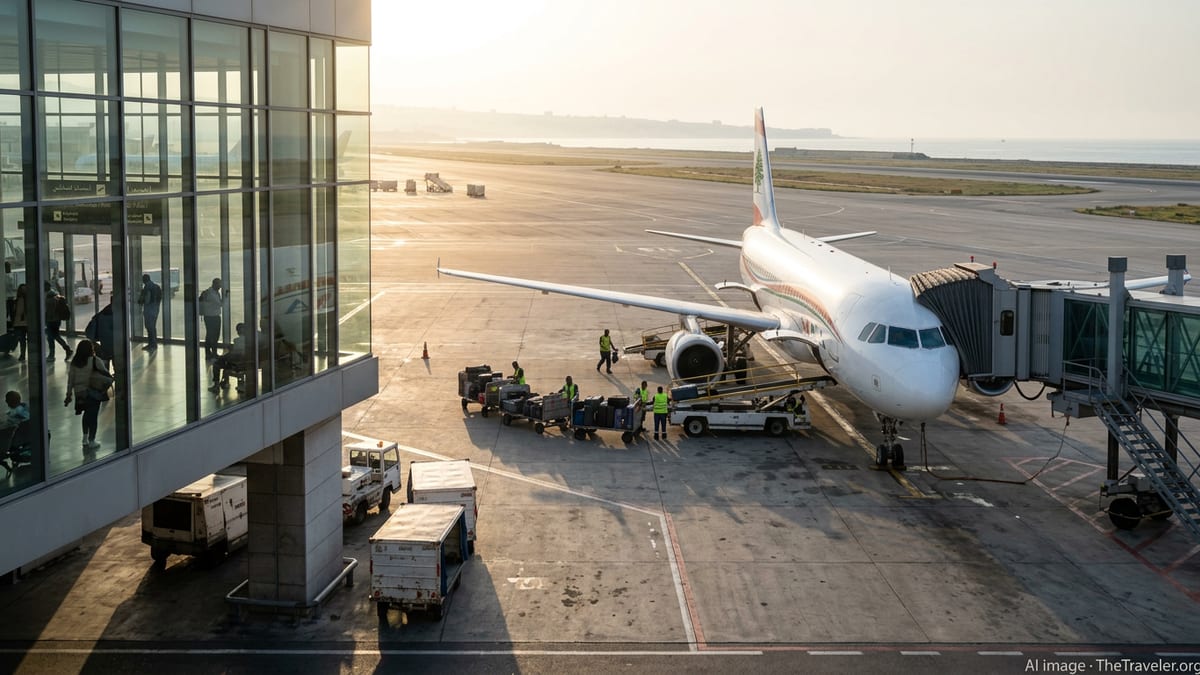
Lebanon’s flag carrier, Middle East Airlines, has begun rebuilding its regional network from Beirut as neighboring countries ease restrictions and more air corridors reopen. After operating on a highly constrained basis during the closures, the airline is now rescheduling services to core destinations including Amman, Cairo, Riyadh and Dubai for March 9 and the days that follow, with further adjustments expected as conditions stabilize.
The carrier has framed the latest schedule as a transition phase rather than a full return to normal. Frequencies remain lower than before the crisis, and some flights are being combined or retimed to fit within approved airspace windows. Beirut’s role as a connecting point for short-haul journeys around the Levant is gradually returning, but long-haul itineraries that once relied on smooth regional overflights continue to face complexity.
Middle East Airlines is also juggling aircraft and crew deployment in response to shifting demand, focusing first on routes that support essential travel, diaspora traffic and critical business links. Travelers can expect rolling schedule advisories as the airline coordinates with regional aviation authorities on which corridors are available each day.
What Travelers Should Expect on Upcoming Journeys
Passengers planning to fly into, out of or over the Middle East in the coming days should prepare for an environment that is more unpredictable than usual, even as aircraft return to the skies. Same-day schedule changes remain possible if security assessments or airspace permissions shift, and airlines are warning that boarding may be limited to those with confirmed bookings and revalidated tickets.
Longer flight times are also likely on many routes, as carriers continue to avoid certain flight information regions and divert around sensitive areas. This can translate into extended connections, missed onward flights and, in some cases, unplanned overnight stays. Travelers are being urged to build extra buffer time into itineraries and to track their booking status frequently rather than assuming that previous confirmations still apply.
At airports, passengers may find additional screening layers and more intensive document checks, particularly for journeys that connect multiple countries in the region. Capacity constraints on both aircraft and airport ground operations mean that queues can be longer than usual, and lounge and city check-in facilities may remain temporarily closed even where flights have resumed.
Practical Advice for Planning Travel Now
Anyone considering new bookings through the Middle East should start by checking whether their chosen airline has formally resumed services on the intended route and on the specific travel date. Schedules published several weeks ahead are being treated as provisional, with carriers making firm decisions closer to departure as they receive updated airspace guidance and demand data.
Flexible tickets and clear change policies have become especially valuable tools in this environment. Many airlines are offering fee waivers or expanded rebooking options for passengers whose plans are affected by renewed disruptions, but the exact conditions differ from carrier to carrier. Travelers are advised to review fare rules carefully, retain all confirmation emails and boarding passes, and keep contact details up to date so they can receive short-notice alerts.
For itineraries that must cross multiple Middle Eastern hubs, some travel agents and corporate travel managers are recommending a hub-by-hub approach, favoring airports and airlines that have already demonstrated stable operations over several days. Where possible, booking longer minimum connection times and avoiding last departures of the day can reduce the risk of becoming stranded if schedules shift again.