

More news on this day
Major airports across the Middle East are still struggling to stabilise operations in April 2026, as the prolonged Iran–Israel confrontation keeps key airspace closed, flight paths distorted and travellers facing persistent uncertainty.
Get the latest news straight to your inbox!
Conflict Fallout Keeps Key Skies Closed
Airspace restrictions that began with large-scale strikes involving Iran, Israel and the United States in late February have evolved into a drawn-out disruption affecting almost every major hub between the Eastern Mediterranean and the Gulf. Conflict-zone advisories from regulators in Europe and elsewhere continue to warn against overflights of Iran, Iraq, Israel, Jordan, Lebanon and large parts of the Gulf, pushing airlines onto longer and more crowded detours.
The European Union Aviation Safety Agency extended its conflict-zone bulletin on 9 April, maintaining guidance that operators avoid wide swaths of Middle East and Persian Gulf airspace until at least 24 April 2026. Publicly available information on the advisory shows that Bahrain, Iran, Iraq, Israel, Jordan, Kuwait, Lebanon, Oman, Qatar, the United Arab Emirates and parts of Saudi Arabia remain under some of the strictest routing constraints seen in the region in years.
Although a two-week ceasefire between the United States, Iran and Israel was announced on 7 April, reports indicate that only a limited reopening of airspace has followed. Several countries, including Iran and Israel, are keeping their skies formally closed to most commercial traffic, while others are allowing only tightly controlled aviation corridors. Airlines and safety analysts continue to describe the situation as fluid, with short-notice changes still possible.
Aviation tracking data and specialist advisories suggest that many long-haul carriers remain reluctant to transit the affected flight information regions even when technically permitted, preferring longer routes via Turkey and the Caucasus to the north or via Egypt and Saudi Arabia to the south. That cautious approach is helping to keep disruption elevated more than a month after the initial escalation.
Ben Gurion, Baghdad and Gulf Hubs Face Uneven Recoveries
Nowhere is the disruption more visible than at Israel’s Ben Gurion International Airport, which has been operating under heavy constraints since late February. Recent coverage indicates that as of 8 April the country’s primary gateway remains largely closed to normal inbound and outbound international traffic, with only a narrow set of flights by Israeli carriers permitted under strict security and safety conditions.
Operational notices show that Ben Gurion is preparing for a gradual ramp-up in activity during the ceasefire window, but airlines are planning a measured return. Some Israeli and foreign carriers have signalled that schedules will rebuild slowly into May, reflecting both the risk environment and the need to reposition aircraft and crews that were redeployed during the peak of the crisis.
In Iraq, the picture is somewhat different. Baghdad International Airport reopened on 8 April after a weeks-long shutdown that began when Iraqi airspace was effectively closed in late February. Initial reports describe a limited resumption of flights, with regional and some international services returning while global carriers continue to monitor conditions before committing to full schedules.
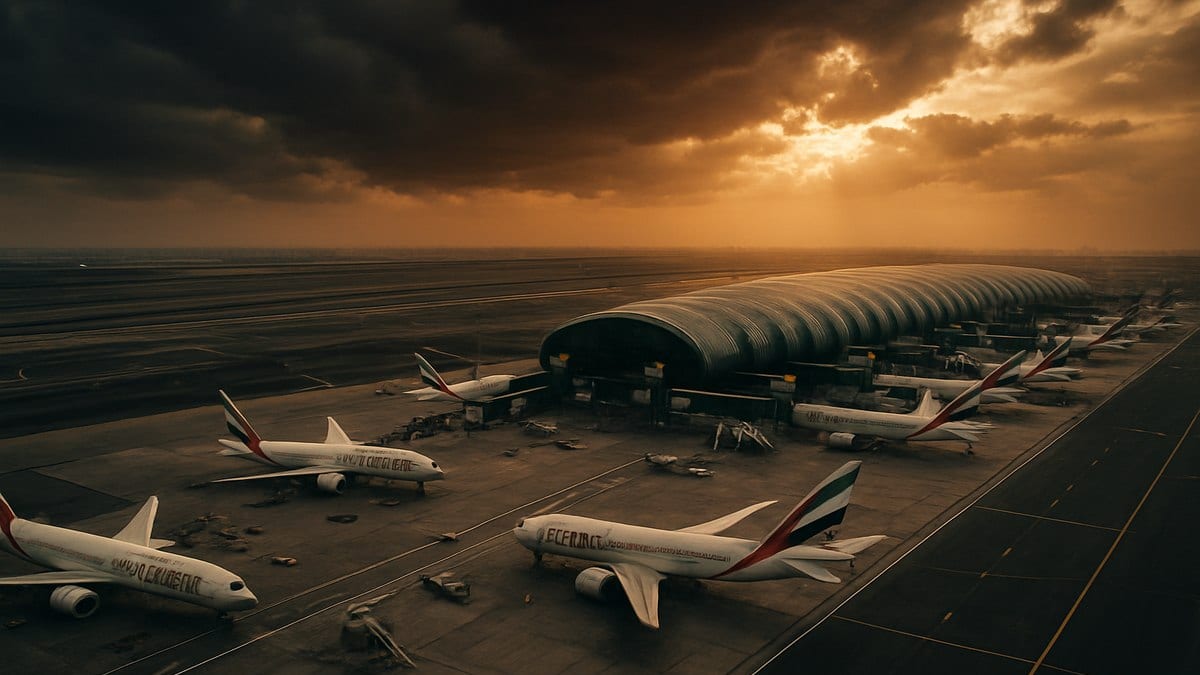
Across the Gulf, major hubs in Dubai, Doha and Abu Dhabi remain under pressure even as they work to restore more regular operations. Industry data collated in March pointed to thousands of cancelled flights across these airports when airspace closures were at their height, and recent regional business coverage describes the disruption as the most far-reaching since the pandemic period. Partial reopenings have allowed Emirates, Qatar Airways and Etihad Airways to mount reduced schedules focused on repatriation, cargo and essential routes, but many transit itineraries remain either suspended or significantly altered.
Rerouted Corridors Strain Secondary Airports
With core airspace blocks still in place, traffic that once followed direct east–west corridors over the Levant and the Gulf has had to be redistributed. According to travel and aviation reports, this shift is placing new strain on airports such as Cairo, Amman and Jeddah, which sit along the main southern bypass routes that have become vital for flights between Europe, Asia and Africa.
Cairo International Airport, for example, has recorded well over one hundred delayed departures and arrivals in the first week of April alone, as airlines pack more overflights and connections into limited time windows. Publicly available information from regional travel outlets links these delays to a combination of rerouted traffic, congestion in neighbouring airspace and staffing pressures in terminals and air traffic control.
Jordan’s Queen Alia International Airport and Saudi Arabia’s main hubs are also functioning as alternative transit points for passengers who would previously have connected in the Gulf or transited via Israeli and Iraqi airspace. Travel advisories from carriers in India and elsewhere describe new routings via Amman and Saudi cities for itineraries that once used Doha, Dubai or Abu Dhabi, adding complexity to network planning and stretching airport infrastructure during peak hours.
This redistribution of flows is particularly evident on popular South Asia to Europe and North America routes. Airlines that are avoiding Iranian and Iraqi skies are funnelling more flights through corridors over Egypt, the Red Sea and western Saudi Arabia, creating bottlenecks during overnight banks and leading to higher sensitivity to even minor operational hiccups.
Global Networks Absorb Longer Flights and Higher Costs
The disruption is not confined to the region’s own carriers. European, Asian and North American airlines have all adjusted schedules to keep aircraft and crews away from the highest-risk airspace, adding time and cost to journeys. Coverage from European travel outlets notes that some flights from central Europe to destinations such as Dubai, Tel Aviv and Bangkok are now operating on extended routings that add up to an hour or more in each direction.
Flight tracking services show that many operators continue to avoid the core of Middle East airspace even when national notices to airmen technically permit overflight at higher altitudes. The preferred options include northern tracks that arc over the Caspian Sea and southern detours that skirt the Arabian Peninsula. Both pathways lengthen great-circle distances and increase fuel burn at a time when airlines are still managing tight margins.
Some European groups have moved to permanently reshape their networks in light of the conflict. Recent business reporting describes how certain carriers are reducing or dropping services to destinations in the Gulf while shifting capacity to South Asia and Africa, where demand remains robust and routing options are less constrained. Low-cost airlines serving leisure markets in the region have pushed out planned resumptions of flights to Israel and select Gulf cities into late spring or beyond.
For passengers, these network changes translate into fewer non-stop options, longer connection times and a greater risk of missed onward flights when delays occur. Travel agents and online booking platforms are advising customers to allow more generous buffers between connections and to prepare for last-minute schedule changes as airlines continually recalibrate.
Travellers Confront Ongoing Uncertainty
For individuals with tickets into or through the region, the prolonged nature of the disruption is creating a second layer of stress beyond the immediate security concerns. Many major airlines serving the Middle East have announced extended waiver policies that allow one-time changes without rebooking fees, reflecting the difficulty of predicting which routes and hubs will be viable several weeks ahead.
According to publicly available advisories, carriers based in the Gulf have kept in place flexible rebooking rules for travel well into 2027 on itineraries touching affected countries, while regional airlines in Jordan, Egypt and Saudi Arabia are encouraging passengers to check flight status closely before heading to airports. These measures mirror the playbook used during the pandemic, when sudden border closures forced rapid schedule overhauls.
Travel and risk consultancies continue to advise businesses and individual travellers to treat the Middle East as an elevated-risk aviation environment, even during the current ceasefire. Recommended precautions include maintaining contingency plans for rerouting via alternative hubs, allowing additional travel time for critical journeys and ensuring that contact details are up to date with airlines so that notifications of changes are received promptly.
With conflict dynamics unresolved and formal aviation advisories now extended into late April, regional airports face the prospect that today’s extraordinary operating conditions could persist. For the time being, Middle East hubs that once marketed themselves on seamless global connectivity are instead focused on managing disruption, stabilising schedules day by day and keeping passengers moving through a still-fractured sky.