

More news on this day
Thousands of passengers have been stranded and key aviation hubs thrown into turmoil as escalating military tensions between the United States and Israel on one side and Iran on the other trigger sweeping airspace closures and mass flight cancellations across the Middle East.
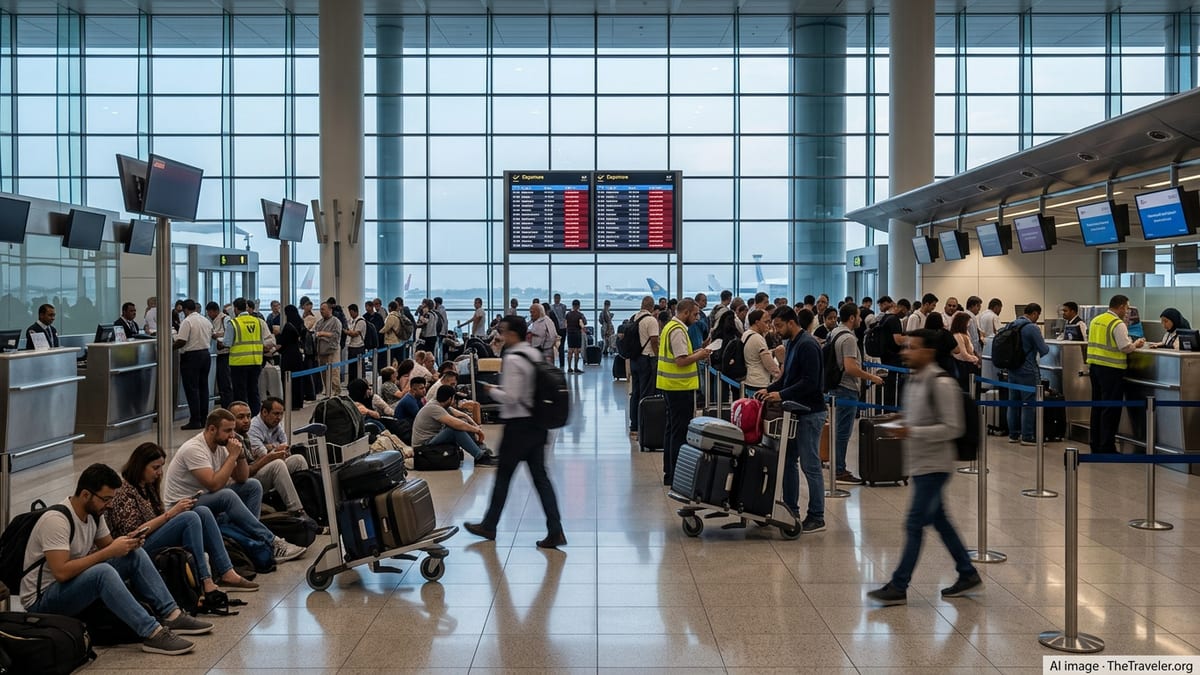
Airspace Shut, Flights Grounded Across a Dozen States
From Iran and Iraq to Israel, Kuwait and the United Arab Emirates, large swaths of Middle Eastern airspace have been closed to civilian traffic since joint US-Israeli strikes on Iran began on February 28, followed by Iranian missile and drone retaliation. Regional aviation authorities, facing the risk of miscalculation in crowded skies, have moved quickly to either fully shut down their skies or impose tight operating windows.
Conflict-zone advisories from international regulators have warned airlines away from Iranian, Iraqi and Israeli skies, while also flagging heightened risk over Gulf states including Qatar, Bahrain, Kuwait, the UAE, Saudi Arabia, Jordan, Lebanon and Oman. Airlines that normally rely on these corridors to connect Europe, Asia and Africa have been forced to cancel flights outright or accept significant diversions that add hours to journey times and fuel burn.
At the peak of the disruption, more than three thousand flights in and out of West Asia were canceled in a single day, according to industry tracking data, with many more operating as prolonged detours. The sudden loss of airspace across such a dense aviation crossroads has created one of the most severe systemic shocks to global air travel since the early months of the pandemic.
Major Hubs from Dubai to Doha Disrupted
Some of the world’s busiest connecting hubs have been hit particularly hard. Dubai International, normally one of the most heavily trafficked airports globally, temporarily suspended operations for safety reasons as missile and drone activity intensified in the wider region. Airlines based in the emirate grounded or sharply curtailed services, prioritizing limited repatriation and repositioning flights when conditions allowed.
Doha’s Hamad International has also faced rolling disruption linked to Qatari airspace closures, which forced Qatar Airways to suspend most services through its hub. Similar patterns have been seen in Abu Dhabi, where Etihad Airways cut back its schedule and focused on gradually ferrying aircraft and crews back to base as security conditions and airspace openings permitted.
Beyond the Gulf, closures and severe restrictions at Tel Aviv’s Ben Gurion Airport and across Iranian airports have effectively severed point to point travel to two of the region’s most strategically important aviation markets. Knock-on effects have rippled outward, with holding patterns, returns to origin airports and last minute diversions becoming common as carriers react in real time to changing military activity.
Global Airlines Cancel, Reroute and Extend Suspensions
International carriers from Europe and Asia have moved quickly to rewrite schedules. Many have temporarily suspended flights to Israel, Iran, Iraq, Syria, Lebanon, Jordan and parts of the Gulf, while avoiding airspace over the conflict zone even on services that do not land in the region. Some long haul flights between Europe and Asia have been rerouted over the Caucasus, Central Asia or the Red Sea, lengthening travel times and complicating crew and fuel planning.
Flag carriers and low cost airlines alike have announced rolling waves of cancellations. Middle East routes from hubs such as London, Paris, Frankfurt, Amsterdam and Istanbul have been particularly affected, as have services from South and Southeast Asia into Gulf and Levant destinations. Several airlines have extended their suspension periods through at least the second week of March, citing continuing uncertainty about airspace openings and the risk of further missile or drone strikes.
Within the region, national airlines in Turkey and Gulf states have halted or severely restricted flights to high risk destinations including Tehran, Baghdad, Damascus, Beirut and Amman. Authorities in Turkey have extended a suspension of flights to several Middle Eastern countries into next week, while carriers in South Asia have cut or consolidated services to Dubai, Doha and Abu Dhabi as airspace bottlenecks persist.
Stranded Travelers Scramble for Escape Routes
For travelers on the ground, the impact has been immediate and deeply disruptive. Tourists, business travelers, migrant workers and religious pilgrims have found themselves stuck in hotels, transit zones and departure halls from the Gulf to the Levant as airlines cancel flights with little notice. Some travelers have resorted to long overland journeys to reach airports in countries where commercial traffic is still operating.
Amman, Cairo, Riyadh and Jeddah have emerged as key escape valves for those able to reach them by road from more heavily affected areas. Reports from travelers describe overnight taxi trips from Israel into Jordan, followed by onward flights to Europe or North America. Others have moved by bus through Saudi Arabia or Egypt to reach operational airports once their original departure points were shut down.
Limited evacuation and repatriation flights organized by airlines and governments have begun to move small numbers of passengers out of the United Arab Emirates and other states, but capacity remains far below normal. In India and other outbound markets, additional disruption has cascaded back into source airports, with dozens of Middle East bound departures canceled in cities such as Delhi, Mumbai and regional hubs along the Arabian Sea coast.
What Travelers Need to Know Right Now
With airspace restrictions and military activity evolving by the hour, airline schedules across the Middle East remain highly fluid. Carriers are repeatedly urging passengers not to travel to the airport unless they have a confirmed, operating flight, and to expect last minute changes even after check in. Travel waivers, fare flexibility and free rebooking options have been introduced on many affected routes, although availability of new dates is constrained by reduced capacity and circuitous routings.
Travel management companies and logistics specialists are advising corporate clients to defer all non essential travel to and through the region until a clearer security picture emerges. Where journeys are unavoidable, they recommend building in generous buffers, remaining open to re routing via alternate hubs in Europe, Africa or South Asia, and monitoring real time updates from both airlines and local authorities.
For leisure travelers with future itineraries involving Middle Eastern stopovers, the advice is to closely review ticket conditions and consider alternative routings that avoid the conflict zone altogether. While some Gulf and regional airports are cautiously resuming limited operations, the overarching message from aviation authorities is that any reopening could be quickly reversed if hostilities intensify, making flexibility and up to the minute information essential for anyone planning to fly through the region in the coming days.