

More news on this day
Escalating conflict in the Middle East and sweeping airspace closures are rippling across global aviation, slashing vital Europe–Asia links and triggering a sharp downturn in inbound tourism to destinations such as Sri Lanka, Thailand, Cambodia, Indonesia and Nepal.
Get the latest news straight to your inbox!
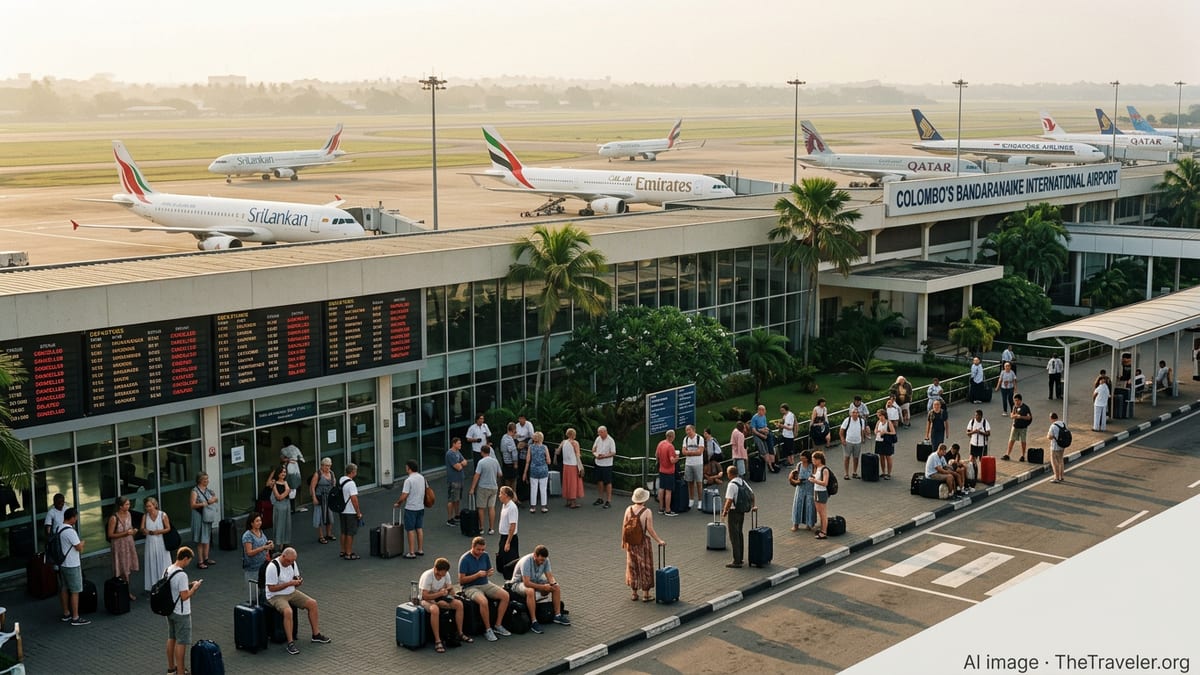
How the Middle East Crisis Is Disrupting Global Travel Corridors
The latest escalation of war involving the United States, Israel and Iran has led to extensive airspace closures over a wide swath of the Middle East. Published coverage describes airspace restrictions or shutdowns affecting countries including Iran, Iraq, Israel, Jordan, Lebanon, Kuwait, Bahrain, Qatar, Saudi Arabia, Oman, the United Arab Emirates and others, forcing airlines to cancel or radically reroute services between Europe, Africa and Asia.
Major hubs such as Dubai, Abu Dhabi and Doha, normally among the busiest connection points between Europe and Asia, have seen large numbers of cancellations and suspensions. Reports tracking operations at these airports point to thousands of flights being grounded or diverted within days of the first strikes, leaving hundreds of thousands of travelers stranded or facing multi day delays as airlines try to redesign long haul schedules.
Industry analyses show that long haul flights which once crossed the Middle East on relatively direct great circle routes now face detours of two to five hours via narrower corridors over the Caucasus or the southern Red Sea. The added distance increases fuel burn, crew costs and scheduling complexity, prompting some carriers to cut frequencies, cap seat capacity or suspend certain routes entirely.
For tourism reliant economies in South and Southeast Asia, the shock is particularly acute because many of their highest value visitors arrive either on European carriers transiting Gulf hubs or on Middle Eastern airlines that funnel traffic from across Europe and the Americas. The sudden loss or reduction of these links is already visible in airport arrival data and hotel occupancy reports.
Sri Lanka Faces Fresh Setback Just as Tourism Recovery Gains Pace
Sri Lanka, which had been working to rebuild visitor confidence after years of economic strain and earlier political unrest, is emerging as one of the hardest hit destinations outside the immediate conflict zone. Local media in Colombo have reported waves of cancellations and schedule changes affecting flights linking Bandaranaike International Airport with major Gulf hubs, including services that feed traffic from Europe and the Middle East into the island’s resort regions.
Editorial coverage in Sri Lankan newspapers highlights concerns from the hotel and wider visitor economy, noting that inbound flow from Gulf markets is already weakening as residents there struggle to travel across a patchwork of airspace closures. At the same time, European travelers who would normally connect through Dubai, Abu Dhabi or Doha are facing long delays, repeated rebookings or outright cancellations, with some visitors stranded in Sri Lanka while they wait for alternative routings home.
Travel industry commentary suggests that even where rerouted flights remain possible, longer journeys and rising fares are dampening demand for near term trips to Sri Lanka. Tour operators serving key long haul markets have begun warning customers to expect schedule volatility and potential last minute changes. This comes just as Sri Lanka was counting on high season European bookings and growing interest from the Middle East to support its fragile foreign exchange position.
The broader concern among tourism businesses on the island is that if disruption persists for several weeks, Sri Lanka could see a notable fall in arrivals compared with earlier projections for 2026. That would echo the setbacks experienced during the pandemic period, when air connectivity constraints rather than domestic conditions were the primary barrier to travel.
Thailand, Indonesia, Cambodia and Nepal Confront Sliding Arrivals
Across mainland and maritime Southeast Asia, the same pattern is beginning to emerge. In Thailand, public statistics for the first weeks of March 2026 already indicate a measurable drop in foreign arrivals compared with last year, with some reports citing week on week declines approaching double digits after the conflict escalated. Local tourism bodies are warning that if Middle East airspace stays constrained for a month or more, Thailand could lose several hundred thousand visitors and tens of billions of baht in revenue this year.
Analyses by regional travel publications describe more than six hundred flights linked to Thailand being canceled in the early phase of the crisis, including both services operated by Thai carriers and international airlines that use Middle Eastern hubs as connection points. While domestic tourism remains relatively resilient, the decline in long haul visitors from Europe and the Gulf is being felt in major resort areas such as Phuket, Krabi and Koh Samui, where hotel bookings and excursion sales had been tracking strongly before the war.
Indonesia’s flagship destination of Bali, often bundled with Thailand on multi country itineraries, is experiencing similar turbulence. Travel trade coverage notes that the island’s dependence on connecting traffic from Gulf carriers and on European airline routes that traverse the restricted zone has left it exposed to cancellations and sharply higher airfares. Hoteliers are reporting softer forward bookings from Europe for the coming months and an uptick in short notice cancellations by travelers wary of long, uncertain journeys.
In smaller markets such as Cambodia and Nepal, where direct long haul links are limited, reliance on regional and Gulf hubs is even greater. Industry observers say that disruption at those hubs quickly filters through to Siem Reap, Phnom Penh and Kathmandu, with group tours rescheduled, transit times extended and some itineraries temporarily withdrawn from sale. Given the relative size of these visitor economies, even modest absolute declines in arrivals can translate into significant pressure on local businesses and employment.
Flight Cancellations, Rising Fares and Shifting Route Maps
Behind the headlines, the mechanics of the disruption are reshaping route maps across Eurasia. Aviation tracking services estimate that tens of thousands of flights have been canceled worldwide since the onset of the crisis, with a particularly heavy impact on services scheduled to cross the Middle East corridor on or after March 1, 2026. Airlines that previously relied on Middle Eastern hubs as efficient midpoints between Europe and Asia are now experimenting with alternative routings via Turkey, Central Asia and, where possible, nonstop point to point links.
Longer detours inevitably increase costs. Analysts point out that airlines must burn more fuel, roster additional crew or introduce technical stops, and may need to limit payload on certain sectors. These extra expenses are feeding through to ticket prices, particularly on last minute bookings and on routes where capacity has been sharply reduced. For leisure travelers heading to price sensitive destinations such as Sri Lanka, Thailand or Indonesia, significantly higher fares can be enough to postpone or cancel a trip.
There is also a growing imbalance between supply and demand on the remaining viable corridors. Flights skirting the conflict zone are frequently departing full, while services that previously required a connection through the Gulf remain off sale or heavily oversubscribed with rebooked passengers. Travel assistance platforms and consumer rights organizations are documenting long waits for call centers, repeated schedule changes and challenges in securing timely refunds, all of which erode traveler confidence in planning long haul holidays.
Insurance considerations add another layer of complexity. Many standard travel policies treat war related disruption differently from weather or technical delays, and fine print regarding coverage for missed connections or extended stopovers is becoming critical for affected holidaymakers. Advisories from foreign ministries about travel to parts of the Middle East are also leading some insurers and tour operators to reassess their risk exposure on itineraries that rely on transiting the region.
How Destinations Are Responding and What Travelers Can Expect Next
Tourism authorities and industry groups across Sri Lanka, Thailand, Indonesia, Cambodia and Nepal are beginning to sketch out responses to the crisis. Publicly available statements and policy outlines in Thailand describe emergency assistance plans for stranded tourists, including daily stipends to help cover accommodation and living expenses while visitors wait for new flights. Similar discussions are emerging in other markets regarding fee waivers, flexible visa policies and coordinated information desks at major airports.
Destination marketing bodies are also pivoting their short term strategies. Instead of relying heavily on long haul arrivals from Europe routed through Middle Eastern hubs, some are turning attention toward closer source markets in Asia Pacific, where flights can avoid the restricted zone entirely. Early messaging stresses that these countries remain safe to visit and that disruptions relate primarily to overflight corridors rather than to conditions on the ground in South or Southeast Asia.
For travelers contemplating trips in the coming weeks, specialists in air travel planning are advising greater flexibility. Recommendations include allowing longer connection times, favoring itineraries that avoid transiting the Gulf, and considering alternative gateways in East Asia or direct flights where available, even at a premium. Booking with airlines that have large, diversified networks and clear rebooking policies is also seen as a way to reduce the risk of being stranded.
Much now depends on how long the conflict and associated airspace closures persist. If a partial reopening occurs within a few weeks, tourism forecasters expect a gradual normalization of schedules and a rebound in deferred demand in the second half of 2026. A more prolonged shutdown, by contrast, could lock in a year of weaker than expected arrivals for Sri Lanka and its regional peers, complicating economic recovery across some of the world’s most tourism dependent destinations.