

More news on this day
Tourists from Australia, Ireland and the United Kingdom are confronting soaring airfares, cascading delays and unpredictable routings as overlapping airspace closures across the Middle East reshape some of the world’s busiest long-haul corridors.
Get the latest news straight to your inbox!
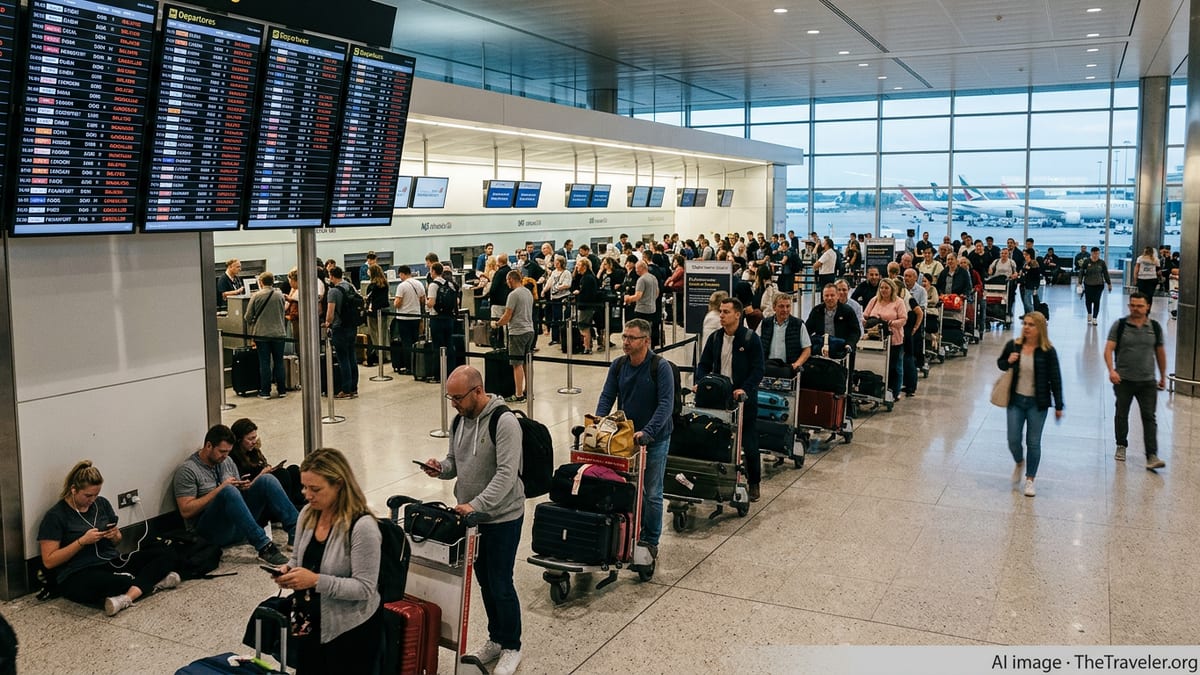
Middle East Conflict Ripples Across Global Flight Networks
Ongoing military tensions involving Iran, Israel and Gulf states have led to rolling airspace restrictions across Iran, Iraq, Israel, Qatar, Bahrain and the United Arab Emirates, according to recent aviation bulletins and travel advisories. Key hubs in Doha, Dubai and Abu Dhabi, normally central to traffic between Europe, Asia and Australia, have seen schedules repeatedly thinned out or temporarily suspended as carriers respond to changing safety assessments.
Industry trackers report that corridors over Iran and Iraq, once packed with Europe to Asia and Europe to Australia traffic, now show markedly fewer flights as airlines reroute around the region. Publicly available operational updates from European regulators indicate that many carriers are still avoiding the Tehran Flight Information Region even when it is technically open, in line with conflict zone guidance that prioritises conservative risk management.
These decisions have triggered a chain reaction far beyond the Middle East itself. Long-haul itineraries that once threaded efficiently through Gulf hubs are being stretched over Central Asia, the Caucasus or southern routes via the Red Sea and North Africa, adding time in the air, pushing up fuel burn and compressing already tight crew rosters.
Business and cargo aviation operators are also altering routings, with specialist associations reporting that some operators now routinely choose either far northern detours over Central Asia or longer southern tracks to avoid volatile airspace altogether. This reinforces the pressure on available routes and underscores the likelihood that disruption will not be limited to a handful of consumer airlines or destinations.
Reroutes, Longer Journeys and Higher Fares for UK and Irish Tourists
For travelers from Ireland and the UK, the most immediate impacts are longer journey times and sharply reduced choice of routings to Asia, Australia and the wider Indian Ocean region. Publicly accessible route maps and schedule updates show European carriers cutting direct services to some Middle Eastern cities, while others maintain flights but follow longer tracks that bypass Iranian and Iraqi airspace.
Published analysis in European travel media indicates that carriers such as British Airways and various continental airlines are still avoiding key segments of Middle Eastern airspace in early 2026, even after some zones formally reopened. This means that flights from London or Dublin to destinations like Singapore, Bangkok, Perth or Sydney may fly far to the north or south of the usual great circle route, adding from thirty minutes to several hours to total flight time depending on the day’s restrictions and winds.
Capacity constraints and operational uncertainty are feeding into prices. Industry-facing cost estimates suggest that every extra hour flown by a widebody aircraft can add several thousand dollars in operating expenses once fuel, crew and maintenance implications are considered. These additional costs often filter through to passengers in the form of higher base fares and reduced fare promotions, particularly on peak dates and school holiday periods when demand from the British Isles is strongest.
Irish travelers have faced an extra layer of complexity in recent days as repatriation operations from Gulf airports have been arranged on ad hoc bases, according to domestic media coverage. While these efforts have helped stranded visitors return home, the reliance on irregular rescue flights highlights how quickly routine connections via the Gulf can become fragile when multiple airspaces close at once.
Australians Squeezed Between Gulf Hubs and Longer Asia Detours
Australians are experiencing similar disruption, though the pattern is shaped by the country’s reliance on both Gulf carriers and key Asian hubs for links to Europe. Publicly accessible data on flight delays across Asia in early March shows more than a thousand delays and hundreds of cancellations tied directly to Middle East airspace closures, particularly at airports such as Kuala Lumpur, Singapore and Shanghai. Many of those flights feed into or out of long-haul services to Australian cities.
For passengers flying from Sydney, Melbourne, Brisbane or Perth to Europe, routings via Dubai, Doha or Abu Dhabi have long been among the most popular options. With airspace around Iran and segments of the Gulf intermittently restricted, Gulf-based airlines have suspended or rerouted a portion of their services, which in turn has reduced the number of available seats for Australians trying to connect to London, Dublin or continental European cities.
In response, some Australian travelers are diverting via alternate hubs in Southeast or East Asia, such as Singapore or Hong Kong, then continuing to Europe on carriers that are following more northerly detours. Travel and logistics updates note that these alternative routings can add several hours of transit time and may involve tight or re-timed connections, especially when late adjustments are made to avoid newly restricted airspace.
Airfare data compiled by regional travel outlets indicates that prices on remaining one-stop and non-stop routes that circumvent the most affected Middle Eastern corridors have risen notably since late February. Promotional economy fares between Australia and major European gateways are less visible, while flexible and last-minute tickets in both economy and premium cabins are significantly more expensive as airlines ration scarce capacity.
What Tourists Should Expect at Airports and In the Air
Travel advisories issued in recent days warn that airspace closures and emergency security controls in parts of the Middle East can be imposed or extended with little notice, leading to last-minute cancellations, diversions or extended ground holds. Some airports in the region are operating limited schedules under tightened security arrangements, and airline statements caution that flights may remain subject to operational and airspace approvals until the situation stabilises.
For passengers connecting through affected hubs, this can translate into overnight delays, missed onward connections and sometimes unplanned stopovers if aircraft are diverted to alternative airports. Flight tracking imagery published by aviation analytics sites shows aircraft from Europe and Asia at times making wide doglegs around restricted zones or holding for extended periods as route clearances are adjusted in real time.
Travel companies and corporate travel managers are advising clients to monitor flight status closely on the day of departure, build in additional buffer time between separate tickets and avoid non-essential long layovers in hubs that sit closest to conflict areas. Public guidance from insurers and risk consultants suggests that travelers should check policy wording to see whether delays and reroutings related to conflict-driven airspace closures qualify for trip interruption or additional accommodation cover.
On board, passengers are being urged to prepare for longer than scheduled flying times and the possibility of fuel stops if routes must be changed mid-flight. While safety protocols in commercial aviation are designed to keep aircraft far from active conflict zones, the practical result for many tourists is a less predictable timetable and a more tiring end-to-end journey than they might expect on the same route in calmer periods.
Planning Ahead: Practical Steps for UK, Irish and Australian Travelers
For those yet to travel, publicly available guidance from airlines, travel agents and government advisories converges on a few core recommendations. Travelers are encouraged to book on a single ticket with one carrier or alliance where possible, as this gives airlines greater flexibility to reroute passengers automatically if a connection is lost due to airspace changes. Separate tickets, by contrast, leave travelers more exposed to missed onward legs and out-of-pocket rebooking costs.
Experts quoted in aviation and business travel publications recommend allowing generous connection windows when routing through Asia or the Middle East in the current environment, especially on itineraries that rely on a single daily long-haul service at either end. A minimum of three hours between flights is being suggested in some advisory notes, with even longer buffers considered prudent for complex itineraries involving multiple carriers.
Budget planning has also become more important. With operating costs climbing and schedules thinning out, last-minute deals have become rarer on many Europe to Australia routings. Tourists from the UK, Ireland and Australia are being advised in travel columns to secure key long-haul sectors well in advance and to remain flexible on dates, routing and even departure airports. In some cases, it may be cheaper and more reliable to position first to a major European or Asian hub before beginning the long-haul sector.
Finally, travelers are being urged to keep documentation and contact details to hand. Travel advisories recommend registering trip details with national consular services when visiting or transiting volatile regions, subscribing to airline notifications, and downloading carrier apps that can deliver real-time gate changes, rebooking options and digital boarding passes. While such steps cannot eliminate the underlying airspace risks, they can help tourists from Australia, Ireland and the UK navigate an unsettled Middle Eastern sky with slightly more confidence and control.