

More news on this day
Families flying from Birmingham Airport have been swept into a fast-moving global aviation crisis after airspace closures across the Middle East triggered mass flight cancellations, severing key links to holiday hotspots and long-haul destinations across Asia and Africa.
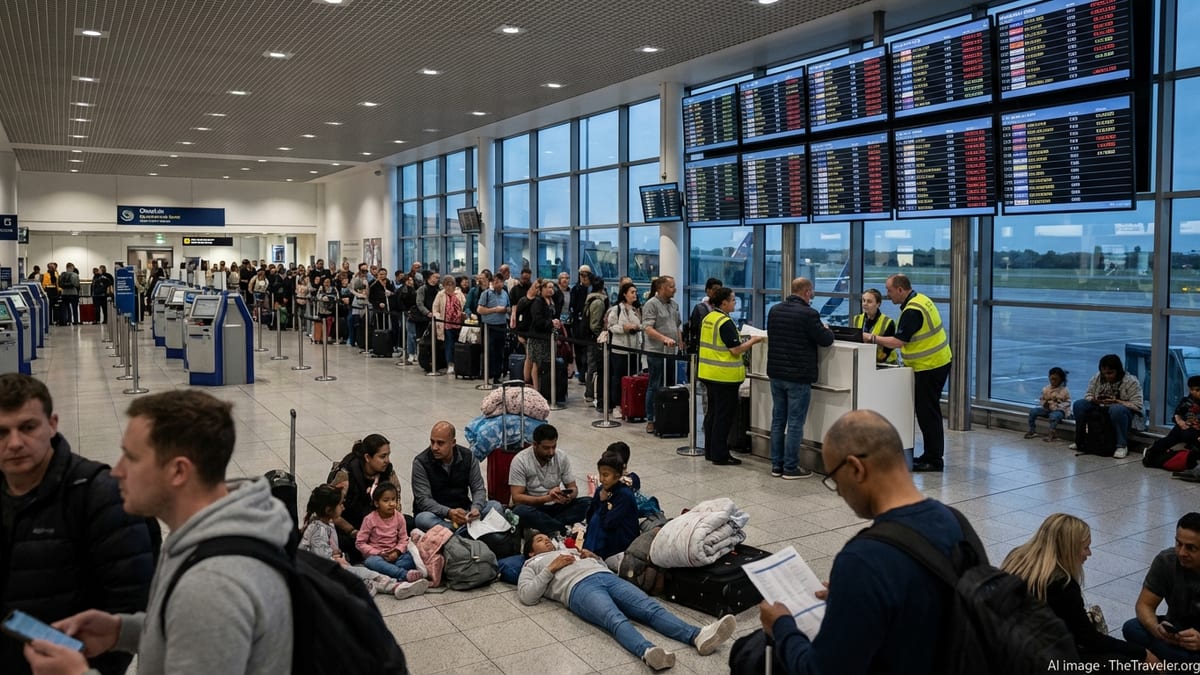
Middle East Erupts as Key Aviation Hubs Go Dark
A dramatic escalation in the Middle East over the weekend has rippled through the global aviation system, with major airspace closures forcing airlines to ground or reroute thousands of flights. Authorities in Iran, Israel, Iraq and several Gulf states have either shut or heavily restricted their skies following a series of strikes and retaliatory attacks, effectively knocking out some of the world’s busiest transit hubs.
Dubai, Abu Dhabi and Doha, which together act as a crucial bridge between Europe and destinations in Asia, Australia and eastern Africa, have been closed to most passenger operations since late last week. Airlines including Emirates, Qatar Airways and Etihad have cancelled large parts of their schedules, while European and Asian carriers have suspended services to the region or are attempting long detours that add hours of flying time and significant cost.
Global flight-tracking data shows several thousand services axed or diverted since the latest round of hostilities began, with further disruption expected in the days ahead. Industry analysts warn that even if tensions ease quickly, it could take weeks for airlines to reposition aircraft and crew and to clear the mounting backlog of stranded travellers.
For UK passengers, that turbulence is being felt far from the front lines, at regional airports such as Birmingham, Manchester and Glasgow as well as at London’s main hubs.
Birmingham Flights Axed as Airlines Rip Up Schedules
Birmingham Airport, a key gateway for holidaymakers from the Midlands and surrounding counties, has seen direct and connecting services to the Gulf wiped from departure boards as carriers react to the rapidly changing security picture. Flights that would normally route via Dubai or Doha to reach destinations such as Bangkok, Perth, Mumbai and the Maldives have been suspended or are subject to last-minute changes.
Airport officials confirmed that a number of departures and arrivals linked to Middle East hubs had been cancelled over the weekend, with more under review as airlines reassess their risk calculations and await clarity on when regional airspace might reopen. Passengers who were due to travel on through-tickets to Asia and Australasia are among those hardest hit, many told to stay at home while airlines attempt to rebook them on alternative routings via Europe or North America.
Some travellers returning to Birmingham from winter sun breaks have found their journeys unexpectedly lengthened by diversions and technical stops as pilots seek safe corridors around the affected region. One family arriving from Southeast Asia described a “zig-zag” route through multiple European cities before eventually touching down in the Midlands, more than 36 hours after leaving their hotel.
The knock-on effects are being felt across the airport’s ecosystem, with handling agents and customer service teams scrambling to cope with waves of disrupted passengers and aircraft parking stands filling up as planes wait out the crisis. Retailers and hospitality outlets in the terminal reported surges in demand from families stuck in limbo between cancelled and rebooked flights.
Foreign Office Tightens Travel Advice Across the Region
The UK Foreign, Commonwealth & Development Office has hardened its stance on travel to much of the Middle East in response to the worsening security environment, advising against all but essential travel to key Gulf states, Israel and parts of the wider region. Officials have warned that further missile or drone strikes cannot be ruled out and that airports and critical infrastructure could remain targets.
British nationals already in countries such as the United Arab Emirates, Qatar, Bahrain and Kuwait are being urged to register their presence with the government’s crisis tracking system and to follow local instructions, which in some cases include staying indoors and avoiding non-essential movements. The Foreign Office has also reiterated its long-standing warnings regarding Israel, the Palestinian Territories, Lebanon, Iraq and Syria, stressing that borders and airspace could close with little or no notice.
The tightened travel advice has immediate implications for would-be holidaymakers from Birmingham and beyond. Package tour operators are cancelling departures to affected destinations while they review programmes for the crucial spring and early summer periods. Under UK consumer rules, passengers booked on package holidays to places where official advice now warns against travel are generally entitled to full refunds or alternative arrangements.
However, independent travellers may face a more complicated path. Some airlines are offering vouchers or rebooking rather than cash refunds where flights still technically operate around the fringes of the affected area, leaving customers to navigate a patchwork of fare rules and insurance policies.
Families Face Costly Detours, Sleepless Nights and Uncertain Returns
For many UK families, the crisis has turned long-planned breaks into logistical ordeals. Travel agents across the Midlands reported a flood of calls from anxious customers as news filtered through of airport closures in Dubai and Doha, both popular stopover points for travellers heading to resort destinations further afield.
Some Birmingham-based passengers who had already flown out found themselves stranded in transit as their onward legs were cancelled mid-journey. Others, due to fly home via the Gulf in the coming days, now face uncertain returns as carriers juggle limited capacity on alternative routings. In online forums, travellers have shared stories of sleeping on terminal floors, queuing for hours at overrun service desks and trying in vain to reach airline call centres.
Financial pressures are quickly mounting. While airlines are obliged to provide re-routing and care in many circumstances, hotel stays, meals and replacement tickets can fall to travellers when disruptions are caused by conflict or airspace closures deemed beyond the carrier’s control. Travel insurers, meanwhile, are applying differing interpretations of “war” and “known events,” leaving some families unsure whether emergency expenses will be reimbursed.
Those still at home face a different dilemma: whether to cancel upcoming trips outright or to wait in the hope that tensions ease and airspace reopens. Industry insiders caution that even a partial reopening of Gulf hubs may not immediately restore previous levels of reliability, as airlines will need time to rebuild their complex web of connections.
What Birmingham Travellers Should Do Now
Travel experts say the first step for anyone due to fly from Birmingham to, through or near the Middle East is to check the status of their booking directly with their airline or tour operator, rather than relying solely on generic information posted on social media. With schedules in flux, passengers are being urged to keep a close eye on email and text alerts in case of last-minute changes.
Officials advise against heading to the airport unless a flight is confirmed as operating, warning that terminals can quickly become congested when large numbers of cancellations coincide. Where services are cancelled, travellers on package holidays should liaise with their tour company, while those who booked flights and accommodation separately may need to coordinate between multiple providers.
All travellers are being encouraged to consult the latest Foreign Office advisories before making any new bookings involving the Middle East or neighbouring regions, paying particular attention to wording around “all but essential travel” and “do not travel” warnings. These phrases can determine whether airlines and insurers are obliged to refund, reroute or compensate.
With no clear timeline yet for the reopening of key Gulf hubs or the lifting of airspace restrictions, Birmingham’s role as a regional gateway is under unusual strain. For now, families across the Midlands can expect their travel plans to remain hostage to events unfolding thousands of miles away in one of the world’s most volatile regions.