

More news on this day
Rapid escalation in the US–Israel–Iran conflict is rippling through global aviation, triggering airspace closures, mass flight disruptions and fresh political pressure on Australia’s alliance settings just as President Donald Trump urges partners to back his widening Middle East campaign.
Get the latest news straight to your inbox!
Airspace Closures Spread Across the Gulf and Levant
Since joint US and Israeli strikes on Iranian targets at the end of February 2026, airlines have faced a fast-changing patchwork of airspace restrictions stretching from the Levant to the Gulf. Publicly available aviation and media reports show that Iran’s retaliatory missile and drone attacks have prompted temporary closures or tight restrictions in multiple flight information regions, including over parts of Iraq, Qatar and the United Arab Emirates. In one recent incident, explosions over Dubai led the UAE to briefly suspend flights while its air defences intercepted incoming fire, underscoring how quickly a local flare-up can shut down a major hub.
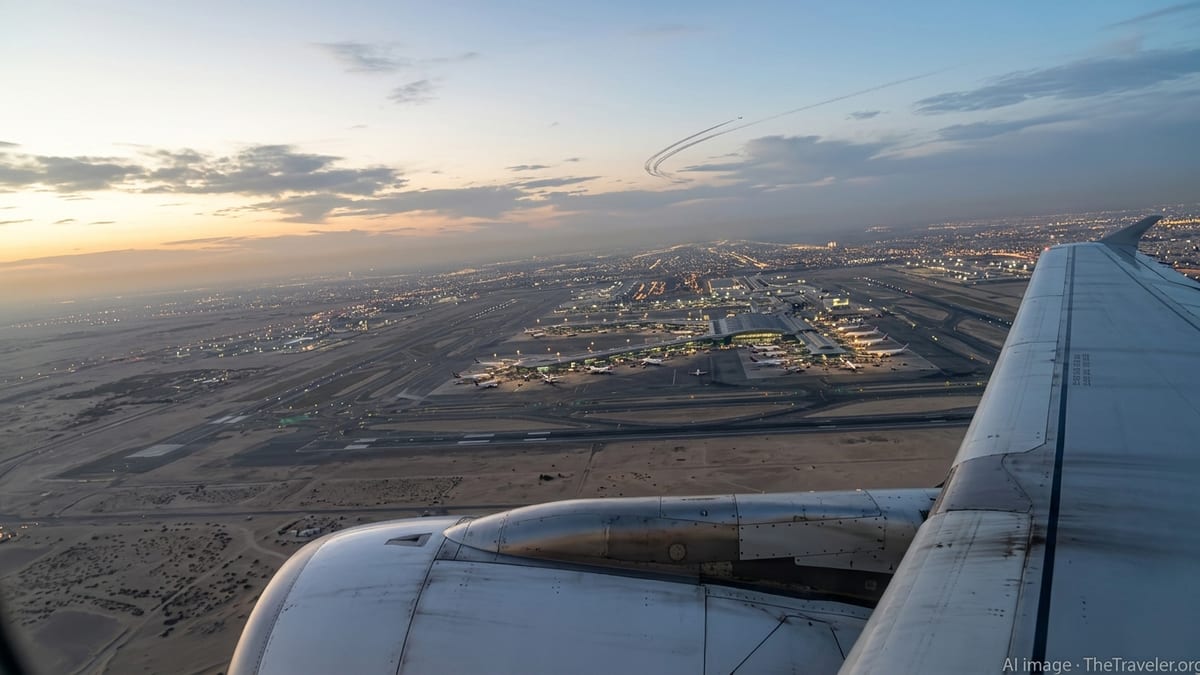
Qatar’s Hamad International Airport, a key global transit gateway, has seen severe disruption after Qatari authorities curtailed air navigation and suspended most commercial services in response to Iranian strikes. Limited emergency operations are continuing for evacuations and essential cargo, but onward connections for Europe, Africa and Asia have been heavily cut. Aviation advisories from insurers and travel assistance firms describe widespread delays, diversions and cancellations across the region, with knock-on effects now being felt as far away as South and Southeast Asia.
In Israel, repeated missile salvos have damaged infrastructure at Ben Gurion Airport and forced a reduction in departures, according to Israeli media reports. International carriers have already thinned or halted services to Tel Aviv, echoing patterns seen during earlier conflicts but now compounded by the wider US–Iran confrontation and the risk that more regional states could limit overflights with little notice.
Strait of Hormuz Campaign Fuels Global Route Disruption
The conflict is centered not only in the skies but also around the Strait of Hormuz, the narrow channel that carries a significant share of the world’s seaborne oil. After Iran moved to restrict passage in response to the initial US–Israeli strikes, the United States launched a dedicated aerial campaign in mid March to reopen the waterway. Analysts note that this has sharpened the military footprint in a corridor that also anchors some of the busiest east–west air routes.
As naval and air operations intensify over and around the strait, airlines are reassessing routings that traditionally cross near Iranian, Omani and Emirati airspace. Long-haul flights between Europe and Asia are being pushed north over Turkey and the Caucasus, or south over Saudi Arabia and the Red Sea, increasing track miles, fuel burn and operating costs. Industry commentary suggests that some carriers are building extra block time into schedules to accommodate holding patterns and last-minute reroutes when military activity spikes.
Travel risk briefings from large insurance and assistance providers now describe the 2026 Strait of Hormuz crisis as one of the most significant geopolitical shocks to global air travel since the early 1990s Gulf conflict. Even passengers whose itineraries do not explicitly list Middle Eastern stops are finding their journeys affected, as crews time out, aircraft miss rotations and congested alternative corridors become saturated.
Trump’s Pressure Campaign on Allies Reaches Canberra
Against this backdrop of operational turmoil, President Donald Trump has intensified public pressure on allies to support US efforts against Iran. In recent days he has touted the scale of strikes on Iranian military assets and called on countries that rely on Gulf energy flows to contribute more to the campaign to secure the strait. Social media posts and commentary highlighted Japan, South Korea and European partners, while also mentioning Australia in the context of broader allied support.
Australian political debate has been sharpening as a result. Earlier in the conflict, Canberra shifted from a relatively cautious tone to firmer backing of US action against Iran and its proxies, while at the same time upgrading travel advisories for Israel and Lebanon to a strict “do not travel” level. Domestic commentators note that Trump’s rhetoric often frames alliances in transactional terms, raising questions in Australia about how far support for US operations in the Middle East might be expected to go, and whether Canberra could come under renewed pressure to contribute maritime or air assets in and around the Strait of Hormuz.
For now, public reporting indicates that Australia has limited its direct involvement to diplomatic backing, intelligence cooperation and potential niche deployments such as surveillance aircraft or missile defence support in Gulf states. Even so, the perception that Washington views allies as instruments in a broader pressure campaign on Iran is feeding concern that Australia could again find itself drawn deeper into a Middle East conflict with complex long-term consequences, similar to earlier campaigns in Iraq and Afghanistan.
Australian Travellers Face Tougher Routes and Rising Costs
For Australian travellers, the most immediate impact is practical rather than political. Much of the country’s long-haul connectivity to Europe and parts of Africa has historically relied on one-stop connections through Gulf hubs such as Doha, Dubai and Abu Dhabi, or via carriers that overfly Iranian and Iraqi airspace. With Qatar’s main hub curtailed and the UAE intermittently tightening restrictions during periods of heightened risk, Australians are seeing already long journeys become even more complicated.
Travel industry reports from South Asia and the Gulf describe thousands of passengers stranded or rebooked after sudden airspace changes forced airlines to cancel or reroute services. Some Australian travellers are being shifted onto less direct routings via Southeast Asia, India, or East Asia, adding significant extra flying time. Others have had European holidays postponed or cut short because available alternatives were fully booked or prohibitively expensive.
At the same time, Australian insurers are updating policy guidance to clarify how war and conflict exclusions apply. Advisory notices from major international underwriters emphasize that events linked to declared hostilities or sanctioned entities might not be covered, particularly in relation to trip interruption costs or emergency evacuations. Travel agents are urging clients to read policy wording carefully and to consider flexible tickets that can be changed if transit hubs close or advisories are upgraded at short notice.
What Airlines and Passengers Should Watch Next
With the conflict still evolving, airlines and passengers are closely watching several key variables. The first is whether Iran and neighbouring states maintain only partial and temporary airspace restrictions, or move toward broader and more sustained closures in response to new strikes. The second is whether further Iranian missile or drone attacks target civilian infrastructure such as airports, after Tehran threatened to expand its focus to include recreational and tourist sites worldwide.
A third factor is how far the United States pushes its allies, including Australia, to shoulder more of the security burden in and around the Strait of Hormuz. If Canberra were to commit naval vessels, aircraft or additional personnel, the move could trigger a domestic debate that affects public perception of travel to and through the Middle East, potentially prompting further tightening of government advisories.
For now, publicly available government and industry guidance generally recommends that travellers avoid non-essential trips to active conflict zones such as Israel, Lebanon, parts of Iraq and Iran, and that those transiting the wider region maintain flexible itineraries, monitor airline notifications and register for official travel alerts. With flight paths shifting daily and the political calculus in Washington, Tehran, Jerusalem and Canberra still in flux, the only certainty for global travellers is that the map of safe and convenient routes through the Middle East will remain unsettled in the weeks ahead.