

More news on this day
Thousands of Australians have been stranded across Europe, Asia and the Middle East after Emirates, Qatar Airways, Etihad Airways and Virgin Australia cancelled or diverted hundreds of flights through Gulf hubs as conflict between Israel and Iran forced widespread airspace closures.
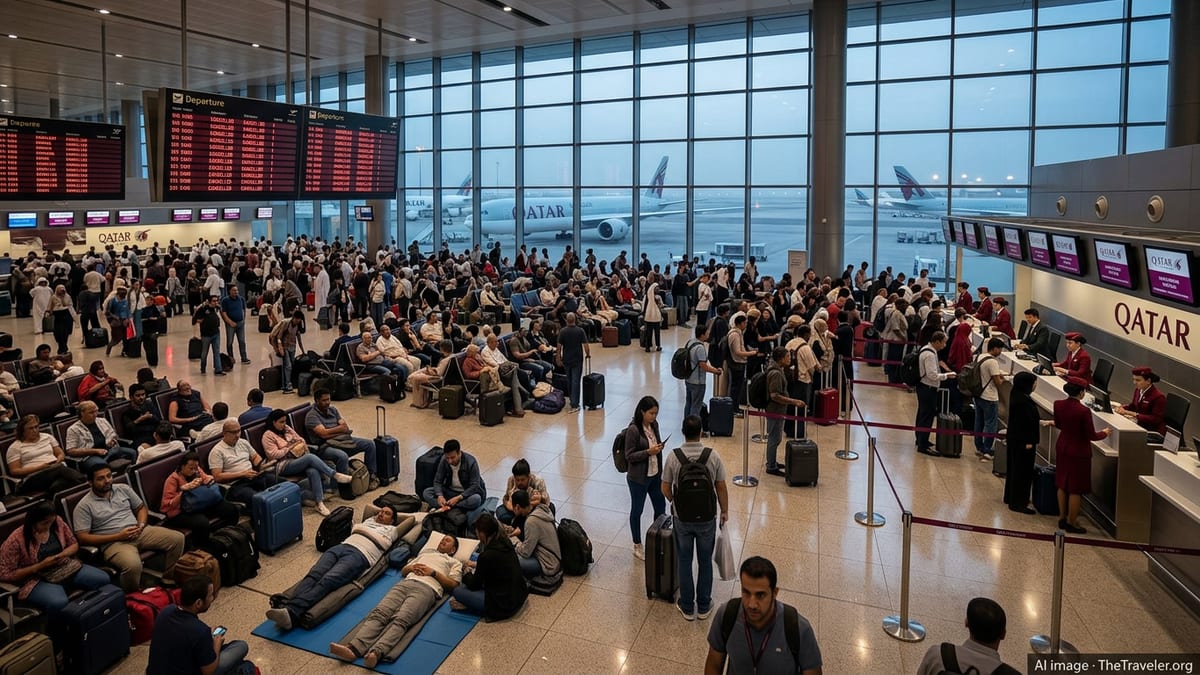
Major Gulf Hubs Grind to a Halt
The latest round of US and Israeli strikes on Iran, and subsequent retaliatory attacks, has triggered one of the most severe shocks to global aviation since the pandemic, with airspace over Iran, Iraq, Israel, Kuwait, Bahrain and parts of the United Arab Emirates and Qatar either fully or partially closed. The knock-on effect has rippled across the airline networks that Australian travellers rely on to connect to Europe, Africa and much of Asia.
Emirates has temporarily suspended all flights to and from Dubai, one of the world’s busiest transit hubs for Australians heading to and from Europe. The carrier said operations would remain limited while regional airspace closures continued, with only a small number of special or recovery flights operating as conditions allow.
Etihad Airways has halted regular services to and from Abu Dhabi while the city’s Zayed International Airport assesses damage from recent strikes and works with regulators on when it can safely resume wider operations. Qatar Airways has grounded most services from Doha after Qatari airspace was effectively shut, cutting off another key link in the global network used by Australian travellers.
The combined effect is a cascading disruption across global schedules. Flight-tracking data shows thousands of flights cancelled or re-routed around the Gulf, adding hours to long-haul journeys and sharply reducing capacity on some of the world’s busiest corridors.
Australians Stranded Worldwide as Connections Collapse
The sudden loss of Dubai, Abu Dhabi and Doha as functioning hubs has left Australians scattered across airport lounges and hotel lobbies from Athens and London to Singapore and Kuala Lumpur. Many had already flown part of the way toward the Gulf only to find their onward legs cancelled mid-journey or turned back in the air.
Australian consular officials say they are aware of large numbers of citizens stuck in Europe and the Middle East waiting for seats on scarce alternative routes. With capacity through the Gulf severely constrained, travellers are competing for limited seats on services routing via Asia, Africa and southern Europe, pushing up fares and extending travel times.
At Australian gateways including Sydney, Melbourne, Brisbane and Perth, departing passengers bound for the Middle East and beyond have faced last-minute cancellations at the boarding gate, along with lengthy queues at airline service desks. Some have reported difficulty securing hotel rooms or food vouchers as airlines struggle to house passengers amid near-total shutdowns of their core hubs.
The disruption is particularly acute for Australians trying to reach family in Europe, as well as for those on complex itineraries involving cruises, tours or non-refundable accommodation. With travel insurance policies often excluding acts of war, many stranded passengers are discovering that their main recourse is the airlines’ own disruption policies.
How Emirates, Qatar Airways, Etihad and Virgin Australia Are Responding
Emirates has issued a broad waiver for customers due to fly in the coming days, allowing those booked on affected services to rebook on alternative Emirates flights once operations ramp up again, or to request a refund if their trip is no longer possible. However, with the carrier’s Dubai hub largely idle and aircraft displaced around the world, the timing and frequency of those alternatives remains uncertain.
Etihad is offering similar flexibility, permitting free rebooking on Etihad-operated flights within a set travel window and allowing full refunds for unused tickets where flights have been cancelled. The airline has asked guests to avoid calling contact centres unless their travel is imminent, citing extremely high call volumes and frequent schedule changes as the situation evolves.
Qatar Airways has suspended many services and is directing passengers to its app and online portals for the latest information, rebooking options and refund requests. With Qatari airspace constrained and aircraft out of position, the airline is prioritising stranded passengers on a case-by-case basis as it looks to gradually rebuild its network when conditions allow.
Virgin Australia has been hit indirectly through its partnership with Qatar Airways on flights between Australia and Doha. Multiple jointly marketed services have been cancelled or forced to return to their departure cities, leaving Virgin to offer affected customers free booking changes, credits or refunds for travel scheduled over the coming days. The airline is advising travellers to closely monitor their itineraries and official travel advisories before heading to the airport.
Government Warnings and Limited Prospects for Rescue Flights
The Australian government has described the scale of the disruption as unprecedented in recent decades, noting that many of the very hubs normally used to stage evacuations and emergency repatriation flights are themselves directly affected by the conflict and associated airspace closures. Officials are prioritising consular support and information, while emphasising that commercial options remain the primary pathway home for most travellers.
Foreign affairs and transport officials are in close contact with Gulf carriers and regional authorities to assess when limited corridors may reopen for transit traffic. While some special flights have begun operating on carefully controlled routes, there is no clear timeline for a full return to normal schedules, and authorities are warning that conditions could deteriorate further if hostilities escalate.
Canberra has updated its travel advice for multiple Middle Eastern destinations, urging Australians to reconsider or defer non-essential travel and to stay in close contact with their airlines if already in the region. Travellers are being told to ensure their details are registered on official advisory platforms so they can receive alerts about any government-facilitated options should commercial routes remain blocked.
Industry analysts say large-scale military evacuation flights for Australians remain unlikely in the short term given the complexity of the airspace picture and the limited capacity of alternative airports that are currently outside the conflict zone. Instead, they expect a phased reopening with heavily disrupted commercial services, making flexibility and patience essential for stranded travellers.
What Stranded Australian Travellers Should Expect Next
For Australians still overseas, the next few days are likely to involve rolling cancellations, long waits for rebooking and competition for seats on alternative routings that avoid the Gulf. Even as Emirates, Etihad and Qatar Airways begin to restore parts of their networks, crews and aircraft are scattered around the globe, meaning schedules will take time to stabilise.
Travellers are being strongly advised not to cancel their tickets pre-emptively without first checking airline policies, as voluntarily cancelling a booking can forfeit eligibility for waivers and could jeopardise any chance of a refund. Those who booked through travel agents are being urged to work through their agents, who may have direct access to airline support channels and negotiated fares.
As demand surges on remaining routes through Asia and other regions, Australians should brace for longer journey times, circuitous routings and limited availability of premium cabins. Some may also face unexpected stopovers or forced overnight stays as airlines rebuild viable long-haul connections that skirt closed or unsafe airspace.
For now, the message from both airlines and authorities is that the situation remains highly fluid. While signs of a gradual restart are emerging, the Middle East’s role as a critical crossroads for Australian travellers has been starkly exposed, and it could be days or even weeks before the full scale of this travel meltdown clears.