

More news on this day
Coordinated US and Israeli strikes on Iran on February 28, 2026 have triggered rapid airspace shutdowns across the Middle East, forcing airlines to divert or cancel hundreds of flights and scrambling long-haul routes between Europe, Asia and North America.
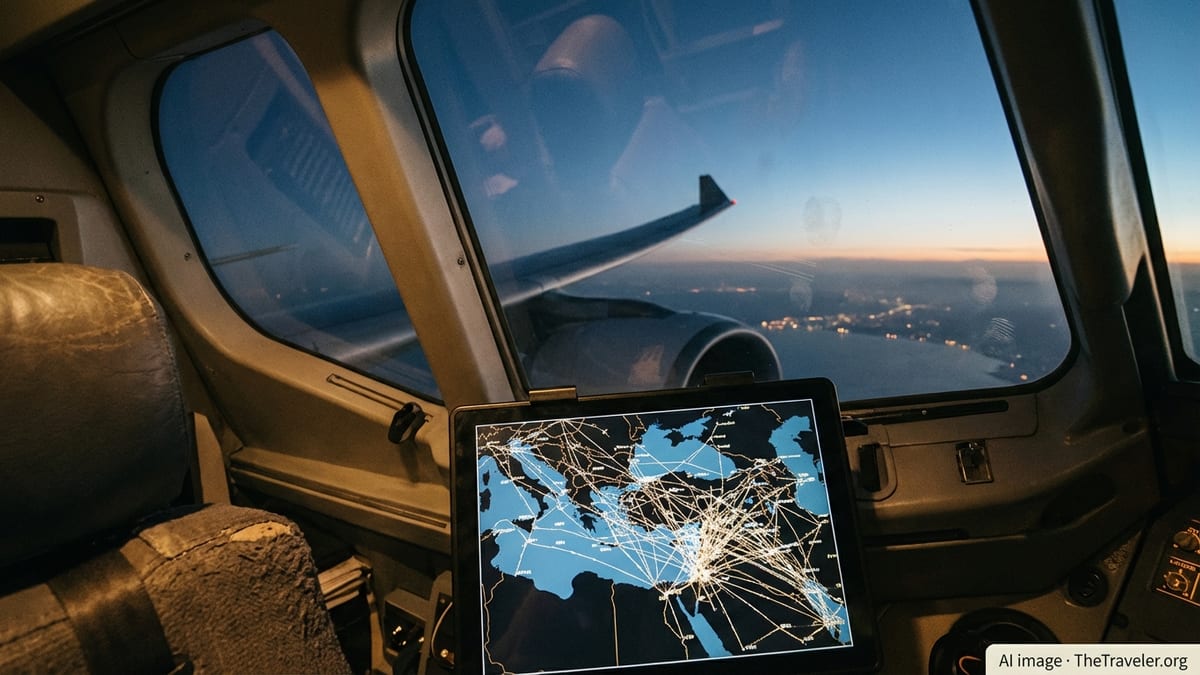
Rapid Airspace Shutdowns Across the Region
Within hours of the strikes on targets in and around Tehran, civil aviation authorities in Iran, Israel and Iraq announced full closures of their airspace to civilian traffic, citing security risks and active military operations. Flight tracking data showed skies over all three countries effectively empty of commercial aircraft as operators rushed to reroute long-haul services away from the conflict zone.
Iran’s civil aviation authority confirmed that the country’s airspace was being shut for at least an initial six-hour window, later extended as explosions and military activity continued to be reported in multiple cities. In Israel, the transport ministry ordered a nationwide halt to takeoffs and landings, freezing civil aviation and advising passengers to stay away from airports until further notice.
Iraq’s transport ministry followed with a blanket suspension of overflights, a significant move given the country’s role as a key transit corridor for flights linking Europe with the Gulf, India and Southeast Asia. The combined closures have effectively severed one of the world’s most important east–west aviation corridors, forcing airlines to improvise alternative paths over Turkey, the Caucasus and, where possible, Egypt and the Mediterranean.
Gulf States Tighten Skies as Security Fears Mount
The shockwaves extended quickly across the Gulf, where several states moved to restrict or partially close their airspace amid concerns about potential spillover attacks and missile activity. Authorities in Qatar, Kuwait and the United Arab Emirates announced temporary suspensions or severe limitations on flights, described as exceptional precautionary measures pending ongoing security assessments.
In the UAE, aviation officials said sections of the country’s airspace were being closed to safeguard passengers and crews, following reports of explosions heard in Abu Dhabi and heightened military readiness around key infrastructure. Airports in Doha, Kuwait City and other Gulf hubs began delaying and cancelling departures, with some incoming long-haul flights from Europe and Asia instructed to hold, divert or return to origin.
Bahrain and other Gulf states increased restrictions and monitoring of transit corridors, further tightening a regional airspace map already dominated by military activity and air-defense alerts. Regional carriers warned that schedules would remain highly volatile through the coming days as governments reassessed risk levels and the potential for further strikes or retaliatory action.
Global Airlines Divert, Cancel and Recalculate Routes
For international travelers, the most immediate impact has been a wave of diversions, cancellations and extended flight times on some of the world’s busiest long-haul routes. Airlines operating between Europe and East or South Asia, as well as between North America and India or the Gulf, have been among the hardest hit as standard routings over Iran, Iraq and the broader Middle East became unavailable almost overnight.
Major European and Asian carriers began rerouting flights north over Turkey, the Black Sea and Central Asia, or further south via Egypt and the Red Sea, adding hours to some journeys and straining crew and fuel planning. Aircraft already en route at the time of the strikes were forced into last-minute diversions to alternate airports in Europe, Central Asia and North Africa when overflight permissions were withdrawn mid-flight.
Several airlines announced temporary suspensions of services to Tel Aviv, Tehran and major Gulf hubs, while others introduced flexible rebooking and refund policies for passengers booked to travel through the region over the coming days. Travel agents and airline call centers reported heavy call volumes as passengers sought clarity on whether their flights would operate and what rerouting options existed.
What Travelers Need to Know Right Now
For passengers with upcoming itineraries touching the Middle East or using the region as a transit bridge between continents, the situation remains fluid and subject to rapid change. Travelers booked on routes that normally pass over Iran, Iraq, Israel or neighboring Gulf states should expect possible schedule changes, longer flight times and, in some cases, outright cancellations as airlines rework networks around newly closed corridors.
Industry experts stress that travelers should monitor airline communications closely, as carriers are the primary source for real-time status on specific flights and any waivers for changes or refunds. Many airlines have begun issuing broad travel advisories that allow passengers to postpone or reroute trips without standard penalty fees when journeys involve affected destinations or overflight zones.
Airports in Europe and Asia are also urging passengers on long-haul departures to allow extra time at departure, as check-in and rebooking desks handle a surge in operational changes. Even travelers not flying to or from the Middle East may experience knock-on effects, with aircraft and crews out of position and global networks adjusting to longer routings that reduce daily aircraft utilization.
How Long Could Disruptions Last and What Comes Next
A key unknown for the aviation industry is how long the current airspace closures will remain in place. Initial notices from some authorities referenced limited time windows, but security officials across the region have signaled that restrictions could be extended or repeatedly renewed if missile launches, airstrikes or other hostile activity continues.
Airlines are planning on the basis of rolling assessments, updating routings as new Notices to Air Missions are issued by regional regulators. For now, most carriers appear to be avoiding any non-essential exposure to airspace near active conflict zones, even where partial access remains technically open, in line with established risk-management practices after previous conflicts in the region.
Analysts note that sustained closures would carry significant economic costs, increasing fuel burn, adding crew and maintenance complexities and potentially reducing capacity on key intercontinental routes. For travelers, that could translate into higher fares on some long-haul sectors, fewer nonstops and more frequent last-minute changes.
With governments, militaries and airlines all working from rapidly evolving intelligence and security assessments, passengers are being advised to treat itineraries involving the wider Middle East as provisional in the near term. Until there is a clear de-escalation in the confrontation between Iran, Israel and the United States, the region’s skies are likely to remain among the most tightly controlled and operationally challenging in the world.