

More news on this day
Turkish Airlines has joined a growing list of global carriers cutting or suspending flights across West Asia, as widespread airspace closures and travel restrictions tied to the Iran war cause the most severe disruption to Middle East aviation since the pandemic.
Get the latest news straight to your inbox!
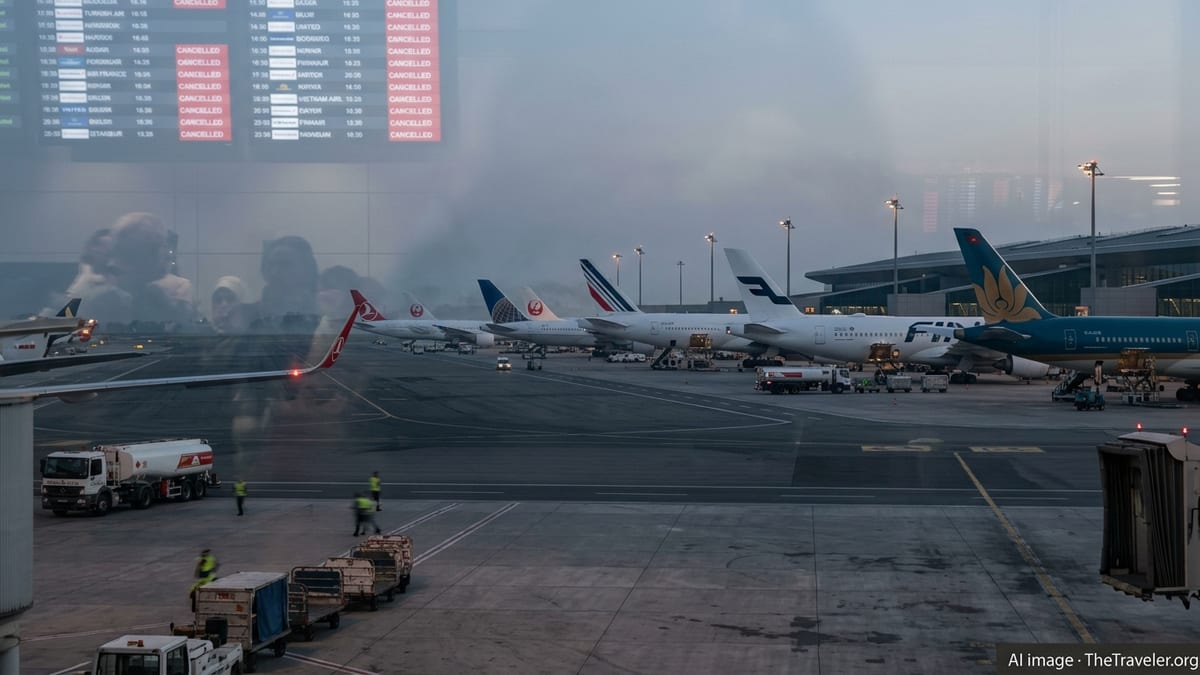
Turkish Airlines Tightens Operations Across Gulf and Levant
Publicly available notices indicate that Turkish Airlines has moved from limited schedule adjustments to broad restrictions across much of the Middle East, covering Bahrain, Iran, Iraq, Jordan, Kuwait, Lebanon, Oman, Qatar, Saudi Arabia, Syria, and the United Arab Emirates for travel between late February and at least the end of April 2026. The carrier is offering free date changes and, in some cases, refunds for passengers ticketed to affected destinations, reflecting the prolonged closure or curtailment of key air corridors.
Passenger reports and airline advisories point to widespread cancellations to Gulf gateways such as Doha, Dubai, Abu Dhabi, Muscat, and regional hubs in Iraq and Kuwait. Some travelers who had booked multi-stop itineraries through Istanbul into these markets describe entire segments being removed from schedules, while flights to and from Turkey itself generally continue to operate. The pattern underscores how sharply the conflict-linked restrictions are concentrated on airspace south and east of Turkey rather than on the country’s own main hub.
Advisory language from the airline, echoed by travel agents and online booking platforms, emphasizes that services to destinations outside the conflict-affected belt remain largely intact. Yet even passengers whose final destinations are in South or East Asia are feeling the impact, as routings that would usually cross Iranian or Gulf airspace are being reworked or withdrawn. For many, itineraries that once relied on seamless overnight connections via Istanbul into Middle Eastern hubs are now being re-ticketed through Europe or other Asian gateways, with longer journey times and reduced flexibility.
The evolving Turkish Airlines policy aligns with recommendations from European aviation safety authorities, which have highlighted elevated risks in the skies over Iran, Iraq, Israel, Jordan, Kuwait, Lebanon, and parts of the Gulf. While the carrier has not detailed the precise scale of its capacity cuts, flight-tracking data and traveler accounts show a clear retrenchment from routes that depend on now-closed or heavily constrained airspace.
Global Network Carriers Pull Back From West Asian Routes
Turkish Airlines’ tightening measures come amid a wider retrenchment by global carriers as the 2026 Iran war and associated missile and drone activity reshape Middle East aviation. According to published coverage and industry analyses, airlines including United, Air France, Japan Airlines, Vietnam Airlines, Finnair, airBaltic, and others have either suspended services to certain West Asian destinations or are operating on heavily modified routings that bypass conflict-affected skies.
United Airlines has issued successive “Middle East unrest” travel waivers since late February, progressively expanding and then adjusting the list of covered destinations and travel dates into mid-June 2026. These waivers allow passengers booked to or through affected points to change plans without fees, signaling a sustained uncertainty around schedules. Although United’s main hubs are outside the immediate conflict zone, its connections into the region and its transcontinental routes that would normally cross Middle Eastern airspace are being reassessed on a rolling basis.
European and Asian network airlines are responding in similar fashion. Public schedules and tracking data show carriers such as Air France, Finnair, and airBaltic diverting flights away from Iranian and neighboring airspace, which has added significant mileage to some routes between Europe and South or East Asia. Japan Airlines and Vietnam Airlines have also adjusted select long-haul paths to avoid overflying Iran and surrounding conflict areas, at times resulting in extended flight times and altered departure slots.
Industry commentary characterizes this as the most complex rerouting challenge since the early months of the pandemic, with airlines struggling to maintain commercially viable schedules while adhering to evolving safety recommendations and airspace closures. The cumulative effect is a patchwork of suspensions, downgraded frequencies, and intricate detours that are difficult for travelers to anticipate from timetable data alone.
Airspace Closures Create a New Aviation Bottleneck
The disruption stems from a rapid cascade of airspace restrictions that followed the opening salvo of the Iran war on 28 February 2026. Publicly available information on the conflict’s aviation impact indicates that Iran’s skies have been largely empty of civilian traffic, while Bahrain, Iraq, Israel, Kuwait, Qatar, Syria, and the United Arab Emirates have also imposed full or partial closures. At one point in early March, commercial traffic into Tehran’s main international airport was effectively halted, and several Gulf airports experienced temporary shutdowns or severe operational limits.
European aviation safety advisories issued in early March recommended that airlines avoid the entire airspace over Iran, Iraq, Israel, Jordan, Kuwait, Lebanon, and parts of the eastern Mediterranean and Gulf, citing conflict-related risks. These advisories, though not binding, carry significant weight for carriers and insurers, effectively pushing much of the world’s East–West traffic into narrower, more congested corridors over Turkey, the Caucasus, and southern Europe.
The result is a new kind of bottleneck in global aviation. Routes that once took relatively direct paths from Europe to India, Southeast Asia, and beyond via the Gulf are being re-drawn along more northerly or southerly tracks. Airlines that rely on Middle Eastern hubs for connecting traffic, including the major Gulf carriers, have been forced to curtail or suspend many operations, and international airlines that once used these hubs primarily for connectivity now face a shortage of viable alternatives.
Analysts tracking flight patterns describe a landscape in which the traditional advantage of Middle Eastern super-connectors has been temporarily blunted. With key corridors curtailed and multiple regional hubs constrained, carriers in Europe and Asia that can route traffic over their own territory or through unaffected partners are gaining a relative operational edge, even as they too shoulder higher fuel costs and longer block times.
Ripple Effects for Travelers and Tourism Markets
For passengers, the immediate impact is felt in cancellations, longer journeys, and limited rebooking options. Travelers with trips planned to popular Middle Eastern destinations in March and April 2026 report receiving repeated schedule change notices, with some itineraries reduced to single daily flights or removed entirely. Those connecting through Istanbul, Doha, Dubai, or Abu Dhabi on their way between Europe, Africa, and Asia are frequently being re-routed via more distant hubs or offered travel credits instead.
Travel insurers and tourism analysts note that the aviation turmoil is hitting regional tourism markets just as they were attempting a full post-pandemic recovery. Cities that had positioned themselves as stopover destinations or winter-sun gateways are facing a sharp drop in arrivals as airlines cut capacity and travelers opt to defer or redirect trips. The downturn is particularly acute in Gulf states and neighboring countries where closed or restricted airspace has made routine flight operations unviable.
Passengers transiting the wider region also encounter practical challenges, from missed onward connections to difficulties accessing customer service in time zones far from their point of departure. Airline call centers, online channels, and social media platforms are reporting elevated volumes as customers seek clarity on whether future flights will operate, and on what conditions apply to refunds or changes under various unrest waivers.
Despite these hurdles, some carriers emphasize that not all routes touching the region are at equal risk of disruption. Flights that skirt the periphery of the conflict area, such as services between Europe and South Asia that can avoid the most restricted airspace, are still operating, albeit on less direct routings. However, industry observers caution that the situation remains fluid, and advise travelers to monitor airline advisories closely and allow for additional travel time on itineraries that would normally overfly West Asia.
Longer-Term Questions on Resilience and Route Strategy
The current shake-up is also prompting wider debate within the aviation sector about resilience and overreliance on a handful of strategic corridors. The closure of multiple Middle Eastern airspaces, combined with higher fuel prices and concerns over insurance, has highlighted how quickly global connectivity can be disrupted when a key geographic bridge between continents is compromised.
Industry experts point out that airlines such as Turkish Airlines, United, Air France, JAL, Vietnam Airlines, Finnair, and airBaltic are now testing the limits of alternative routing options, exploring northern transcontinental paths and deeper cooperation with alliance partners. These adjustments may shape future network strategies, encouraging carriers to diversify route structures and reduce dependence on any single region’s airspace where feasible.
Airport operators outside the immediate conflict zone, particularly in southern and eastern Europe and parts of Central Asia, could see lasting gains if rerouted traffic becomes semi-permanent. At the same time, prolonged disruption risks eroding confidence in multi-stop itineraries that hinge on tight connections through volatile regions, nudging some travelers toward more expensive nonstops or itineraries via perceived safe havens.
For now, the aviation map over West Asia remains in flux. With the conflict still unfolding and airspace restrictions adjusted week by week, Turkish Airlines and its global peers appear to be bracing for an extended period of uncertainty, even as they work to preserve as much of their long-haul connectivity as safety constraints and operational realities will allow.