

More news on this day
Air travel across the Middle East and beyond was thrown into turmoil on February 28 as Israel joined Iran, Iraq, Jordan, Qatar, Kuwait and Bahrain in closing its airspace following joint United States and Israeli strikes on Iran, triggering cascading flight cancellations by major carriers and raising fresh questions about the fragility of global aviation routes.
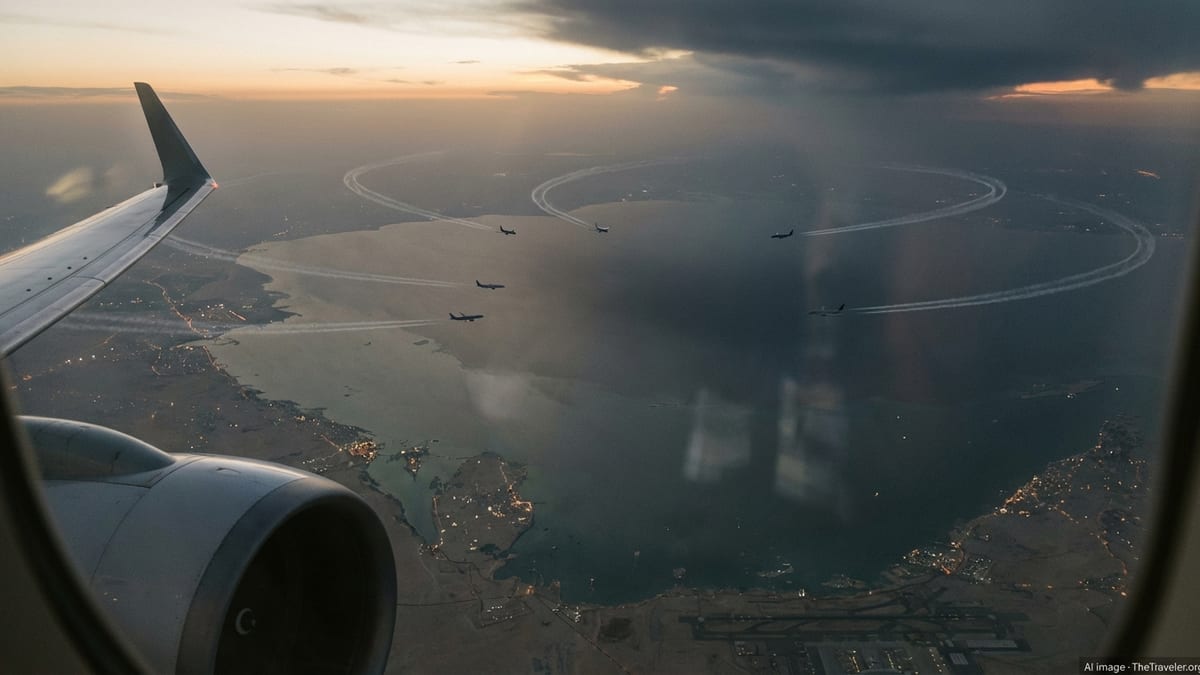
Coordinated Strikes Spark Chain Reaction in the Skies
The coordinated offensive by the United States and Israel on targets across Iran early Saturday immediately rippled through international aviation, which relies heavily on Middle Eastern air corridors linking Europe, Asia and Africa. Within hours of the first reports of explosions in Tehran and other Iranian cities, authorities in Tehran moved to shut down Iranian airspace to civilian traffic and issue formal notices to pilots.
Israel quickly followed, ordering a halt to all takeoffs and landings at its airports and effectively sealing its skies to commercial flights. Sirens sounded across Israeli cities as officials cited security developments and the risk of retaliatory missile fire in justifying the sweeping closure. Flight tracking data showed Ben Gurion Airport near Tel Aviv transforming from a bustling regional hub to a standstill, with arriving aircraft diverted mid-route.
The closures came against the backdrop of a rapidly escalating confrontation. Washington has framed the strikes as an effort to degrade Iran’s missile and naval capabilities and to prevent further military escalation, while Iranian officials have vowed a harsh response and declared American and Israeli interests legitimate targets. That intensifying rhetoric is feeding directly into risk calculations by aviation regulators and airlines worldwide.
Regional Airspace Locks Down Across the Gulf
Beyond Iran and Israel, regional states moved almost in unison to restrict their skies. Civil aviation authorities in Iraq, Kuwait, Qatar and Bahrain each announced temporary closures or severe restrictions, effectively erecting a broad no-fly belt across the northern and central Gulf. Flight tracking services showed one of the world’s busiest corridors between Europe and Asia abruptly thinning as aircraft diverted to longer, more southerly routes.
Qatar’s civil aviation authority confirmed that its airspace had been closed, forcing hub carrier Qatar Airways to suspend flights to and from Doha. In the United Arab Emirates, a key transit point even though not named in all initial closure lists, authorities also restricted airspace, prompting Emirates and Etihad to cancel or reroute services and warning passengers of significant disruption at Dubai and Abu Dhabi.
In Jordan and Bahrain, both hosts to US military assets, the combination of Iranian threats and ongoing missile exchanges led officials to severely curtail civilian traffic. Aviation observers noted eerie, near-empty skies over Iran and much of the northern Gulf for several hours at what would normally be peak traffic periods. For risk-averse carriers and insurers, the region has effectively become a patchwork of conflict-adjacent zones to be avoided.
Major Airlines Cancel, Reroute and Issue Travel Warnings
The operational fallout for airlines has been immediate and far-reaching. Qatar Airways confirmed a broad suspension of flights tied to the closure of Qatari airspace, while Israel-based carriers froze their schedules as domestic airports shut down. Turkish Airlines canceled flights across Lebanon, Syria, Iraq, Iran and Jordan until at least March 2, and halted services to Qatar, Kuwait and Bahrain for the day, citing regional airspace closures.
European and Asian carriers have followed suit. Lufthansa, Air France, KLM, British Airways, Wizz Air and others suspended services to Tel Aviv and several Gulf destinations, while also reconfiguring routings between Europe and Asia to avoid Iranian, Iraqi and adjacent airspace. Carriers in India, including Air India and IndiGo, announced temporary suspensions of flights into the wider Middle East as safety concerns mounted.
Travel advisories from airlines warned of delays, last-minute cancellations and extended flight times for routes that typically cross the Middle East. Some long-haul services between Europe and South or Southeast Asia were dispatched with extra fuel to accommodate long detours or contingency diversions, increasing costs and complicating crew scheduling. In several cases, aircraft already en route turned back to their origin airports, leaving passengers in so-called “flights to nowhere.”
Global Networks Strain as Key Corridor Seizes Up
Industry analysts note that the timing of the crisis could not be worse for an airline sector still recalibrating after the pandemic and coping with lost access to Russian and Ukrainian airspace since 2022. With a major swath of Middle Eastern skies now effectively off-limits, carriers face tighter bottlenecks and fewer viable alternatives for some of the world’s most heavily trafficked long-haul routes.
Detours around the Arabian Peninsula and over the Red Sea or Central Asia lengthen flight times, increase fuel burn and push aircraft and crew utilization to their limits. For hub-and-spoke airlines that rely on precise connection banks in cities such as Doha, Dubai, Abu Dhabi and Istanbul, even short-lived disruptions cascade across daily schedules, stranding travelers far from their intended destinations.
Regulators are also stepping in. The European Union Aviation Safety Agency has issued conflict zone bulletins urging operators to avoid affected airspace at all altitudes, citing a high risk to civil aviation amid ongoing military activity. Insurers are reassessing war-risk coverage for flights that might approach the region, adding further complexity to airline decision-making and in some cases rendering certain routes commercially unviable in the short term.
Is Global Air Travel on Edge Again?
With multiple conflict zones now reshaping global flight paths, the latest Middle East closures underscore how vulnerable modern aviation remains to geopolitical shocks. The industry has already had to absorb the loss of direct trans-Russia routes between Europe and Asia and navigate periodic flare-ups in other regions. The sudden shutdown of key Gulf and Levant airspace piles on a new layer of uncertainty.
For travelers, the immediate impact is visible in crowded departure halls, extended layovers and abrupt itinerary changes. Many airlines are offering flexible rebooking or refunds, but capacity constraints and network disruptions mean some passengers may spend days rerouting or waiting for space on alternative connections. Corporate travel managers and tour operators are once again dusting off contingency plans designed during earlier crises.
How long the current wave of closures and suspensions lasts will depend largely on the military and diplomatic trajectory of the US Israel Iran confrontation and any broader regional spillover. For now, aviation executives, regulators and passengers alike are watching radar screens and news feeds in near real time, acutely aware that a handful of decisions in distant capitals can redraw the global map of air travel overnight.