

More news on this day
South Africa is emerging as one of the latest countries to feel the impact of the Middle East airspace crisis, as escalating conflict in and around Qatar, Saudi Arabia, the United Arab Emirates and Iraq forces airlines to redraw routes, disrupts medical travel flows and complicates already fragile global tourism recovery.
Get the latest news straight to your inbox!
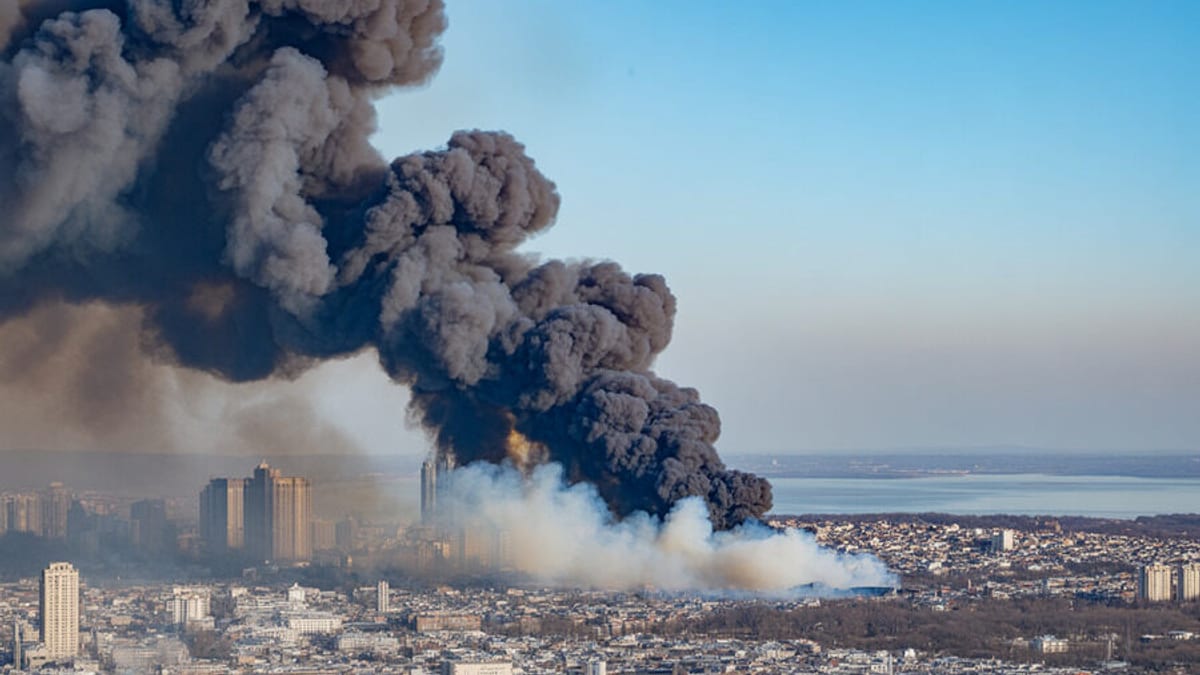
Image by Latest International / Global Travel News, Breaking World Travel News
A Global Web of Disruptions Reaches South Africa
Regional conflict involving Iran and several Gulf states has triggered a cascade of airspace restrictions and capacity cuts across the Middle East. Client advisories and aviation notices issued since late February describe closures or severe curbs affecting corridors over Qatar, large parts of the UAE and segments of Iraqi and Saudi airspace. Publicly available situation reports indicate that these limitations have persisted into March, with no clear timeline for full resumption of normal traffic.
These hubs sit on some of the world’s busiest long-haul corridors, connecting Europe and North America with Asia and Africa. According to industry analysis, carriers based in Dubai, Doha and Abu Dhabi usually support a substantial share of global long-haul capacity and cargo uplift, meaning that any extended grounding or diversion has rapid knock-on effects for other regions.
South Africa, which relies heavily on one-stop connections through the Gulf for links to Europe, South Asia and East Asia, is now caught in the ripple. Flight search data and airline bulletins show growing use of alternative routings via Europe, East Africa and island hubs in the Indian Ocean, while some itineraries from Johannesburg, Cape Town and Durban have become longer, more complex and in some cases more expensive.
Similar patterns are being seen in India, Germany, the United Kingdom, Singapore, Nigeria and Thailand, all of which have traditionally depended on Middle Eastern super-connectors for both passenger and cargo flows. As a result, what began as a regional security crisis is increasingly reshaping global aviation geography.
Airspace Closures Force Costly Rerouting
Operational bulletins circulated to corporate travel clients in early March describe an “ongoing Middle East airspace closure” affecting transit over or into Qatar, the UAE, Bahrain, Israel, Iran and Iraq. Airlines are being advised to keep aircraft clear of contested zones, anticipate sudden changes in available corridors and plan for extended block times as they reroute around the Gulf.
For flights linking South Africa to major Asian markets, the impact is especially acute. Previously, travellers heading from Johannesburg or Cape Town to destinations such as Mumbai, Delhi, Bangkok, Singapore or Tokyo often moved through Dubai, Doha or Abu Dhabi. With these hubs operating at significantly reduced capacity and some airspace segments fully closed, several carriers have shifted to more southerly paths over the Arabian Sea or circuitous routings via East Africa and Europe, adding up to two or three hours to certain journeys.
Travel and tourism media tracking the crisis report that airlines from London, Paris, Delhi and Singapore are similarly rewriting their route networks, leaning more heavily on Turkish, Central Asian and West African corridors to maintain Asia–Europe and Asia–Africa links. This redrawing of the global route map is not only lengthening flight times but also reshaping where passengers choose to connect, with implications for airport revenues and national tourism strategies.
For South African carriers and their partners, higher fuel consumption, crew duty-time pressures and congestion on alternative routes translate into increased operating costs. Those pressures are likely to be passed on to consumers through higher fares, surcharges or reduced frequency on some long-haul legs, further complicating travel planning for both leisure and business passengers.
Medical Travel Flows Under Strain
Beyond leisure and corporate itineraries, the crisis is reverberating through the medical travel sector. Health tourism analysis published in March notes that the Middle East has long been both a source and a destination for international patients, with countries such as Saudi Arabia, Iraq and other Gulf states sending large numbers of people abroad for treatment in India, Europe and Southeast Asia.
With flights cancelled, airspace constrained and regional confidence shaken, those patient flows are being disrupted. Reports focusing on India’s health tourism industry point out that medical value travel from the Middle East accounted for a significant share of foreign patient arrivals as recently as 2024. The current instability has abruptly complicated access, delaying procedures, altering referral patterns and forcing patients and providers to consider alternative routes or destinations.
South Africa is part of this shifting landscape. The country has positioned itself as a competitive medical tourism hub for Sub-Saharan Africa, particularly in specialties such as elective surgery, oncology and advanced diagnostics. Many patients from Nigeria and other West and Central African markets have historically relied on one-stop connections through Gulf hubs to reach South African hospitals quickly and affordably.
As those routings become less reliable, travel planners indicate rising interest in more direct intra-African links via Addis Ababa, Nairobi and Kigali, as well as potential detours via European hubs. While this may open new partnership opportunities for South African healthcare providers, it also risks longer travel times for patients with complex needs and could dampen demand from cost-sensitive markets.
Europe, Africa and Asia Rewire Their Connections
The turmoil is accelerating a broader realignment in how continents connect. Tourism and trade think tanks observing the situation describe a “redistribution of global travel flows” following successive crises in the wider Middle East, from Red Sea security incidents to the latest clashes involving Iran and Gulf states. Confidence indices for several Gulf destinations have fallen sharply, and tour operators report a marked shift in demand away from transit-heavy itineraries routed through the region.
For Europe, which has long depended on Gulf megahubs for access to secondary cities in Asia and Africa, airlines are boosting capacity via alternative gateways in Turkey and Central Asia, as well as reinforcing direct long-haul links where aircraft and crew are available. This, in turn, influences how African and Asian carriers schedule their fleets, potentially increasing the role of non-Gulf hubs in Addis Ababa, Nairobi, Casablanca, Johannesburg and Singapore.
Africa is particularly exposed to these shifts. Ethiopian Airlines and other regional players have already been reshaping their networks in response to both the Red Sea security environment and Gulf airspace restrictions. As more traffic is funneled through East African and Indian Ocean hubs, South African authorities and industry stakeholders are watching closely to see whether Johannesburg and Cape Town can capture a larger slice of connecting flows between South America, Africa and parts of Asia.
In Asia, carriers based in India, Singapore and Thailand are recalibrating flight schedules that once depended heavily on overflying Iran, Iraq and the Gulf. Although some services continue to operate using longer or more northerly routings, the uncertainty has encouraged a renewed emphasis on bilateral links and regional tourism corridors that do not depend on Middle Eastern transit points.
South Africa Weighs Risks and Opportunities
For South Africa, the crisis presents a complex mix of vulnerability and opportunity. On one hand, the country is highly dependent on foreign carriers for long-haul capacity, and any sustained disruption to Middle Eastern transit will strain connectivity to key markets in Europe, the Indian subcontinent and East Asia. Travel agents report that some South African travellers are postponing or reconfiguring trips to Asia due to longer travel times, more frequent layovers and higher prices.
On the other hand, the reshuffling of global routes could strengthen South Africa’s role as a gateway for parts of the African continent, particularly if carriers choose to route Southern Hemisphere traffic via Johannesburg or Cape Town rather than the Gulf. That repositioning would likely require coordinated efforts in visa policy, airport infrastructure and airline partnerships to capture diverted flows.
In the medical travel arena, South African hospitals and clinics may find new opportunities to attract patients who previously would have flown through Gulf hubs to destinations such as India, Thailand or Singapore. However, capitalizing on that potential will depend on reassuring international travellers about route reliability, travel times and overall safety, as well as managing capacity within the country’s own health system.
With reports indicating that airspace restrictions and intermittent attacks have already persisted for several weeks, the outlook for a swift normalization of Gulf aviation remains uncertain. For now, South Africa joins a growing list of countries, including India, Germany, the United Kingdom, Singapore, Nigeria and Thailand, that must navigate a far more fragmented and fragile global travel environment shaped by conflict well beyond their borders.