

More news on this day
A cascading wave of global flight disruption tied to Middle East airspace closures is rippling through Washington Dulles International Airport, where United Airlines, Emirates, Qatar Airways, British Airways and Virgin Atlantic have logged around 50 delays and 15 cancellations, snarling routes to Dubai, Doha, London, Washington D.C., Amsterdam and major U.S. cities.
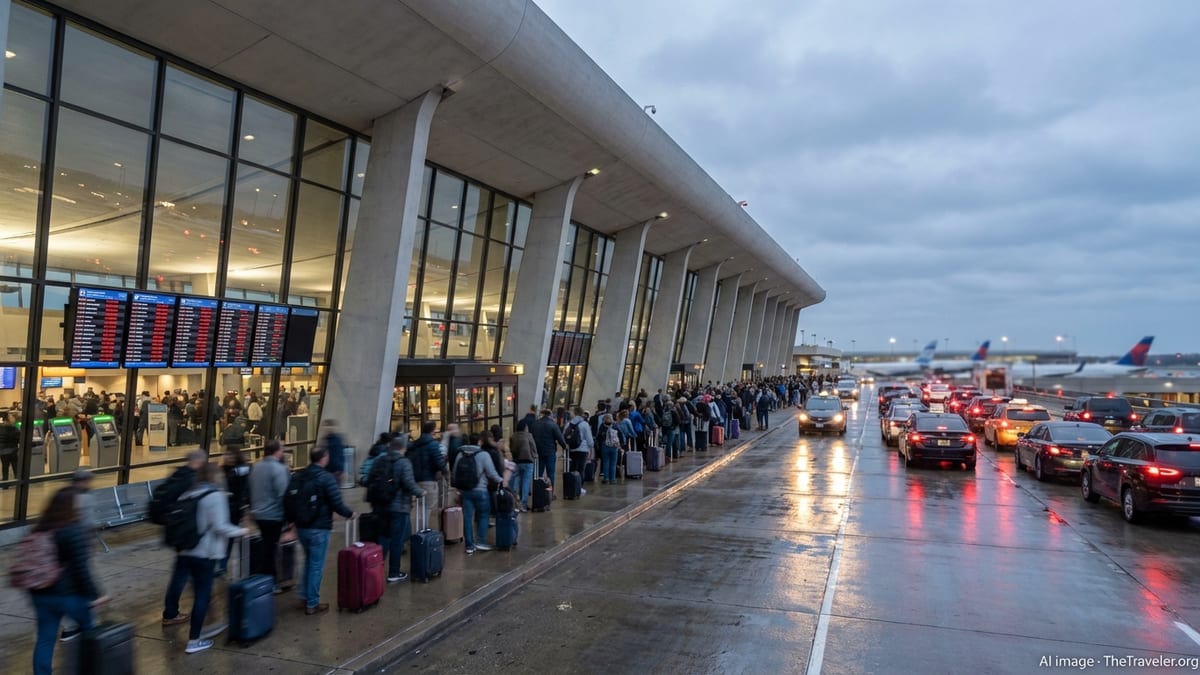
Middle East Airspace Closures Hit Washington Dulles
What began as a regional aviation emergency in the Middle East is now firmly visible in departure boards at Washington Dulles International Airport. After coordinated U.S. and Israeli strikes on Iran on February 28 triggered widespread airspace shutdowns across Iran, Iraq, Kuwait, Israel, Bahrain, Qatar and the United Arab Emirates, airlines have been forced to suspend or reroute services through key hubs such as Dubai, Abu Dhabi and Doha. That chain reaction has now translated into dozens of delayed and cancelled flights at Dulles.
United Airlines, which operates a major hub at Dulles, has been particularly affected on long haul services linking Washington to the Middle East and South Asia. Routes that would normally track across Gulf region airspace are either suspended or operating on extended routings, resulting in significant knock on delays to and from major U.S. cities and onward international destinations.
While Dulles remains open and functional, the abrupt removal of critical Middle East corridors has sharply reduced network flexibility. Aircraft and crews are out of position, and airlines are juggling rolling schedule changes, producing a patchwork of last minute cancellations and multi hour delays even on flights that do not touch the Middle East directly.
Dubai and Doha Links Severed as Gulf Hubs Shut Down
The most immediate impact for Washington area travelers has been the suspension of services to Dubai and Doha, two of the world’s busiest connecting hubs. Emirates and Qatar Airways, both heavily reliant on Gulf airspace, have halted the majority of their operations in and out of their respective hubs while regional authorities keep skies closed or tightly restricted amid security concerns.
Passengers booked from Dulles to Dubai and onward to Asia, Africa and Australasia are among the hardest hit. With Emirates services disrupted and Dubai International Airport operating at a fraction of normal capacity, many itineraries that depended on a single smooth connection now face uncertain multi day rebooking windows. Qatar Airways customers connecting in Doha are experiencing similar uncertainty as Qatar’s airspace remains effectively shut, severing a key bridge between North America and destinations across the Indian subcontinent.
Travel advisers say that some Dulles originating passengers have been rebooked via alternative European hubs where capacity exists, but those options are limited by the same airspace constraints forcing long detours around the Gulf. For many, the only realistic outcome in the short term is a full refund or a voucher and a complete rethink of travel plans.
Knock on Disruptions for London, Amsterdam and Major U.S. Cities
The ramifications are not confined to direct Middle East services. British Airways and Virgin Atlantic, which connect Washington Dulles with London, are also wrestling with the fallout as their global networks adjust. Flights between London and the Middle East have been heavily curtailed, prompting aircraft swaps, retimed services and tighter crew rotations that in turn affect transatlantic operations.
As a result, Dulles passengers bound for London and onward to Amsterdam and other European gateways are encountering an uptick in delays, even when their itineraries do not transit the Middle East. Missed connections in Europe are forcing some travelers to overnight unexpectedly or accept reroutes through alternative U.S. or Canadian hubs where spare capacity can be found.
Within the United States, the disruption is showing up in congested hub operations. United’s domestic network is absorbing knock on effects as widebody aircraft usually assigned to intercontinental routes sit idle or are reassigned. This is leading to schedule shuffles on services linking Dulles with major cities including New York, Chicago, Los Angeles, San Francisco and Houston, as airlines try to keep core domestic corridors moving despite equipment and crew shortages.
Passengers Face Long Lines, Limited Options and Rolling Updates
At Dulles, the passenger experience on Sunday has been characterized by long customer service queues, busy call centers and constantly changing information. Travelers report being advised to remain close to gate areas as departure times shift repeatedly while airlines wait for updated routing permissions and security assessments.
Airlines are encouraging customers to make use of their mobile apps and text alerts rather than relying solely on airport screens, which can lag behind operational decisions. Same day change and fare difference waivers have been introduced by several affected carriers for tickets issued in the days leading up to the crisis, giving some passengers the option to postpone or reroute their journeys without additional cost.
Travel agents and corporate travel managers say demand for alternative routings via unaffected hubs such as certain European capitals and Canadian gateways has spiked, quickly consuming remaining inventory in premium cabins and constraining economy class availability. For many leisure travelers, the combination of uncertainty, lengthy detours and higher fares is prompting deferral of trips until the situation stabilizes.
What Travelers Through Dulles Should Do Now
For passengers scheduled to fly in or out of Washington Dulles over the coming days, particularly on United Airlines, Emirates, Qatar Airways, British Airways and Virgin Atlantic, early and proactive engagement with airlines is critical. Industry experts advise checking flight status repeatedly in the 24 hours leading up to departure, as services that appear on time in global distribution systems can still be pulled or retimed at short notice.
Holding off on heading to the airport until a flight shows as confirmed and ready for check in can reduce time spent in crowded terminals. Where feasible, travelers are being urged to consider flexible itineraries that allow an extra day on either side of long haul trips, acknowledging that connection times are currently far less predictable than usual.
While there is no clear timeline for the full reopening of Middle East airspace, airlines are signaling that rolling cancellations and delays are likely to persist as long as security risks remain elevated. For Dulles, a key transatlantic and long haul gateway, that means continued disruption on routes touching Dubai, Doha, London, Amsterdam and major U.S. hubs, and a challenging week ahead for both carriers and their passengers.